There has been a shocking incident in Melbourne’s Rowville which jolted the Indian-Australian community. A statue of Mahatma Gandhi, an icon of global peace and non-violence was sliced apart with an angle grinder and snatched in the dead of night. This was not by chance, or by mistake. It was a purposeful, tactical and audacious act. The act occurred at a community centre that is reflective of the cultural identity and dignity of Victoria’s Indian-Australian population. For a lot of people, though, this is about more than a theft; it is about respect, safety and accountability.
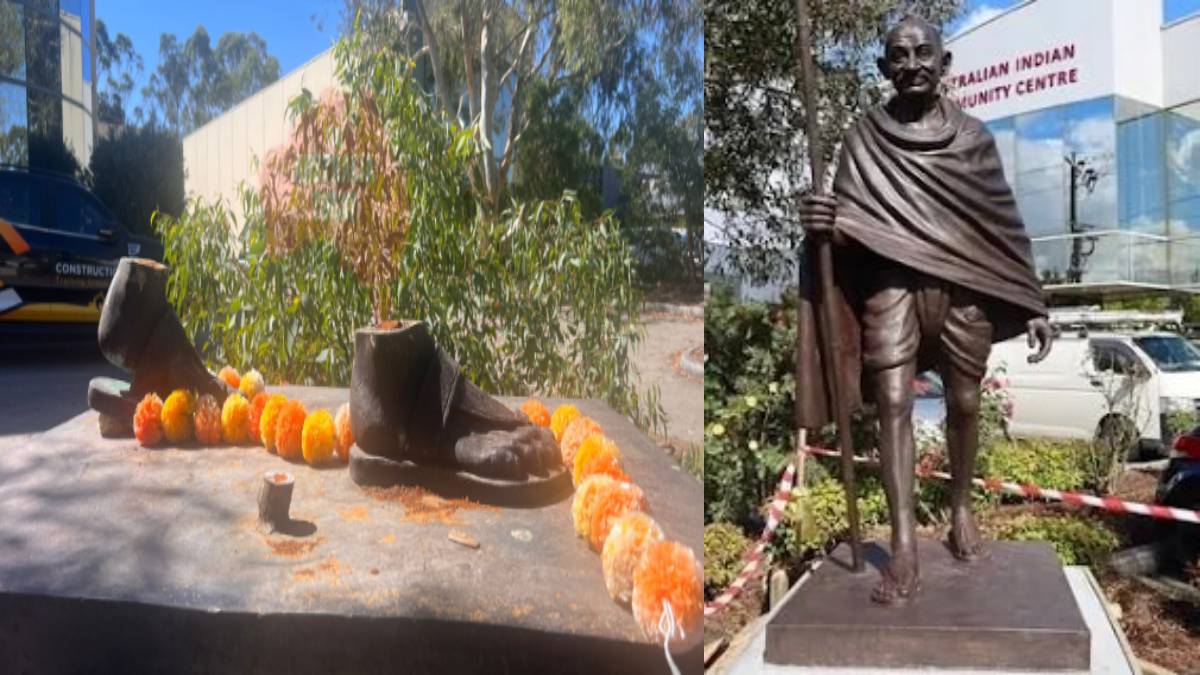
When Gandhi's statue is destroyed and stolen it is more than just a loss of his physical possession. Gandhi symbolizes peace, consensus and non-violence all across the globe. To attack such a symbol is to attack on the values it stands for, and the people who live within it. This incident shows how cultural spaces and symbols are susceptible to targeted acts. It begs the question: when is the end to “just theft” in those cases, the “only theft” for most, when must communities be targets? There may be a risk of normalising these acts and ignoring them. Communities need to be protected, and cultural symbols need to be treated with seriousness.
For Victoria’s Indian-Australian denizens, the statue was a piece of art but also emblematic of heritage, dignity and belonging. Its destruction delivers a wrenching message: that cultural identity can be assaulted without consequence. Such incidents instill fear, insecurity, and outrage to members of a community. They also undermine faith in public safety systems, when people say their complaints aren’t taken seriously. This is precisely why we need to make cultural safety a priority. Community centres and cultural landmarks need to be protected — you cannot afford to treat people differently, they deserve respect and harmony because we are living in a heterogeneous society.
The theft of the Gandhi statue must lead to accountability. If anyone knows who did this, observes dubious activity, or gets offered the statue as scrap, they must report it. Silence defends criminals, not societies. Not only is reporting those criminal acts a matter of justice but also one for the society to show that cultural disrespect is unacceptable. But we also need authorities to do something about it. Additional layers of security measures, faster investigations into incidents and concrete support for affected communities need to be provided. Victoria can do more, and Victoria needs to give up the easy road to safe spaces, cultural spaces that are safe, respectful and just.
It isn’t a one-off occurrence in this story, however. Statues and cultural symbols have been vandalised or stolen across the globe, frequently against minority communities. Of course, the impact is sometimes far more than the tangible damage. It attacks identity, belonging and dignity. Respect for cultural symbols is part of respecting the people who live in a multicultural community. Safeguarding them is about safety, but it is also about honouring diversity. A lack of attention to cultural safety, however, renders communities isolated and fragile and places them at risk.
Respect needs to be the foundation of a community, this act should highlight that. Gandhi’s statue was a symbol of peacemaking and non-violence. Its destruction is a call to arms: to save cultural spaces, to bring offenders to justice and to make sure that communities feel safe and valued. Victoria must do better. This is about respect. This is about safety. And this is about accountability.
The theft of Gandhi’s statue in Melbourne is not just about losing a monument; it is about losing a symbol of peace and dignity. Communities cannot thrive when their cultural identity is attacked and their safety ignored. Protecting cultural landmarks is protecting the people who value them. This incident must serve as a wake-up call for stronger accountability, better protection, and deeper respect. Only then can communities feel secure, valued, and respected in the society they call home.