A video of an ambulance amid the destruction in Gaza has reignited a heated debate over attacks on medical vehicles during the Israeli-Palestinian conflict. One of the most disturbing images from an earlier stage of the war has been shared on social media by Muhammad Mazen as one of the most disturbing scenes of the war.
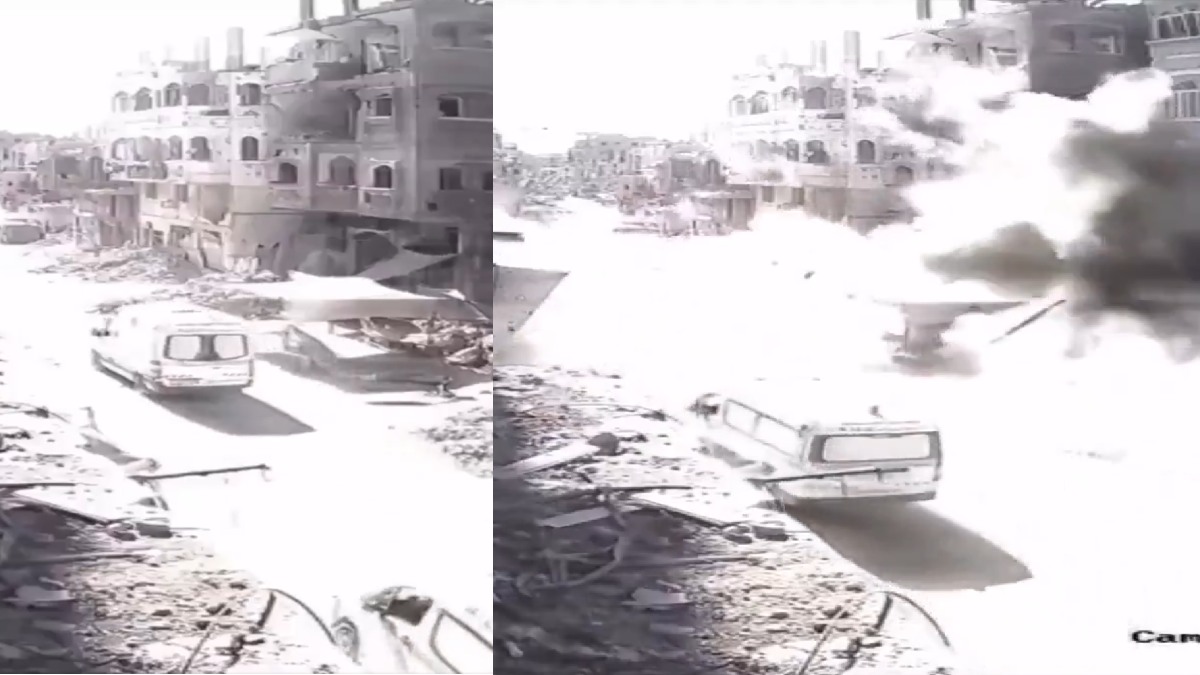
The footage has also become part of a larger debate over whether ambulances and other medical vehicles have been deliberately targeted in the course of the conflict. Posters writing next to the video claim Israel attacked ambulances carrying wounded people and cite hundreds of incidents involving medical facilities and personnel in the area since the conflict began in October 2023. Some estimates of more than 200 incidents and 1,700 health workers killed are given in the videos. But the details and the degree to which incidents are known are different, so it is important to distinguish between what are the known attacks and those that are not.
For supporters of the video’s interpretation, the ambulance is used as a symbol of the grim conditions faced by Gaza’s emergency workers. Medical workers have been working in extremely difficult conditions for years in the context of shortages of medical supplies, damaged healthcare infrastructure, displacement, and continuing security risks. Ambulances are needed to evacuate wounded civilians through military areas, and drivers, paramedics, and patients are always at risk.
At the same time, Israel has repeatedly accused Hamas and other armed groups of exploiting civilian infrastructure, hospitals and transport vehicles for military purposes. Israeli officials have argued that ambulances can lose their protected status under international humanitarian law if they are used to commit acts harmful to an adversary beyond their humanitarian function.
The issue has gained more attention in the wake of footage released by the Israel Defense Forces in 2026 that it says shows armed operatives using ambulances in northern Gaza. Israeli authorities have cited that material as evidence that Hamas has employed medical vehicles for military activity. But critics of Israel’s military operations have questioned the interpretation and broader context of individual pieces of military-released footage.
International humanitarian law provides protection to medical personnel, hospitals, and medical transportation when they are solely serving the humanitarian interest. Medical units and vehicles are generally protected from attack, as per the law of armed conflict. That protection is not unlimited, however. If a medical vehicle is used for military purposes, then that protected status may be affected according to certain circumstances and is subject to legal requirements.
This is particularly important when assessing videos that are shared on social media. A short video of an ambulance getting damaged or attacked may not indicate what had been happening before or after the video. The location, date, occupants, circumstances of the incident, and whether the vehicle was being used exclusively for medical purposes can be essential to determining what actually happened.
The newly resurfaced footage has been argued to be deceptive. Proponents who present it as evidence of targeted killings contend that it demonstrates the dangers faced by Gaza's healthcare workers. But others say it is not possible to draw conclusions on the basis of the replayed footage without independent verification and that armed groups have sometimes exploited civilian and medical infrastructure.
The debate is also a reflection of the wider problem with information emerging from the Gaza conflict, with videos and photographs circulating quickly and without context. Material posted years, months, or weeks ago could also be found in a moment of sudden resurfacing and then cited as evidence of a current development. This makes independent verification so important, especially if the material is being used to support allegations of violations of international humanitarian law.
One of the most brutal scenes in human history has been leaked.
— Muhammad Mazen (@mhmd_s09) August 23, 2026
The Israeli army bombed an ambulance carrying wounded people to a hospital in the Gaza Strip during the war of extermination two years ago.
A video that the world must never forget. pic.twitter.com/LJUKkDp2nT
With all the competing claims, the protection of medical workers and patients is still a central pillar of wartime humanitarian law. Ambulances performing genuine medical duties are not ordinary military targets, and attacks on medical personnel or patients can raise serious legal and humanitarian questions. At the same time, claims that armed groups misuse medical vehicles also have to be investigated and not just based on political affiliation or unverified footage.
As the video continues to circulate, the main question is not just about what the evidence seems to show, but also about what can be independently established about the incident. Without any solid evidence of the truth behind the recording, claims about such specific targeting should be considered cautiously. All of this is not to say that there has been any real evidence of intentional targeting, but the current debate is no doubt a reminder of the high risk faced by emergency workers in Gaza and the need to safeguard medical care in an environment of conflict in war.