Gilli Danda, one of India’s oldest and most familiar traditional games, is finding a new audience beyond the country’s borders. What once was associated with Indian streets and villages and open grounds is now drawing interest and participation from Spain and the United States to Italy and the Philippines.
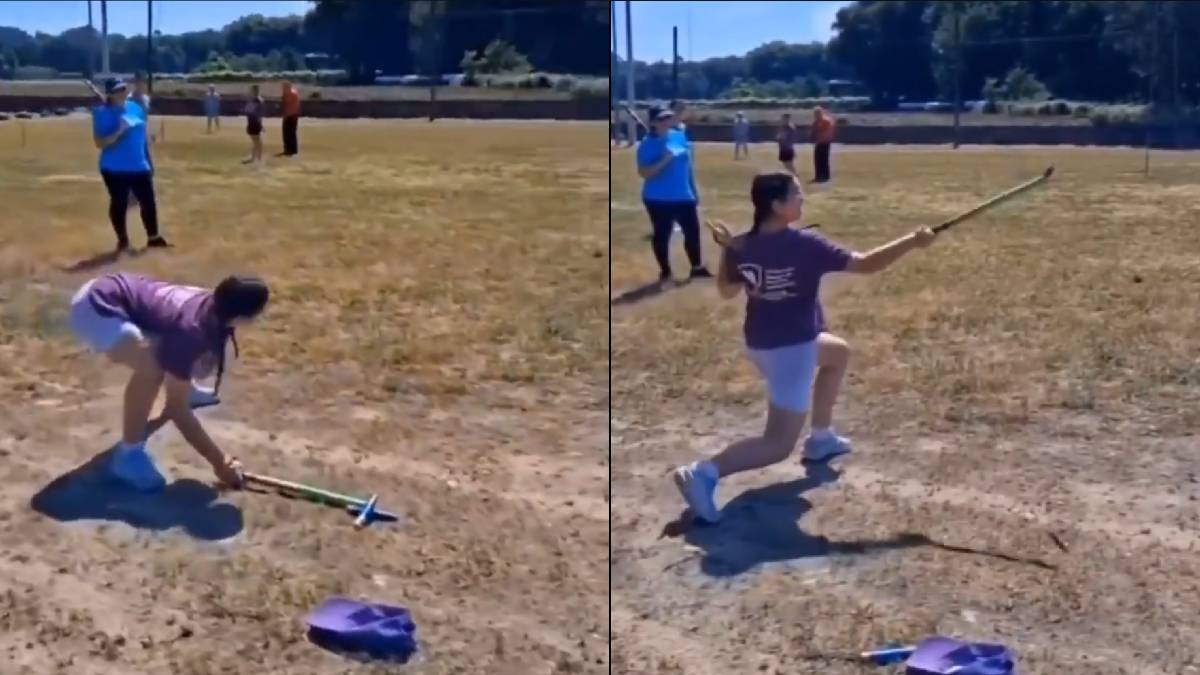
But this simple game only requires two pieces of wood, a lot of skill, timing, coordination, and explosive movement, and is very engaging. And with international recognition, it is a very fresh lesson in how traditional Indian games can cross cultural boundaries.
Gilli Danda is, at its heart, so simple. Players use a long wooden stick called the danda to hit a shorter tapered piece of wood called the gilli. They aim to hit or throw the smaller stick as far as possible while doing so with accuracy and control.
The game’s simplicity of equipment is perhaps one of the game’s greatest strengths.
Unlike traditional sports that require high-end equipment, specialised playing surfaces or extensive infrastructure, Gilli Danda can be played with basic materials and in relatively open spaces. That accessibility is why people who don’t know the game can take part.
Gilli Danda goes International.
— Harpreet Sandhu (@harpeetsubh) August 23, 2026
Who said traditional Indian games stay stuck in India? 🇮🇳
This ancient stick game is now scoring fans from Spain to the US, Italy to the Philippines.
One simple stick.
Explosive energy.
Worldwide attention. pic.twitter.com/sJNQS2UGdH
Its growing international appeal shows that traditional sports do not have to remain confined to their places of origin.
In an age of world-famous sports globally like football, basketball, tennis and cricket, indigenous games are being rediscovered as important to our cultural heritage. Social media is the biggest way to do so because it has enabled people to experience traditional games, to go and watch, and not have to travel to get into and experience them.
Short videos featuring the speed, technique and excitement of Gilli Danda will be able to make the game instantly understandable to international audiences.
The game is also deeply connected with India’s own cultural history. Childhood games of stick and ball were played in India’s streets, fields and neighborhoods for generations. The rules might be different for different regions, but the basic concept was familiar.
Before smartphones, gaming consoles and organised sports facilities became widespread, games like Gilli Danda offered children an inexpensive way to compete, exercise and socialise.
The new interest in the game thus is not just entertainment. It is also part of a larger effort to preserve and promote traditional forms of recreation.
The international focus from Spain to the United States, Italy to the Philippines is particularly interesting because it shows how easily a simple physical activity can transcend cultural differences.
The basic appeal is universal: hitting a moving object accurately, judging distance, developing hand-eye coordination and competing with friends.
For international participants, finding Gilli Danda may also provide a glimpse into one of the aspects of Indian culture that is quite different from the country's internationally famous modern industries, cinema and cricket.
Festivals, schools, community events and demonstrations may be the way forward for the game. Organised competitions may also help to ensure the same rules, but for the sport to still be a traditional one.
But Gilli Danda will be at risk if it finds popularity outside India. But the sport is not just another recreational activity; it’s part of India’s traditional sporting heritage.
As the game is gaining popularity in India, it is also possible to introduce it to younger generations. As children’s leisure activities migrate to digital platforms, traditional outdoor games are struggling to stay relevant.
International recognition might in fact return domestic interest.
When traditional Indian games are appreciated abroad, it can generate more curiosity among younger Indians about the games that old generations played regularly.
Gilli Danda's international journey is therefore an encouraging reminder that cultural traditions can adapt without disappearing.
But with a simple wooden stick and a piece of wood, a game can be developed into a game that is seen in countries all around the world. Its huge popularity in Spain, the United States, Italy and the Philippines shows that traditional Indian recreation can be found in both countries as well as in people from places other than India.
The Gilli Danda story is really simple. No sophisticated technology is required, no expensive equipment is necessary, and no massive stadium is needed.
One stick, explosive energy and a game that is steeped in centuries of Indian tradition are enough to make international attention shine.
As interest continues to grow, Gilli Danda might be a good example of India’s traditional games finding new international life—and turning a nostalgic childhood pastime into a cultural export that links people to each other across borders.