A firing at Sarhad University in Islamabad has been the stuff of headlines after a Pakistan Army officer allegedly pulled out a pistol and fired shots into the air during a confrontation with protesting students, according to reports. There were tensions over the Head of Department, fees and classes, and other university-related issues at the time of the shooting incident as well as about the Head of Department's responsibilities, we reported.
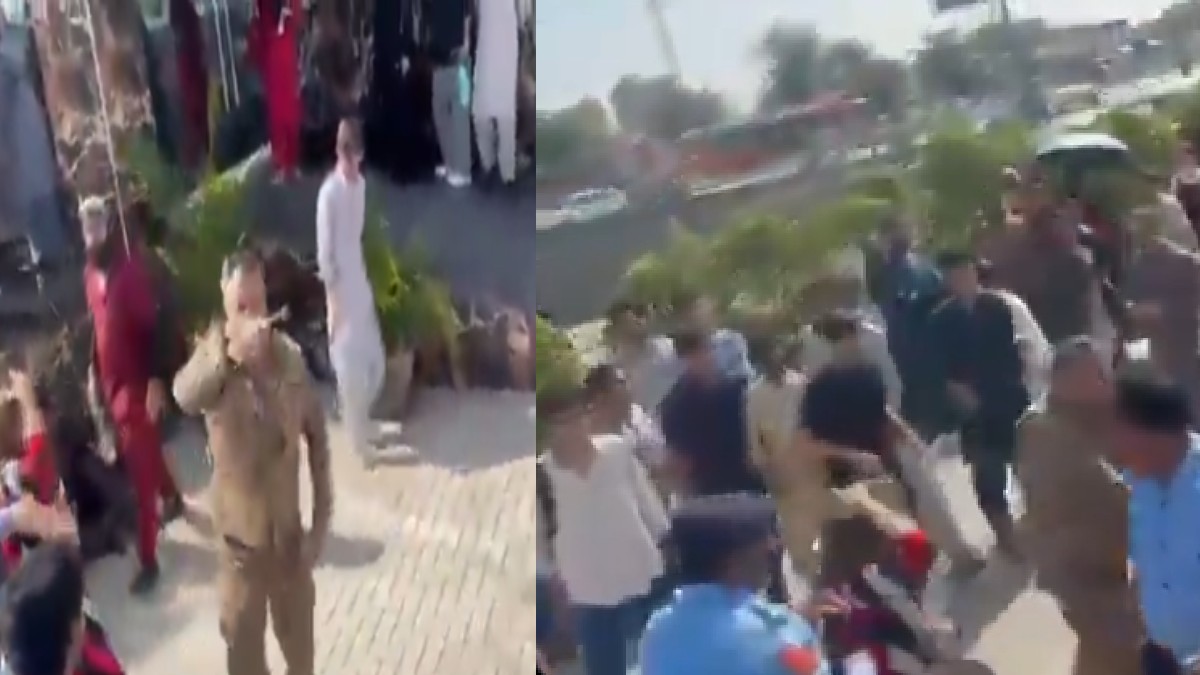
As far as the report went, students had come together to protest their demands and to express concerns about problems in the university. Students were protesting the issue when Dr Aina, the head of the university’s Student Affairs, arrived and talked to them about it and addressed their complaints.
However, the efforts to negotiate with the students did not immediately resolve the situation. Some students were allegedly unwilling to accept the proposed discussions, following which Dr Aina is said to have contacted her husband, who is a Pakistan Army officer.
The officer arrived at the university and the situation took a more serious turn. The officer allegedly struck a student with a stick during the altercation, the student’s account says. The incident then turned physical between the officer and some students.
A video of the incident has also been posted online and is being circulated widely. The video appears to show an Army officer (who is apparently the Army officer) confronting and hitting students with a stick. In the confrontation, some students are seen moving towards him and some are reportedly grabbing him by the collar.
The situation then seems to escalate further when the officer pulls out a pistol. He is seen firing shots into the air, apparently in an attempt to disperse the students and bring the confrontation under control. The footage has led to questions about the presence of firearms on a university campus and the manner in which the dispute was handled.
The firing details, including the exact number of shots fired and whether anyone was injured or not, would have to be verified by official authorities. The video in question is visual evidence of the confrontation, but what happened before and after is still to be verified.
The incident comes at a time in which protests, security measures and information curtailing in Pakistan and Pakistan-occupied Jammu and Kashmir (PoJK) are more and more under scrutiny.
The response to the unrest has been to put up higher levels of security and put restrictions on journalists and information movement from the territory, rights groups say. Restricting independent reporting is a challenge the rights organizations have said.
Shocking visuals from Pakistan of a Colonel of the Pakistan Army firing in the air and at students at a university in Islamabad in front of Police.
— Amitabh Chaudhary (@MithilaWaaala) August 24, 2026
Some reports claim he became angry after students caught him harassing female students and confronted him. Other reports claim his… pic.twitter.com/jjBSXLh92F
The developments are also happening as the Pakistan-backed administration in the disputed region gets to work on preparations for assembly elections. India has rejected the electoral process in Pakistan-occupied Jammu and Kashmir as illegitimate, maintaining its position on the territory.
According to reports cited by The New York Times, foreign media journalists in Pakistan have reportedly been required to obtain prior government permission before traveling outside Islamabad, Karachi and Lahore. Such restrictions might be of concern to reporters who want to cover developments in unrest-affected areas like PoJK.
Against this backdrop, the Sarhad University incident has added to Pakistan’s public demonstrations and disputes’ problems. A dispute that began over university-related grievances turned into physical violence and the alleged use of a firearm, raising questions about security and accountability on educational campuses.
We will only know more details will be revealed when authorities have a full picture of the incident and the reasons for the confrontation. Confirmation from the university, police or other relevant authorities would be key in deciding the sequence of events and if action has been taken against those involved.