Routine jobs in retail, healthcare and education are the most vulnerable to disruption due to generative artificial intelligence (Gen-AI) as predicted by Goldman Sachs. It underscores how rapidly AI technologies are transforming workplaces worldwide through automation of repetitive jobs, productivity improvement and the ability to acquire skills for a new era of work.
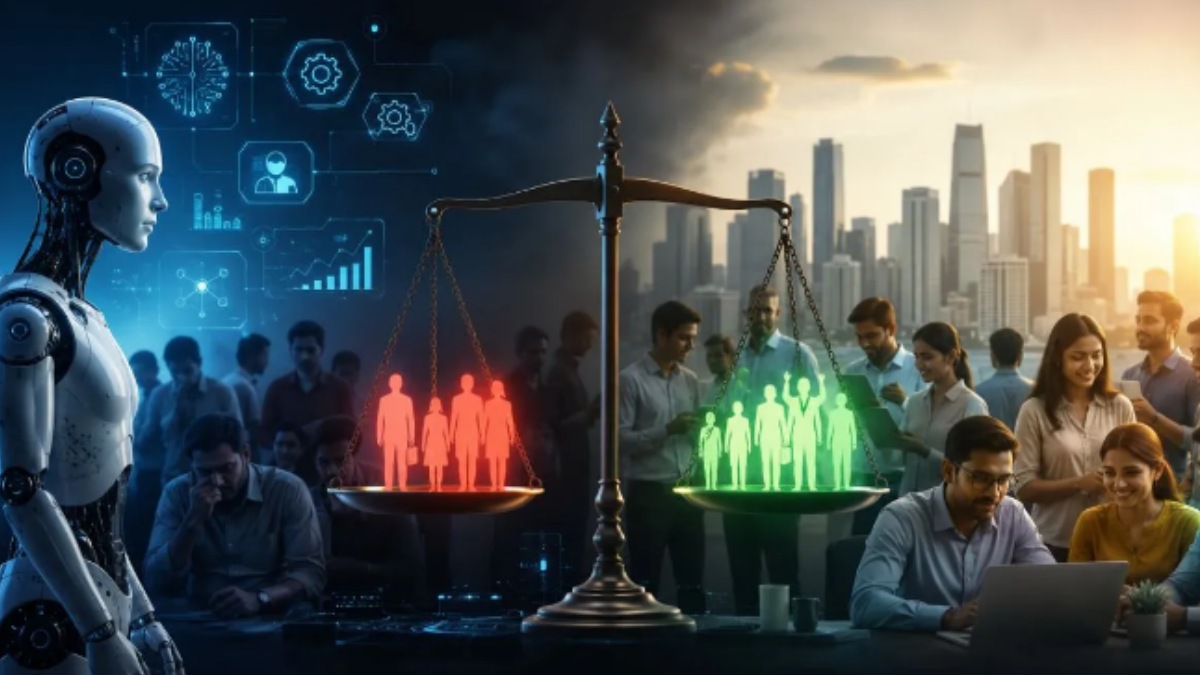
The findings demonstrate the growing power of generative AI tools to generate content such as text, images, code, presentations, reports or other digital content with minimal human intervention. AI-based solutions, which are increasingly being adopted by businesses and are heavy on routine administrative and information-processing tasks, will be the most impactful.
The report found that retail, healthcare and education sectors have millions of employees with tasks like repetitive documentation, customer relations, scheduling, data entry, inventory management, record keeping, and communication. And those are exactly the tasks which today’s AI systems are increasingly capable of doing efficiently.
In retail, generative AI will help to automate customer care, product recommendations, inventory management, pricing determination, demand forecasting and supply chain management in the retail industry. AI-based virtual assistants and chatbots are already working on customer support, processing returns, and providing personalized shopping experiences. Retailers are using AI to optimize stock levels and to predict consumer purchasing patterns at the same time, lowering operational costs and creating better customer service.
The healthcare industry is also seeing rapid AI adoption. Doctors, nurses and specialists will continue to play a crucial role but many administrative tasks can be streamlined by generative AI. Medical documentation, appointment scheduling, insurance processing, patient record summarization, clinical note generation and preliminary diagnostic assistance are all being augmented by AI tools. Healthcare professionals can focus on patient care more efficiently by reducing paperwork and administrative work hours.
Similarly, the education sector is undergoing a radical transformation with AI-driven technologies. Teachers and educational institutions are using generative AI to develop lesson plans, generate quizzes and study material, assess assignments, translate content into academic content, and provide students with more personalized learning experiences. Administrative duties like attendance management, timetable creation and student record maintenance are being automated too.
Goldman Sachs notes that the increasing adoption of AI should not be seen as a threat to employment. Rather, it will help to improve human capabilities that we all have in order to do repetitive and laborious work but not to do so at the expense of creativity, critical thinking, emotional intelligence and complex decision-making.
Even though some job duties may be automated, replacing professionals is not likely in most industries. Human judgment, empathy, ethical reasoning, interpersonal communication, and strategic decision-making are still important in sectors like healthcare, education and customer service. AI is most likely to be a collaborative tool, but not a replacement for workers.
The report also focuses on the necessity of reskilling and upskilling. As AI is implemented in our daily working environment, employees will need to acquire new digital skills, data literacy, AI management skills and problem-solving capabilities. Governments, the educational system, and employers are supposed to help to prepare the workforce for ever-evolving job demands through continuous learning.
Businesses are investing in generative AI to enhance their operations, reduce costs, innovate at an earlier stage and create better customer experiences. AI-powered software is already helping employees to draft emails, summarize lengthy documents, create reports, analyze market trends, write computer code, and make business decisions.
But experts say responsible AI deployment is still crucial. Organizations using AI technologies need to make sure they do so with data privacy, transparency, cybersecurity, regulatory compliance and ethical governance. Human oversight is still needed in sectors that have sensitive personal data and critical public services, and human oversight will continue to be needed.
India also will experience significant changes as generative AI adoption accelerates across industries. The country has an excellent information technology ecosystem, digital infrastructure and a growing startup scene that will be very attractive to AI-driven innovation. However, workforce adaptation will be just as important to ensure employees have an edge in an ever-more automated industry.
Industry analysts expect that future work will combine human skill sets with AI-driven tools more and more. Generative AI will change the face of jobs, automate repetitive activities and create new professions in AI development, cybersecurity, machine learning, prompt engineering, data science, digital transformation and technology consulting.
The Goldman Sachs report is a reminder that while generative AI has great potential for economic growth and productivity gains, it also requires investment in education, workforce development and responsible innovation. As companies continue to adopt AI technologies, success cannot only depend on automation but also on having the workers learn the skills necessary for the rapidly changing digital economy.