A young man from Hisar, Haryana, has built a career that few could have predicted.
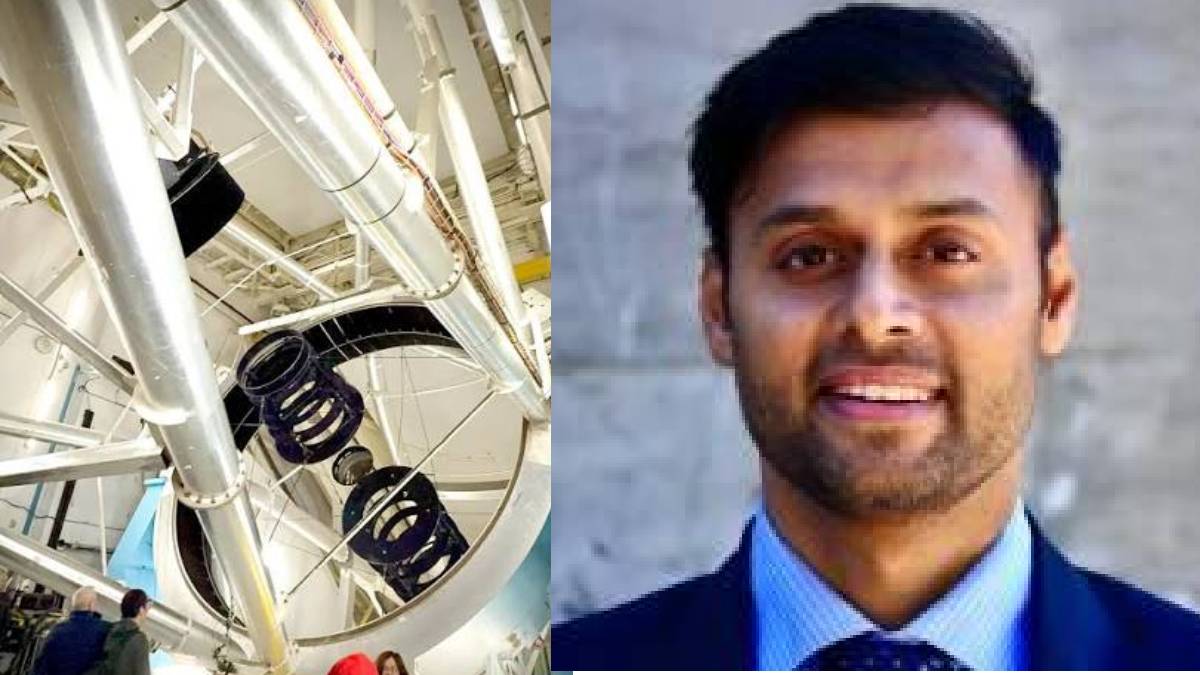
He began as a judo athlete and later graduated from Harvard University and now advises the White House on issues of Unidentified Aerial Phenomena (UAP).
His inspiring story is a testament to perseverance, curiosity and the idea that asking the right questions is often more important than only making quick answers.
His core philosophy, “Explain why before how,” has guided his study and career.
He grew up in Haryana and studied hard and played sports especially judo so that he could discipline, be strong and keep focused in times of crisis.
All that has been useful for him as he went on to attend Harvard University, one of the most prestigious and influential universities in the world.
With Harvard he worked in interdisciplinary research that was both science, technology, public policy and national security.
Instead of focusing on one area, he investigated complex problems from many perspectives, winning recognition for analytic rigour and evidence-based thinking.
His knowledge led him to work on UAPs the term used by governments and researchers to describe aerial observations that cannot be explained.
UAPs have gained great interest in recent years from governments, scientists and defence agencies in the US and globally, as more transparency and scientific inquiry seem to be on the agenda.
As advisor for UAP-related policy and research, he advocates for thorough analysis, objective analysis of evidence and scientific inquiry.
Rather than sensationalism, he promotes hard work and evidenc based analysis and the fact-based analysis that is far from conjecture for that is, to put facts over speculation.
His quote, “Explain why before how,” is a reflection of an overall belief that understanding the purpose, and context, of any problem should be the first order of business before finding solutions.
This has earned him respect from researchers as well as from policymakers in areas where scientific uncertainty and national security intersect.
In addition to his work and personal accomplishments, his journey has inspired students across India.
As a non-metropolitan city like Hisar, he has shown that determination, education and intellectual curiosity can open up a world of opportunity.
His success also shows how Indian talent is becoming an increasingly prominent asset in international research, technology and policymaking.
And experts believe stories like that make young people want to work in science, public policy, and new technologies without being constrained by geography or background.
He is a great example of how excellence is built through continuous learning, discipline, and the courage to explore unfamiliar fields.
From judo mats in Haryana to Harvard and advisory discussions to the White House, that is what it is like to follow his path, to see how he is able to convert his ambition to global impact and how his own critical thinking allows for that to happen.
It is an inspiring story to students, researchers and athletes in general and one that serves as a reminder for all of us as we go forward that every great thing starts by asking good questions to people and by understanding why they matter.