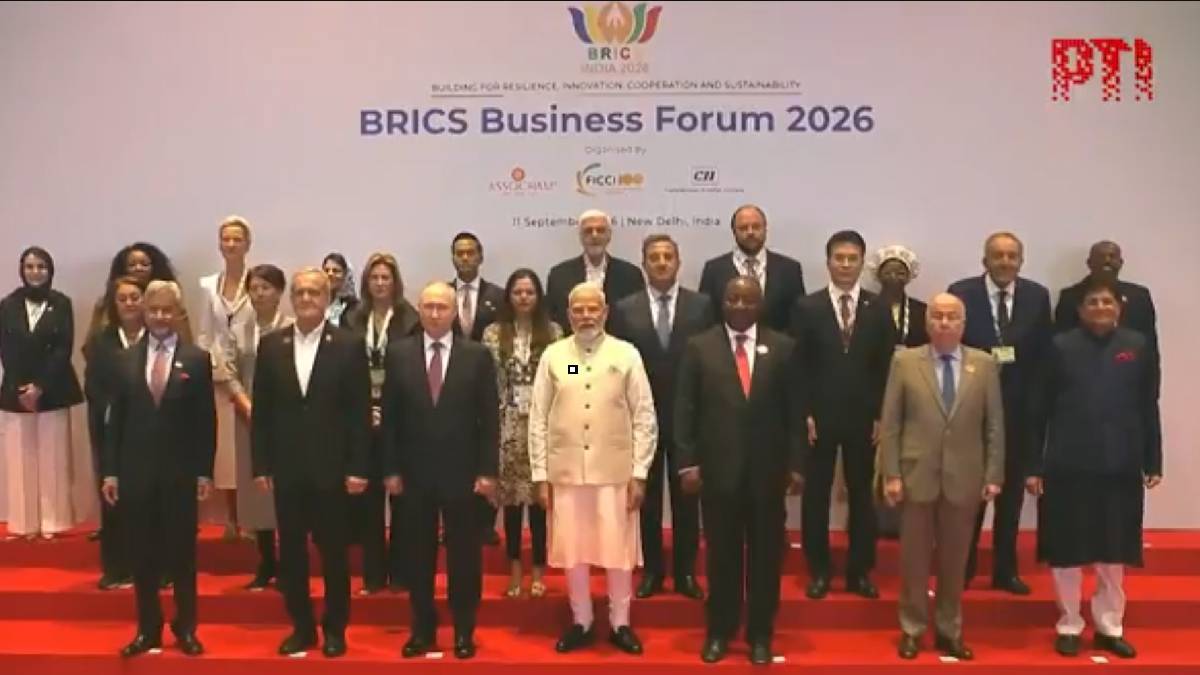
The House of Representatives of the United States has advanced legislation that would give President Donald Trump the power to introduce tariffs on India and other countries that continue to buy Russian oil and gas. This comes as India hosted the BRICS leaders for the first time in New Delhi and talked to them about more economic cooperation, local-currency trade, and reforms in international institutions.
The Lindsey O. Graham Sanctioning Russia and Iran Act of 2026 cleared a key procedural hurdle in the House on Tuesday by 214-211. The bill is coming to the House in a package on Thursday, September 17, according to a report from 16 September.
Importantly, the bill does not impose a 100% tariff on India. Instead, it would give the US president the power to impose tariffs of up to 100% on countries purchasing Russian energy under the provisions that actually become law. India is among the major buyers of Russian energy under the House legislation. China, Azerbaijan, Hungary and Slovakia are also mentioned in the report on the measure.
The proposed measure is part of a broader push to put pressure on Russia over the Ukraine war and sanctions on Russia and Iran. In addition to tariffs, the legislation has sanctions on Russia and Iran. India’s energy imports from Russia have been largely sheltered by the tariff provision.
The House action follows weeks of debate about how far Washington should go in penalising countries that continue buying Russian energy. The Senate version did not mention India, but House members introduced amendments that could specify the major Russian oil buyers, including India. Other amendments sought to remove or contain the tariff provision completely.
The development also comes at a sensitive time for India-US economic relations. In 2026, the White House announced a trade agreement under which the United States reduced its reciprocal tariff on India from 25% to 18% and removed an additional 25% tariff related to India’s Russian oil purchases, after India announced it would stop buying Russian Federation oil.
In that sense, this new congressional action might add another layer of uncertainty to bilateral trade talks if the tariff authority becomes law and then is used.
The timing has also been a factor this time because India hosted the 2026 BRICS summit in New Delhi on September 12-13. The conference brought together leaders from the expanded BRICS group, including India, China, Russia, Iran, UAE, Brazil, South Africa, Egypt, Ethiopia and Indonesia. The summit's joint declaration also discussed unilateral sanctions, tariff barriers, more local currencies in trade and reforms to international institutions.
But both the House tariff bill and the BRICS summit must be viewed as separate events with no connection. The US bill mostly focuses on sanctions against Russia and Iran and on countries that buy Russian energy. Congress’ passage of the bill is a continuation of a larger US policy conversation about Russia, sanctions and trade.
The next step for India is the House vote. If the bill is passed in the House, the final legal outcome would be the legislative outcome and the provisions enacted in the end. At this point, the potential 100% tariff still looks like a legislative threat, not an active tariff already in place on Indian imports.
The forthcoming congressional proceedings will therefore be closely watched in New Delhi, especially regarding Russian crude purchases, India-US trade talks, and the overall economic relationship between the two countries.