Israel is building a 23-kilometre-long earthen barrier along southern Gaza, heightening concerns over the Palestinian territory and the possibility of temporary wartime military bases that become permanent borders.
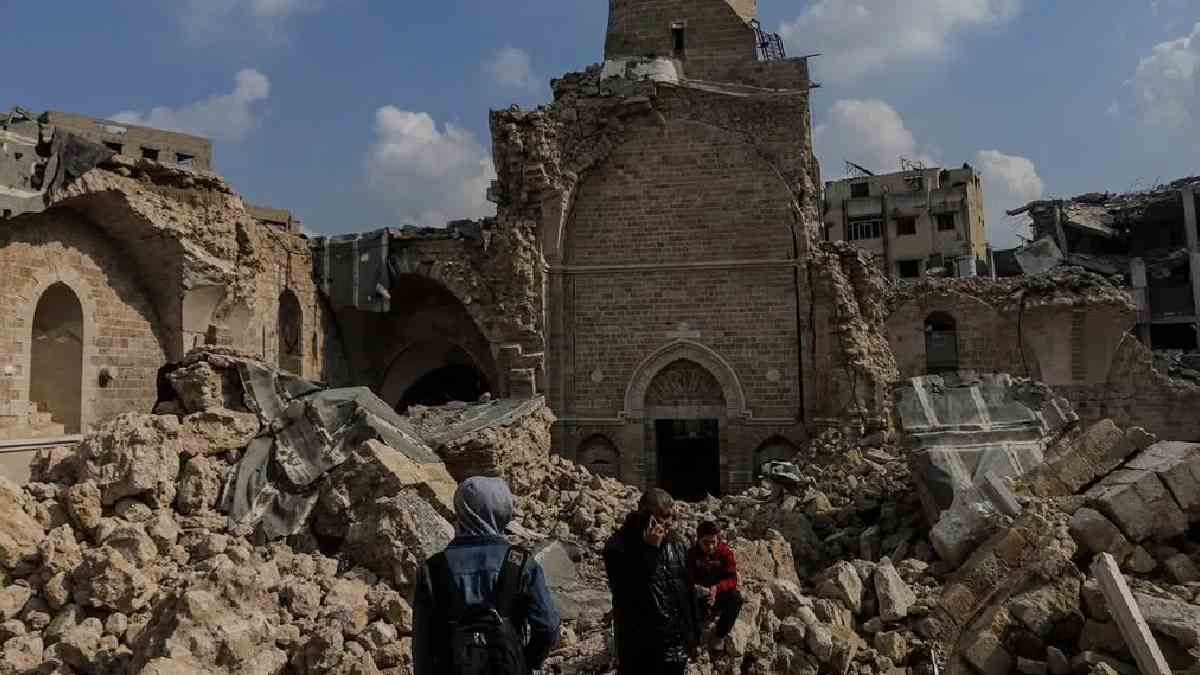
The construction, revealed by recently reviewed satellite imagery, shows Israeli forces are expanding and reinforcing their military presence inside Gaza as the conflict continues with no clear political resolution in sight.
Satellite images show extensive construction
According to satellite images reviewed by several international media organisations, the Israeli military is building an extensive earthen embankment stretching more than 23 kilometres across southern Gaza.
The barrier mostly follows the "yellow line," a demarcation established under a US-backed ceasefire framework and separates areas currently under Israeli military control from the rest of the Gaza Strip.
The embankment consists of large mounds of earth and fortified positions, and so it is supposed to create a clear physical boundary that can support military operations and movement control.
Military Control Expands
The new barrier further bolsters Israel’s control over areas of southern Gaza where military operations have continued in recent months.
Israeli officials have maintained that their military actions are to prevent militant groups from regrouping and launching new attacks. Security officials say fortified positions and controlled zones are needed while military operations are ongoing.
No timeline has been given for how long the barrier will remain in place.
Greater Concern Over Permanent Division
The construction has increased concern among international observers, humanitarian organisations, and regional analysts.
There is a fear that infrastructure built during wartime will eventually become a permanent division of Gaza, changing the geography of the territory and complicating any political settlement.
The uncertainty surrounding Gaza’s post-war governance has only exacerbated these fears. With no firm agreement on how to govern Gaza or on the reconstruction of the territory, there is fear among many that temporary military arrangements may not last.
Humanitarian Challenges Continue
The conflict has already left millions of people in Gaza homeless, short on food, water, medical supplies, and shelter.
The international humanitarian community has repeatedly warned that more military facilities and restrictions on movement will complicate humanitarian efforts and delay the delivery of critical assistance to civilians.
Access for relief agencies remains one of the main challenges as efforts to support displaced families in the enclave continue to provide emergency assistance.
At this point, Gaza's future remains uncertain
The construction of the earthen barrier comes at a time when ceasefires, hostage releases, and Gaza’s future governance remain unresolved.
A variety of regional and international mediators are still engaged in diplomatic efforts, but there are still substantial differences between the parties.
Analysts say that developments on the ground, namely new military infrastructure, will shape future peace negotiations and the political status of Gaza.
The new barrier is not just another symbol of the increasing uncertainty of the region's future. Whether it remains a temporary wartime measure or evolves into a permanent border will most likely depend on the war’s effects on military developments, diplomatic talks, and any political settlement at the end of it.