Japan has made a big leap in quantum technology with a breakthrough in the field that could transform the world’s economy. In a field that is among the most competitive in the world, and it has more than one and a half billion people working in it nowadays and with many countries and technology companies in the world, it is only a matter of time before quantum computers will be a reality for the future to make the first quantum computers to solve the kind of problems that today's supercomputers cannot.
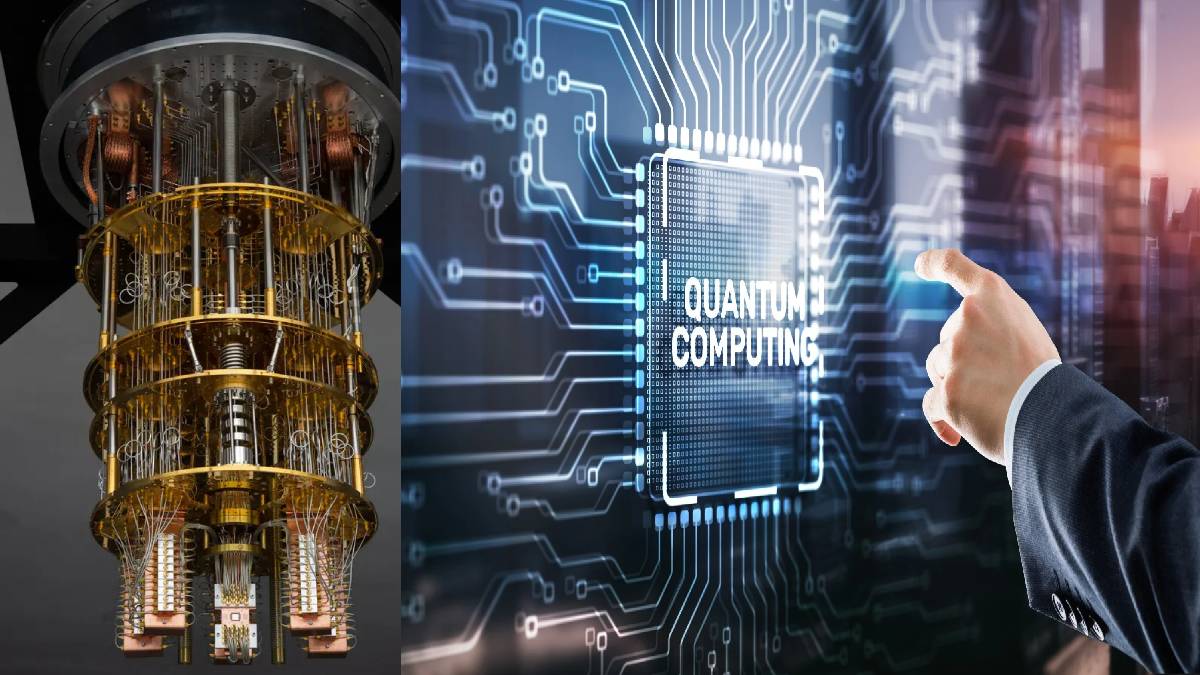
Quantum computing represents a fundamental change from traditional computing. In conventional computers, information is transmitted via binary bits, either 0 or 1. Quantum computers use qubits, which can be in several states at any given time through a quantum superposition. The quantum entanglement and quantum superposition allow quantum computers to do some calculations much faster than conventional machines.
🚨 Japan’s Quantum Breakthrough Could Change Everything!
— SciTech Girl (@scitechgirl) July 15, 2026
Imagine sending information instantly across space without wires, without satellites… just pure quantum magic. Scientists in Japan have made a shocking discovery with a mysterious “W state” — a special kind of quantum… pic.twitter.com/bEgTw0XohZ
Japan's latest breakthrough is in improving the stability, scalability, and reliability of quantum hardware, three of the most important barriers to widespread commercial use. Scientists have developed new ways of decreasing computational error and improving qubit performance, in turn helping us to become more efficient at quantum computing.
One of the most promising applications is artificial intelligence. Training advanced AI models requires enormous computational resources to train them for a long time and typically takes weeks or months on traditional computing infrastructure. The next quantum computers could reduce the training time, optimize machine learning algorithms and solve complex optimization problems much faster and more efficiently in future quantum computers.
Healthcare is another industry that could benefit from quantum computing. Pharmaceutical companies invest years in finding and testing new drugs, because modeling molecular interactions accurately is very hard for classical computers. Quantum computing could allow researchers to model complex molecules much more clearly and speedily, and it’s something that we believe is needed in drug discovery, personalized medicine and treatments for cancer, Alzheimer’s and rare genetic diseases.
Climate science and materials engineering could also see major advances. Quantum simulations could be used to create more efficient batteries, develop cleaner energy technologies, and develop new superconducting materials and carbon capture systems. As such, such advances could be instrumental in the development of sustainable solutions to global warming and climate change problems.
Quantum developments are also being closely watched by the financial industry. The investment industry and banks are based on an array of sophisticated algorithms for portfolio tuning to manage risk, detect fraud, and make the right decisions. Quantum computers could process an ocean of financial data at once and thus make decisions in a faster time frame.
Cybersecurity is a threat and an opportunity. While quantum computing may offer the promise of better encrypted communication as well as improved quantum cryptography, such powerful quantum computers will eventually be able to break many of today’s most basic encryption protocols. This has pushed the field of post-quantum cryptography to a higher level, and security companies are already designing new security protocols that will be able to survive quantum attacks.
Quantum technology investment in Japan is part of a larger national policy to develop advanced manufacturing, semiconductor development, and scientific research. Universities, research institutes, and top technology companies are collaborating to create next-generation quantum processors and expand the quantum ecosystem of the country through education and industrial relations.
The breakthrough also contributes to an increasing international competition in quantum technology. China, the United States, Germany, Canada, and the UK are investing billions in quantum research. Big technology companies are also looking to create larger, more stable quantum processors capable of handling ever more complex computational tasks.
Even as progress is made, we should be careful that real, fault-tolerant quantum computers still remain in development. In the near future, qubit instability is still present, error correction is still needed, and cooling is necessary, such that the development of quantum computers would be difficult. However, every new technology is making a step forward, and the industry is on the way towards commercialization.
It is likely that hybrid computers—the combination of classical supercomputers and quantum processors—will be the first to emerge as organizations tackle specialized problems, while traditional computers handle the day-to-day computing tasks.
Japan's new achievement shows how rapidly quantum technology is evolving. As hardware improves and software ecosystems mature, quantum computing could be one of the most transformative technologies of the 21st century and unlock new opportunities for medicine, artificial intelligence, cybersecurity, energy, manufacturing and scientific discovery.
Even if the commercial adoption is still decades off, Japan’s progress is further proof that the quantum era is more than a distant horizon to be seen- a new reality that can be used in the future to reconfigure computing and unlock new technologies that had previously been considered impossible.