Deep in northeastern India, Meghalaya is called the “Abode of Clouds” and is one of the most beautiful places in the country. Here, fog-covered mountains overlay the sky, cascading waterfalls fall from taller cliffs, and green forests stretch as far as the eye can see. Nature is shown to be a picture in the sky in Meghalaya, and that’s a place for photographers, explorers and nature lovers to enjoy.
The name Meghalaya literally means "the abode of clouds," fitting for a country where clouds often creep low enough to cover villages, forests, and mountain roads. During the monsoon season, the landscape turns into a lush green wonderland, fed by some of the highest rainfall on Earth. Sohra (Cherrapunji) and Mawsynram are famous for producing a great deal of annual rainfall, which is unlike anywhere else.
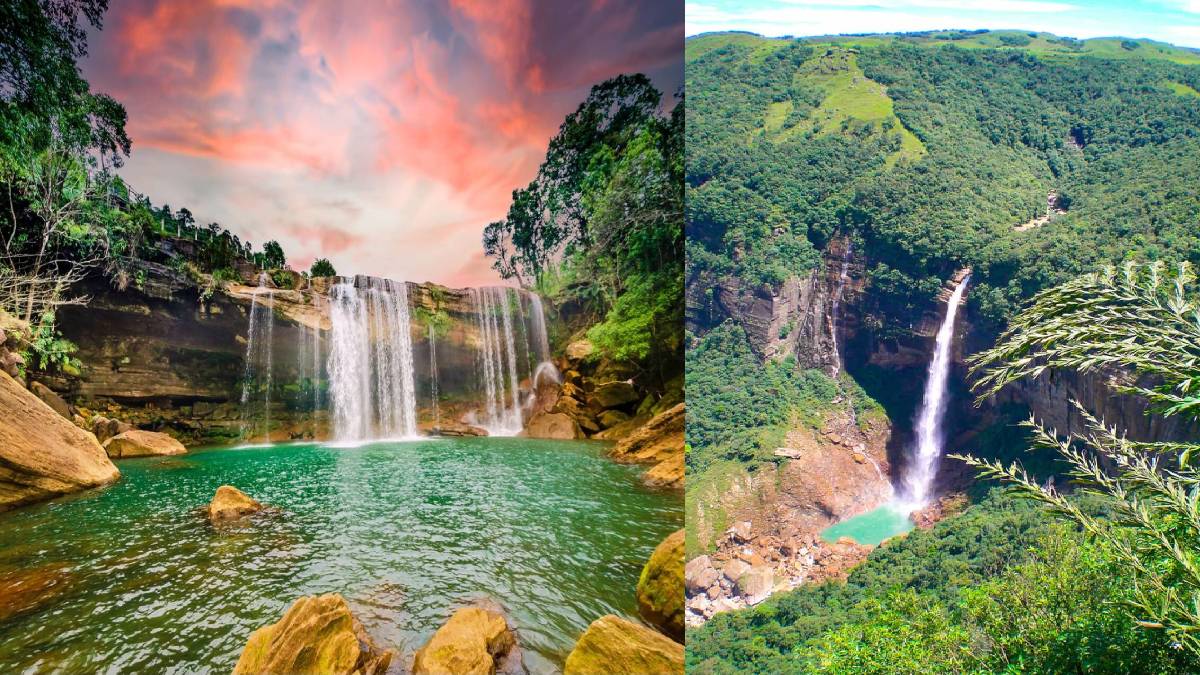
One of Meghalaya's most beautiful waterfalls is one of its waterfalls. Nohkalikai Falls, India’s highest plunge waterfall, is one of the state’s most famous symbols. Water is cascading at a height of 340 m into a crystal-clear turquoise pool surrounded by cliffs and dense forests. When it rains, the waterfalls are a perfect display of beauty. In Meghalaya, the waterfall is a full display of the beauty that attracts people from around the world.
Another remarkable attraction is the Seven Sisters Falls, also known as Nohsngithiang Falls. This brilliant series of seven segmented waterfalls flows down a limestone cliff, especially in the monsoon months, and is one of India’s most photographed natural wonders. Wei Sawdong Falls, Elephant Falls, Krang Suri Falls, and many hidden cascades are also very intriguing.
Meghalaya’s landscapes are not just those of waterfalls but also of rolling hills and cloud forests. When moist air from the Bay of Bengal descends to the Khasi, Jaintia and Garo Hills, it cools and turns into thick blankets of mist. The result is an ethereal world where mountain peaks appear to fall away into clouds and provide beautiful panoramic views during the year.

The biodiversity of the state is just as great. Dense subtropical forests are home to rare orchids, medicinal plants, colorful butterflies, exotic birds, and diverse wildlife. Nature reserves such as Nokrek Biosphere Reserve and Balpakram National Park protect many endangered species while preserving Meghalaya’s rich ecological heritage.
The living root bridges that are so special to Meghalaya are one of Meghalaya’s most unique attractions. These are built by the Khasi and Jaintia tribes over the centuries, and these awesome natural bridges are produced where the aerial roots of rubber fig trees are dragged across streams so that they are strong enough to support human weight. Some bridges are over a century old and are growing stronger with age, and are the perfect mix of indigenous knowledge and sustainable engineering.
Adventure tourism has been flourishing in Meghalaya in recent years. Visitors can walk through dense forests, visit limestone caves such as Mawsmai Cave and Siju Cave, kayak on the crystal-clear waters of Umngot River in Dawki, zip-line across valleys, and hike to hidden waterfalls deep in the hills.
The state also enjoys a vibrant native culture. Khasi, Garo, and Jaintia have been around long enough to have rich traditions in place, and these have also been the source of the very vibrant festivals, music, as well as the matrilineal social systems that continue to fascinate visitors. Local cuisine, handcrafted products, and warm hospitality are part of the trip.
For all its natural beauty, Meghalaya’s environmental challenges are environmental-related: deforestation, climate change, plastic pollution and tourism pressure. Conservation efforts by local communities, environmental organizations and the government are aimed at protecting the state’s forests, rivers and waterfalls and promoting sustainable tourism.
We tell responsible travelers to minimize waste, care for local customs, respect local customs, avoid disturbing wildlife and support eco-friendly tourism initiatives. These are the best practices, and they will allow the protection of Meghalaya’s natural gems and the environment for future generations.
Every season brings a different aspect to Meghalaya. During the monsoon, the sound of booming waterfalls fills the region. Winter is a comfortable and nice time to go for a hike in the mountains, and spring has the forests filled with lush green and flowers. But no matter the season, it is the State that will always attract people and make it beautiful when they visit: the natural beauty of the place is what the land looks like to them.
Meghalaya is not just a destination for travel; it is a living creation where clouds float to touch the earth, waterfalls make the mountains, and ancient traditions live harmoniously alongside nature. Its beautiful landscapes are an example of India’s ecological bounty and the need to maintain these natural landscapes for generations to come. Whether you want adventure, peace, or inspiration, Meghalaya is the perfect place to visit, and one of the most beautiful places to visit in the world.