A Japanese Air Self-Defense Force (JASDF) F-15J fighter jet made an emergency landing at Naha Airport in Okinawa yesterday after landing gear failure during touchdown. The incident triggered an immediate response from airport emergency services and fire trucks as white smoke and what appeared to be flames or sparks were seen from the aircraft.
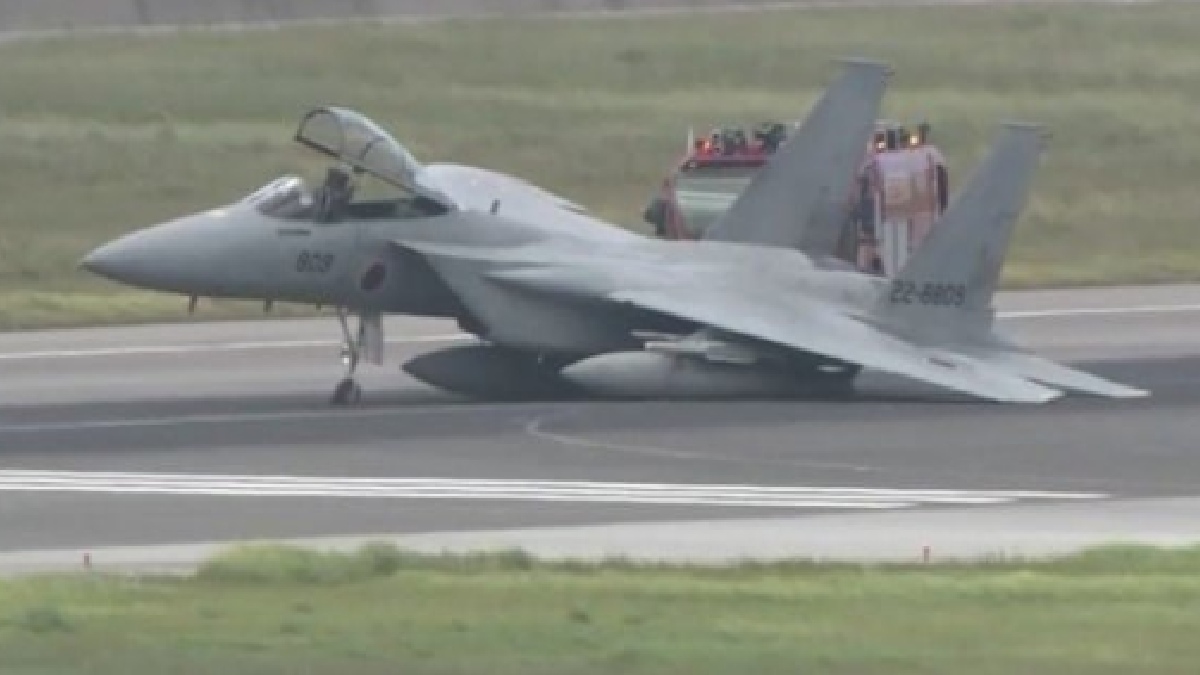
The fighter was operated by the 304th Tactical Fighter Squadron based at Naha Air Base. The aircraft did fail the left main landing gear when it landed at Naha Airport, but the pilot was able to get the aircraft down and safely left the fighter.
No injuries were reported. The safe evacuation of the pilot prevented what could have been a more serious accident, particularly with the smoke and visible flames or sparks around the aircraft after touchdown.
Emergency crews rushed to the scene rapidly after the plane landed. Fire trucks were used for safety and emergency personnel surrounded the fighter to keep the fighter from blowing up and ensure there was no more fire or risk. The response was a testimony to the need for emergency services immediately when military aircraft travel from or land at an airport with civilian traffic.
The incident also impacted airport operations. One runway had been closed following the emergency landing but commercial aviation could still use the other runway. The relatively low level of disruption made the incident not completely shut down Naha Airport, a key transportation hub for Okinawa.
The F-15J is Japan’s domestic version of the F-15 fighter aircraft, and is a major part of the country’s air-defense fleet. Aircraft of this kind frequently fly training, patrol and interception missions from bases all over Japan. Naha Air Base in Okinawa is particularly strategic because it is located in Japan’s southwest.
Japan’s southwestern airspace has seen a high level of military activity in recent years. The country’s fighter units are commonly involved in air-defense and scramble missions, responding to aircraft that are coming or going in close proximity to Japan’s territory.
As such, the emergency landing takes place in the context of sustained military operations around Okinawa and the East China Sea region. Naha is one of the key bases from which Japan monitors and reacts to developments in the surrounding airspace. The landing gear failure itself is not connected to any particular military mission but is a testament to the tough environment Japanese fighter units are operating in.
Mechanical problems in landing gear can be serious in the final stages of a flight. The landing gear is crucial to absorb the impact of touchdown and keep an aircraft stable as it slows on the runway. A failure in one of the main landing gear assemblies can make landings very challenging and pilots need to control the aircraft’s speed, alignment and touchdown very carefully.
The visible smoke and possible sparks after landing triggered the quick dispatch of firefighting personnel. These are standard responses to a landing accident or mechanical failure in any aircraft, especially if fuel, engines and other hazardous components are involved.
Investigators will look into what caused the landing gear failure. In addition to that, the aircraft’s mechanical systems, maintenance data, maintenance history and circumstances of the landing will likely be studied.
The incident also serves as a reminder for the JASDF that aircraft maintenance and operational safety are very important. Fighter aircraft fly in a high-pressure environment and reliability of key components is of utmost importance for the safety of pilots and continuous readiness of fighter aircraft.
The incident ended without injuries and the commercial flights at Naha Airport went on as scheduled, despite the runway closure. Details on the cause of the landing gear failure of the F-15J would be revealed as the investigation continues.