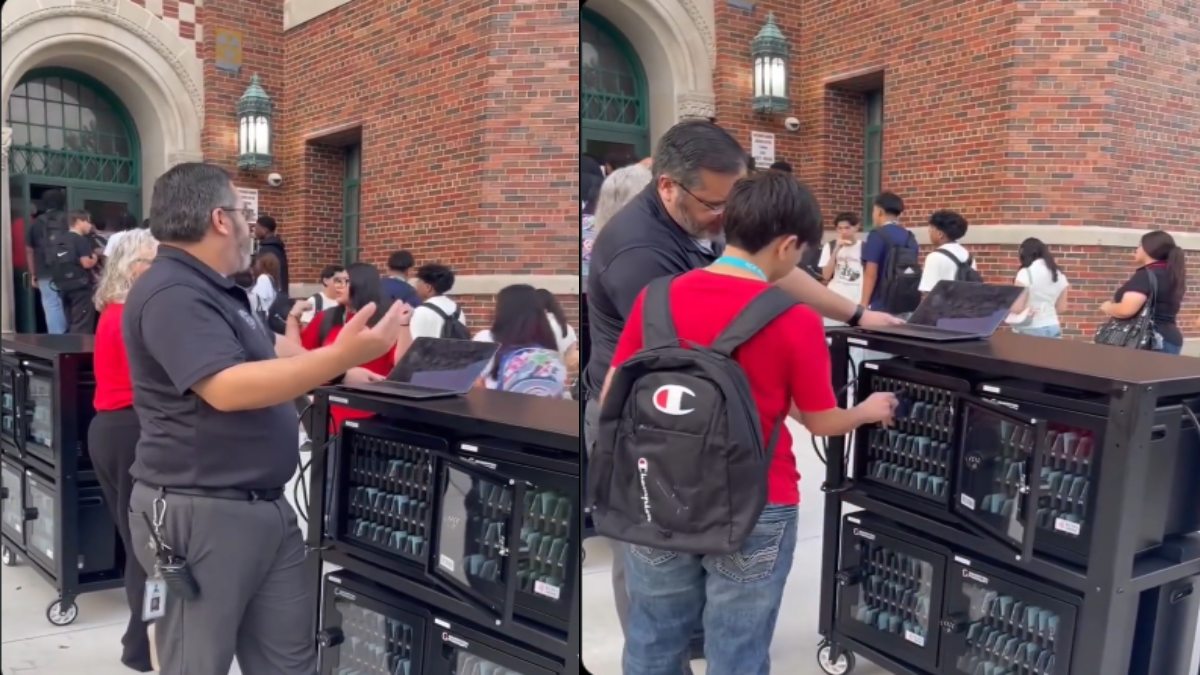
The state is going more strict on cellphone use in Kansas and schools are putting kids in phone lockers for the entire day; some schools are telling students to store their devices in special phone lockers in school for the entirety of the day.
The move is part of the state’s push to curb cellphone usage in schools and is part of a national debate over the extent to which smartphones should be allowed in students’ hands during the school day.
One of the most visible examples is from the Kansas City, Kansas school district, which has since then spent more than $150,000 on new cellphone lockers. Under the system, students are required to secure their phones before the first school bell and keep them locked away until the last bell rings, the report said. The school-day restriction applies to lunchtime and passing periods as well.
The policy is a radical shift from schools where students could safely store their phones in their pockets, backpacks or lockers and use them during breaks. Schools want phones to be physically secure so students won’t get distracted by notifications, social media, games, messages and all the other smartphone activities.
Cellphones are very much integrated in the lives of young people. Smartphones can provide communication, entertainment, educational resources and access to information in seconds.
At the same time, educators and school administrators increasingly have voiced concerns about the impact on concentration and classroom participation and student interactions that smartphone use can have on school learning and learning.
The Kansas approach is part of the larger movement across the country to establish more robust rules around cellphone use by students. States and school districts have tried different policies from cellphone-free class time for students to phones not to be allowed in schools throughout the day.
That locker system takes the concept one step further because students are not just being asked to stop using their phones. Their devices are physically secured for a certain period. This can make enforcement easier because teachers and administrators do not have to repeatedly check whether a student is secretly using a device.
The $150,000 investment by the Kansas City, Kansas school district also showcases the financial commitment that some education systems are willing to make to enforce cellphone restrictions. Rather than solely applying punishment, dedicated storage systems provide schools with a physical way to implement their policies.
But the change for students can be a bit of a transition. Young people use phones to communicate with family members, check the dates of their work, listen to music and access digital services all the time. So to be separated from a smartphone for hours can feel unusual for students used to being behind the wheel frequently.
One of the main arguments for cellphone restrictions is that fewer distractions will help students concentrate on lessons. Notifications and the temptation to check social media can disrupt attention even if students don’t use their devices. Removing the phone from immediate reach may reduce that distraction.
Teachers might also be able to keep classroom engagement (e.g., when students are not able to use smartphones) when they can’t get their phones to take calls during the classes. And instead of monitoring whether students are texting or browsing during lessons, educators can concentrate on making their students feel engaged and involved and getting to know them.
The policy could also affect student social interaction. And school cellphone restrictions encourage students to talk with one another face to face when phones are unavailable. Lunch and passing periods, which have been times where informal conversations could take place in a more casual way, can become less and less dependent on screens.
But cellphone restrictions can also raise practical questions. There are parents and children communicating during the school day. Schools implementing very strict phone policies need to make sure families have the ability to contact students in emergencies and that students can contact parents when necessary.
So school administrators have to balance restrictions with legitimate communication needs. Emergency procedures, medical requirements and other exceptional circumstances may need specific provisions. Clear rules can help students and parents know when phone access is permitted and how exceptional situations will be handled.
But enforcement is just one side of the problem. Even with dedicated lockers, schools need to establish procedures for students who refuse to adhere to the policy. Administrators will need to decide for sure what happens and how to do it in different situations.
The cost of cellphone storage systems may also be a consideration for school districts. While Kansas City, Kansas has $150,000 invested in its new lockers, other districts may have different budgets and may need to look elsewhere for solutions.
Some schools use pouches or other secure storage systems; others require phones to be switched off in backpacks. The effectiveness of each method is affected by the school’s environment, student population and how effective it is to ensure the policy is enforced consistently.
The Kansas story will be watched by educators and policymakers elsewhere. As more states and school districts debate cellphone restrictions across the country, educators and school districts in the wake of cellphone bans are wondering how to implement rules in practical ways without creating unnecessary friction between students and parents and schools.
We would need to look at the relationship between technology and children and the children’s interests. Smartphones are great. But too much or poorly timed use can interfere with activities that take sustained attention. Schools are increasingly perceived as places where students can stay focused and not be drowned out by digital notifications.
Technology in itself is still important in modern education. Schools use computers, tablets, online learning platforms and digital resources for lessons and assignments. And the challenge is not to remove technology but to identify when personal technology is needed for learning, and when it becomes a distraction.
The cellphone restrictions in Kansas illustrate this difference. Students may use technology provided or authorised by schools for educational purposes while smartphones are restricted during the school day.
For parents, it may provide reassurance that students are spending more classroom time on academics rather than on their own phones. Others may be worried about being unable to talk to their kids every time they want. And the policy should be very well-liked, and very much with schools and families communicating.
Students may initially resist such restrictions but eventually adapt to the new routine. When devices are kept secure from the first bell to the last, checking phones is something outside school hours rather than all day.
The Kansas approach also reflects the growing recognition among educators that classroom management has changed drastically because of smartphones. Teachers do not only deal with traditional classroom distractions. Social media, messaging applications, short-form videos and online games can compete for students’ attention at virtually any moment.
By physically removing the devices, schools are attempting to create a clearer boundary between school time and personal digital life. If such policies are to produce measurable improvements in academic performance, student behaviour or wellbeing, they will need to be carefully assessed over time. Attendance, disciplinary incidents, classroom engagement and feedback from teachers, students and parents will need to be reviewed to determine whether the investment is working to achieve its intended objectives.
Kansas schools are requiring students to lock their phones in dedicated phone lockers after the state banned cellphones at school.
— Collin Rugg (@CollinRugg) August 13, 2026
Kansas City, Kansas school district spent $150,000 on the new cell phone lockers.
Students are required to keep the phones locked up from before… pic.twitter.com/yRs4q6JXNg
The Kansas cellphone-locker program is more than a new storage system. It is part of a wider shift in how schools are looking at smartphones and student attention in general. With dedicated lockers costing the Kansas City, Kansas school district $150,000, it is the kind of policy that demonstrates the extent to which some education systems are willing to go to limit distractions in education.
As cellphone restrictions continue to spread throughout the U.S., Kansas could be a good example for schools in making it easier for them to have an all-day phone-free environment. And the overarching goal is the same: give students more time to learn, interact with peers and enjoy school life.
The success of the policy will ultimately depend on how well schools manage discipline, communication, student needs and educational objectives. For now the requirement to lock phones away from the first bell through the last bell is a big change for students in participating Kansas schools.