Almost a thousand years ago, people watched in great wonder at the brightest celestial events ever recorded in history. In 1054 AD, astronomers witnessed a bright "new star" that suddenly appeared in the sky, glowing so brightly that it was visible even at night for weeks. But what the ancient skywatchers witnessed was not a new star but a massive one exploding on its death; a supernova for science researchers more than 1,000 years later to get to know.
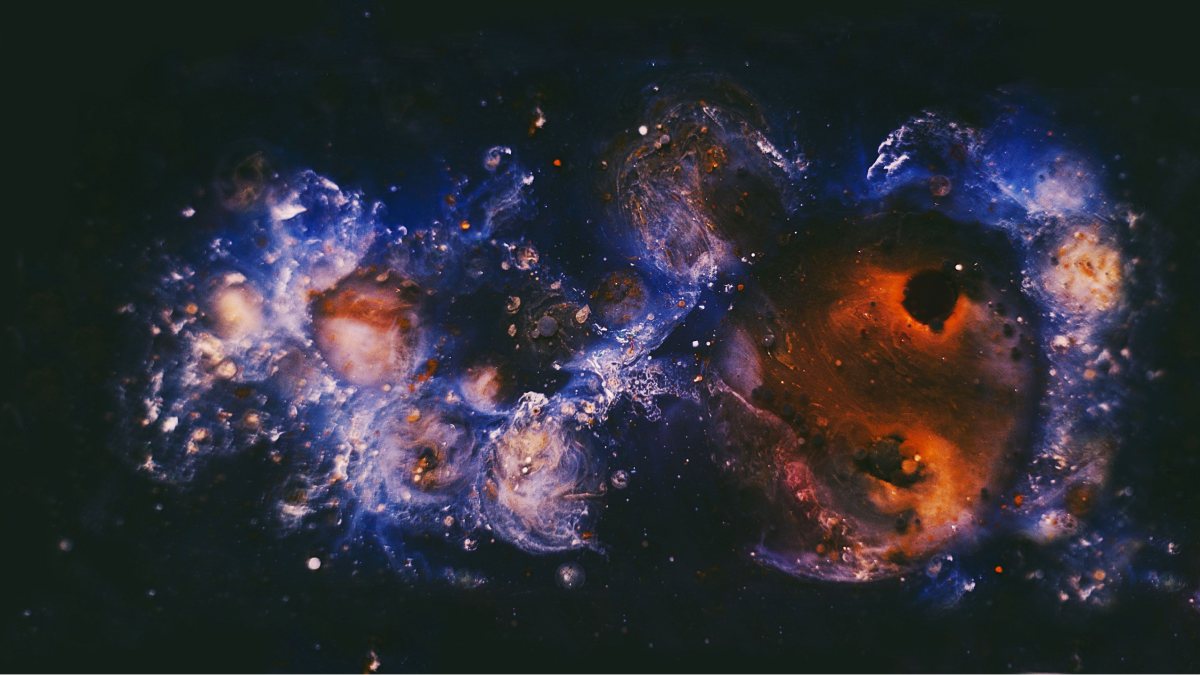
Now NASA's Hubble Space Telescope has returned to the famous Crab Nebula and scientists have a unique opportunity to see how the cosmic explosion has evolved in the last 25 years. The latest images from 1999 and 2000 also confirm that the nebula is still expanding rapidly in space and a fresh look at one of the most studied objects in the Universe.
A Thousand-Year-Old Explosion Still in Motion
The Crab Nebula, located about 6,500 light-years from Earth in the Taurus region, is a glowing remnant of Supernova SN 1054. The violent stellar explosion was discovered by Chinese, Japanese, Arab, and other astronomers in 1054 and they said it was a bright new object that outshone almost all other stars in the night sky.
The showy cloud of gas and dust of supernova remnants is still one of the best-known supernova remnants in astronomy today.
NASA's latest observations show that the nebula has continued to expand for the last quarter century. Its colorful filaments of gas are racing outward at an astonishing 3.4 million miles per hour (around 5.5 million kilometers per hour).
So, these movements are too slow to notice for a few years but Hubble’s long life has made it possible for scientists to observe measurable changes over decades.
Hubble's Long-Term Vision
Since the launch of the Hubble Space Telescope in 1990, we have changed our thinking of the universe. The fact that it has the ability to observe the same objects over decades of observations of the same celestial objects repeatedly and see how they change over time allows astronomers to study how the universe changes.
The Crab Nebula observations have been published in The Astrophysical Journal, where the authors show how comparing images taken 25 years apart can provide useful information about the expansion of the supernova remnant.
"We tend to think of the sky as being unchanging, immutable. But with the longevity of the Hubble Space Telescope, even an object like the Crab Nebula is revealed to be in motion, still expanding from the explosion nearly a millennium ago," said astronomer William Blair of Johns Hopkins University, who led the new observations.
Blair also praised Hubble's Wide Field Camera 3's improved imaging capabilities, but he also said the images today reveal much more complex structures than those taken two decades ago.
A Partnership Between Hubble and Webb
The Hubble observations are just the first step in understanding how the Crab Nebula is evolving, they said.
The data will be combined with recent infrared observations from NASA's James Webb Space Telescope and astronomers will be able to build one of the most detailed models ever made of the supernova remnant.
While Hubble is able to see visible light, Webb can see infrared wavelengths where cooler gas, dust, and other material are hidden and not visible to optical telescopes. The two observatories combine to give us complementary views of one of the most spectacular stellar remnants in our universe.
Why Does the Crab Nebula Matter?
The Crab Nebula is more than a pretty cloud of glowing gas. It’s a natural laboratory in which we should also be able to explore the aftermath of stellar explosions, heavy elements, and neutron stars' evolution.
At the center of the nebula is the Crab Pulsar, a rapidly spinning neutron star that is left behind after the original supernova. The pulsar rotates about 30 times every second; the light from it gives the nebula its spectacular glow.
Because the original explosion was observed and documented more than a thousand years ago, astronomers have a very rare opportunity to compare historical records to modern observations.
A Story Still Being Written
The Hubble images are a reminder that things are not static. Things that happen centuries ago are evolving in front of our eyes, but on a time scale that would take decades of observation to get a grasp of.
The Crab Nebula is still one of the best examples of how long-term space missions like Hubble still result in cutting-edge science for us today. Almost 1,000 years after it was first detected by the ancient astronomers, it is still a bright explosion, and its expanding world still offers new insights into the life and death of stars.
As Hubble and the James Webb Space Telescope continue to work together, scientists hope to learn even more about this great cosmic landmark—showing that some of the stories written among the stars are still being written.