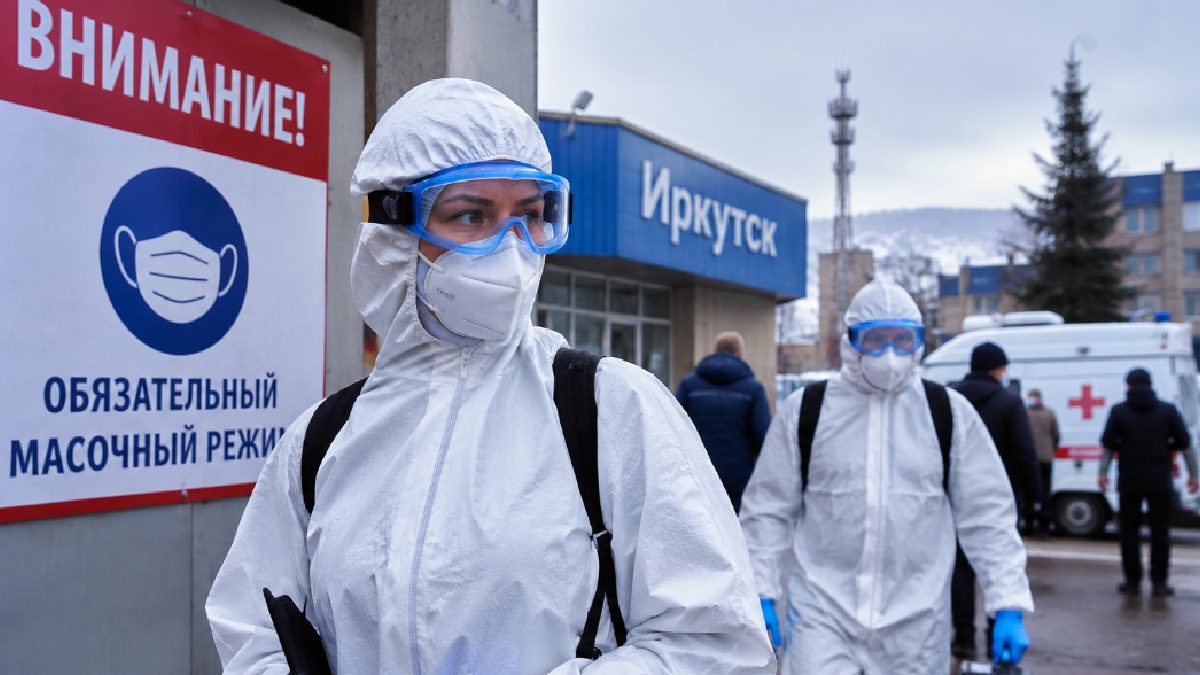
A suspected pneumonic plague case in Russia’s Siberian region of Irkutsk has triggered a rash of measures, like wearing masks and medical observation and quarantine procedures. The situation has attracted international attention after a 28-year-old laboratory worker was found dead of pneumonia.
But Russian health authorities have tried to reassure the public that so far plague or another very serious infection has not been detected.
The deceased woman, identified in reports as Darya Shipilova, worked at the Irkutsk Anti-Plague Research Institute of Siberia and the Far East. She was admitted to hospital last Tuesday after she developed pneumonia and died two days later.
The reports have suggested that she may have been exposed to pneumonic plague accidentally when a test tube broke at the laboratory.
Russia’s federal health watchdog, Rospotrebnadzor, has declared pneumonia of unknown origin as the cause of death. That's caused some uncertainty because the woman was in a workplace and the institute has done research on dangerous pathogens.
Almost 200 people who may have had contact with the deceased worker or could otherwise have been exposed are said to be under medical observation. The officials said close contacts are being monitored and regularly tested in laboratory tests so as to prevent the spread of any infectious disease.
Precautionary Measures In Siberia
Several precautionary measures have been taken in Shelekhov and Irkutsk after the death. The Irkutsk Aluminium Plant in Shelekhov ordered its 2,154 employees to wear face masks. Plant director Artyom Fominykh announced on Telegram it was a precaution because of uncertainty and rumours around the area.
The plant later played down the significance of the mask requirement, describing it as a routine measure related to seasonal respiratory illnesses and urging people not to panic. Health officials also instructed fuel stations and retail businesses along the R-258 highway linking Shelekhov and Irkutsk to put on protective masks, it said.
Protective equipment, including masks and gloves, was also distributed to schools and kindergartens in the Shelekhov district, one report said. And another report said that a community cleanup event planned for early October was postponed for worry about large crowds.
In the nearby city of Baykalsk, the authorities also advised residents to temporarily avoid unnecessary travel to Shelekhov and nearby settlements. This warning was later removed online, and public speculation grew.
There have been reports of increased containment measures for hospitals in the Irkutsk region. Five hospitals, including municipal hospitals, a children’s hospital and a maternity hospital, were reportedly put under stricter control. Later reports indicated that the hospitals were operating as usual.
Russia wants to calm the public’s fears, it said.
Despite the precautions taken, Russian authorities have repeatedly denied suggestions that a confirmed plague outbreak is in progress. The laboratory analysis of samples from the deceased worker did not find microorganisms associated with her professional activities, said Rospotrebnadzor.
The agency and a special commission at the research institute concluded that there had been no emergency or security breach. Authorities also said no other employees at the institute had reported symptoms of infectious disease during the last 10 days.
The situation was further complicated by comments from Alexei Tsydenov, head of neighbouring Buryatia. He initially said the laboratory worker had died from plague but later qualified his statement by saying it was only a possibility.
According to Rospotrebnadzor, close contacts of the deceased are still under medical observation and undergoing daily laboratory examinations. Of those who were monitored, Covid-19 and two cases of rhinovirus were found but no other cases associated with the suspected plague were found.
Irkutsk Governor Igor Kobzev said family members and close relatives who had been put under quarantine could potentially be released the following week, depending on their condition and test results.
The Kremlin has referred questions about the case to Rospotrebnadzor, the country’s federal public health and consumer protection agency.
International Monitoring
The findings have also attracted greater attention outside Russia. The United States and the UK have said they are closely monitoring developments and neighbouring countries including Kazakhstan, Kyrgyzstan and Mongolia have reportedly intensified sanitary surveillance at their borders.
Pneumonic plague is a serious form of plague that affects the lungs and can potentially be life threatening if not treated properly. But the current situation in Irkutsk is not established as a pneumonic plague outbreak. Russian investigators are still searching for the reason to which the laboratory worker died and are monitoring the people who might have been exposed.
But so far, all this precautionary action and official reassurance has left Siberia in an unusual position. The government is monitoring potential contacts and minimizing risk, but there is no definitive evidence of a wider plague outbreak. Laboratory testing as well as medical monitoring will be required to determine whether the case was linked to plague or another cause of severe pneumonia.