Three people were killed and 36 others injured in attacks on two airports in Saudi Arabia on Monday as fighting between Yemen’s Houthi rebels and Saudi-backed government forces intensified, marking a dramatic surge in the long-running Yemen conflict.
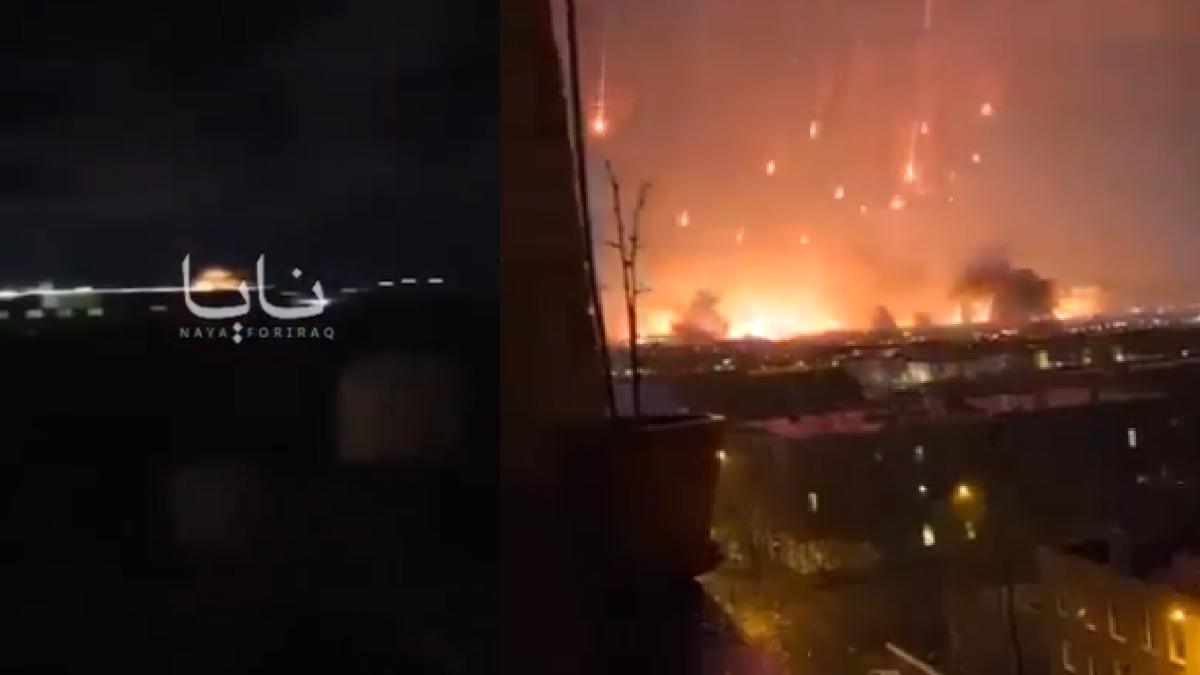
The attacks targeted King Khalid International Airport in Riyadh and Abha airport. Saudi civil aviation authorities said one person was killed and eight injured in the attack at King Khalid International Airport, while two people were killed and 28 wounded at Abha airport. Foreign nationals were among the casualties, Saudi authorities said.
The Iran-backed Houthi movement claimed responsibility for the attacks, saying it had targeted the Saudi capital with drones and missiles.
Saudi authorities said they intercepted a ballistic missile north of Riyadh and destroyed the launch platform in Yemen’s capital, Sanaa.
One Saudi-led coalition backing Yemen’s internationally recognised government threatened retaliation. The coalition said in a statement that it had carried out strikes on more than 80 Houthi military sites in the provinces of Saada, Hodeidah, Jawf and Marib.
The strikes continued operations by Saudi-backed forces to capture Houthi positions in western Yemen.
🚨🇸🇦 SAUDI ARABIA — Three killed, 36 injured in attacks on Abha and Riyadh airports Saudi Arabia’s General Authority of Civil Aviation announced on October 7, 2026, that three people were killed in two attacks on airport facilities in the kingdom on October 6 and 7. At Abha International Airport: ➡️ Two female residents—one Moroccan and one Algerian—were killed. ➡️ 28 people were injured. At King Khalid International Airport in Riyadh: ➡️ A Sudanese man residing in the kingdom was killed. ➡️ Eight people were injured: five Saudis, two Egyptians, and one Pakistani. The combined toll: three dead and 36 injured, with injuries ranging from minor to severe. The injured were hospitalized. Property damage was also reported. The names of those killed were not disclosed in the reports reviewed. ⚠️ Attribution requires careful wording. Saudi authorities confirmed the attacks and the casualty figures without identifying the perpetrators in this statement. The Houthis claimed responsibility for operations against both airports, saying they used drones against Riyadh and ballistic missiles and drones against Abha. Which weapons caused the casualties remains to be established. Why does this development matter? The war in Yemen is directly exposing Saudi civilian infrastructure to attacks, reaching as far as the capital’s airport. The Moroccan, Algerian, and Sudanese fatalities also underscore how foreign residents are suffering the consequences of this escalation. Strategically, these strikes could increase the political and economic costs of the Riyadh-backed offensive: passenger safety, air traffic, and infrastructure protection all become pressure points. They also heighten the risk of retaliatory strikes in Yemen. At this stage, however, the casualty figures alone do not establish that either airport faces a prolonged closure. Sources: https://t.co/9CyCwQrRYv https://t.co/Q5gqoWBMN4 #SaudiArabia #Yemen #Houthis #Riyadh #Abha
— Seals Consulting (@Consulting4502) October 7, 2026
The escalation has also spread to Yemen's aviation infrastructure. Houthi forces stormed Aden International Airport with ballistic missiles and explosive-laden drones.
One missile landed in the middle of the runway just before a flight from Cairo was about to arrive. The airport serves areas of Yemen outside Houthi control.
The fighting in the Bab el-Mandeb Strait is now the most important maritime artery in the world. The waterway links the Red Sea and the Gulf of Aden which is crucial to international shipping and energy shipping.
🛑 مطار خالد في #الرياض وسط #السعودية تحول الى كومة انقاض بعد استهدافه بصاروخ #الحوثي الشديد الانفجار نوع قات-600 #المخا_تعز #ذوباب_اليمن https://t.co/yxJQ7w1bek
— بشير (@basheeriraqi20) October 5, 2026
Longer-term disruption of the waterway is likely to cause higher risks for shipping and global energy trade.
The latest fighting is the culmination of a period of relative calm in Yemen. The Houthis seized Yemen’s capital, Sanaa, in 2014, and Saudi Arabia intervened the following year in support of the internationally recognised government. The conflict has resulted in one of the world’s worst humanitarian crises.
🚨 BREAKING NOW: ⚠️🚀💥💥 🇸🇦⚔️🇵🇸 - Massive explosions echo across the capital of #Riyadh as emergency sirens wail through the night! 🚀 Flight operations at King Khalid International Airport are instantly ground to a halt amid surging security alerts. Ground-shaking blasts rock the Saudi heartland as an unprecedented escalation unfolds live! 🔥📉🇸🇦
— 𝐀𝐌𝐄𝐑𝐈𝐂𝐀𝐍 𝐏𝐎𝐖𝐄𝐑 (@AmericanpowerUs) October 7, 2026
The renewed fighting is already worsening humanitarian conditions. More than 200,000 people have been displaced since the latest round of fighting started, according to the International Organization for Migration.
NEW: Video emerges of the Ansar Allah (Houthi) strike on the Aden Airport. Initial reports indicate that several Saudi officers and Syrian mercenaries were killed in the strikes. We have seen Ansar Allah conduct successful strikes on airports in Riyadh, Jeddah, Jizan, Najran, Abha, and Aden, along with Saudi Aramco facilities across Saudi Arabia in the past week. Saudi is getting HAMMERED.
— Brett Erickson (@BrettErickson28) October 6, 2026
Humanitarian agencies have also warned of rising food insecurity, malnutrition and disease risks as access to medical care gets harder.
The airport attacks thus represent more than another exchange of strikes between the two sides. They show how quickly the conflict can spread beyond Yemen’s borders and threaten civilian infrastructure in Saudi Arabia.
With fighting continuing around strategic territory in the Red Sea, fears are growing that the latest escalation may further destabilise the wider Middle East.