A discarded SpaceX rocket stage is expected to collide with the Moon on August 5, leaving a fresh crater on the Moon and giving scientists a chance to study the effects of high-speed impacts in space.
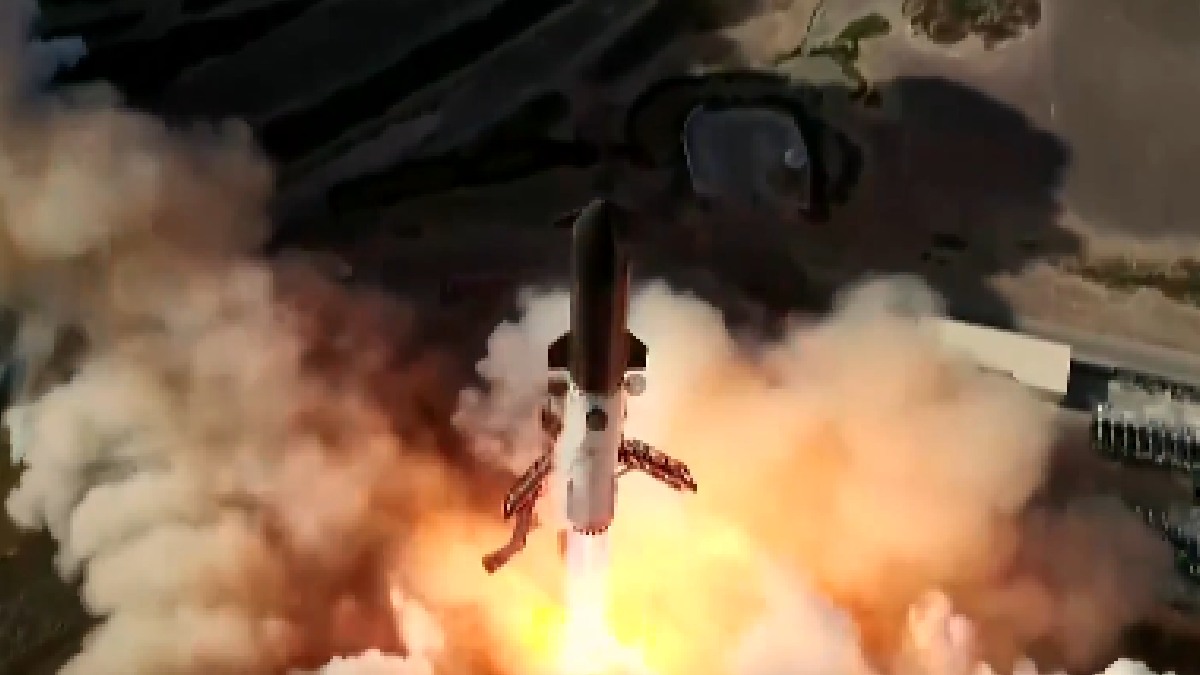
According to astronomers, the rocket will strike the Moon at 12:05 pm IST, close to the Einstein Crater, a large impact basin on the far side of the Moon. Although it won’t be visible from Earth, scientists are interested in the effect of the rocket hitting the Moon and will be able to observe the aftermath using lunar orbiters and other telescopes.
The object has been tracked for years by astronomer Bill Gray, creator of Project Pluto software, who was among the first to calculate its trajectory and predict the collision. His observations have helped scientists estimate the timing and location of the impact.
A 4,000 kg SpaceX Rocket Stage Is About to Crash Into the Moon. On August 5, 2026, a Falcon 9 upper stage launched by SpaceX in January 2025 is expected to collide with the Moon after more than a year drifting through space. The rocket successfully delivered two private lunar… pic.twitter.com/z5y2FTLNRk
— Stellarix (@Stellarixorine) July 28, 2026
Size and speed of the Rocket
The rocket stage is almost 40 feet (about 12 meters) in length and 13 feet (around 4 meters) in width. It weighs about 4,000 kilograms, making it a large piece of space hardware despite being hollow.
As it travels at approximately 8,750 km/h, the rocket will hit the lunar surface with immense force. While the Moon has no atmosphere to slow it down, the empty interior of the rocket is going to break apart on impact: it should not be intact.
What will happen after the Impact
Scientists believe that the collision will excavate a crater 65 to 100 feet (20 to 30 meters) wide. The impact is also expected to eject large amounts of lunar regolith the dust and rocky material on the Moon’s surface.
The debris would be thrown several kilometres above the lunar surface, creating a temporary plume before settling back into the Moon. It is hoped that such a natural experiment will shed light on the Moon's geology and the behavior of impact ejecta.
Why the Collision Matters
Although no danger to Earth is anticipated, the event is scientifically significant. Researchers could study craters from the impact of controlled or accidental impacts and how lunar soil reacts during a collision.
It also exposes the growing space debris problem in space as discarded rocket stages and satellites continue to accumulate in space. Tracking these objects is now more important in order to avoid accidental collisions and to ensure long-term space sustainability.
If the predictions are correct, the August 5 impact will add another fresh scar to the Moon's surface and scientists will have a unique opportunity to study a high-speed collision in deep space.