Sri Lankan Navy has arrested nine Indian fishermen for allegedly crossing the International Maritime Boundary Line (IMBL) and fishing in Sri Lankan territorial waters, once again adding fuel to the long-standing dispute between the two neighbouring countries over fishing rights in the Palk Bay.
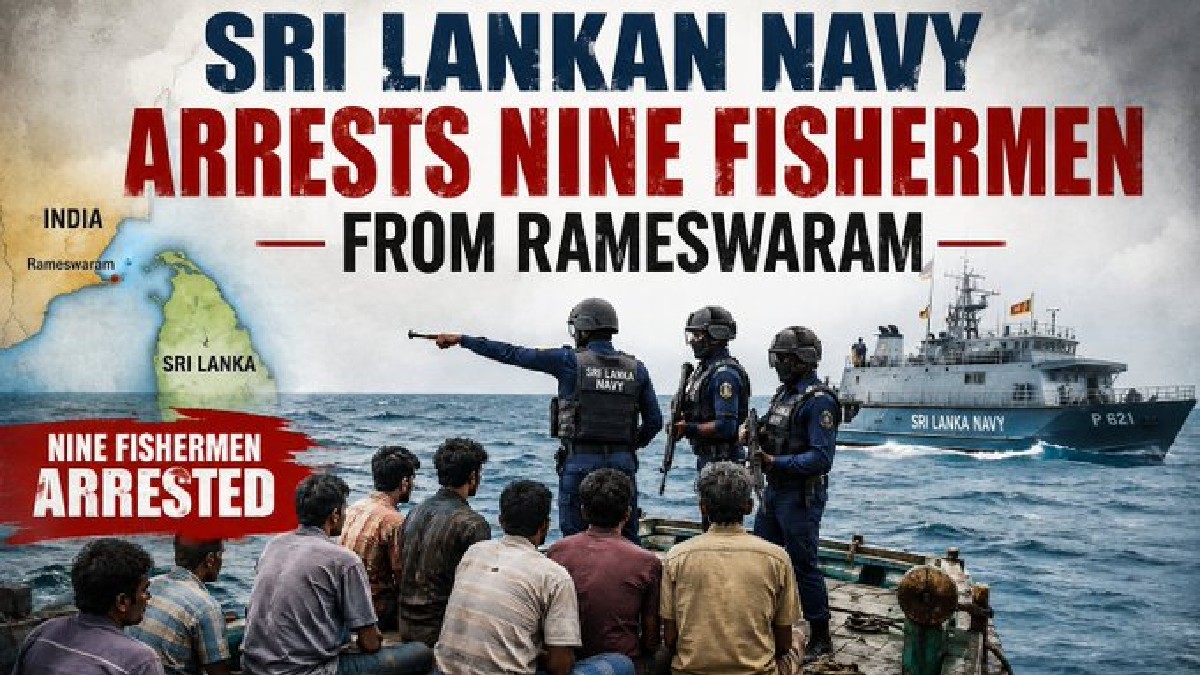
They were detained by the Sri Lankan Navy during a routine patrol, they said. Their fishing boat was also seized and taken to a Sri Lankan port for further legal proceedings.
The fishermen, believed to be from Tamil Nadu, will be brought to the local court, where Sri Lankan maritime laws will determine what they do next.
Those fishing associations in Tamil Nadu have raised questions about the recurring arrests as well, having repeatedly urged the Indian and Sri Lankan governments to resolve the problem. The Palk Bay separates the two countries and is a narrow stretch of water rich in marine resources, a valuable fishing area for coastal communities on both sides.
For decades, Indian fishermen have contended that diminishing fish stocks and traditional fishing practices force them to reach close to or across the sea. Sri Lanka, however, has strict border control with regard to its territorial waters, because of concerns that illegal fishing and the environmental impact of bottom trawling are not good for the environment.

The issue has become a recurrent diplomatic challenge. Indian fishermen are arrested every year by Sri Lankan authorities for alleged maritime boundary violations. Many are ultimately released after diplomatic intervention, but boats are often seized for weeks and their livelihoods suffer.
Given the recent arrests, Indian officials will take up the matter through diplomatic channels. The Indian High Commission in Colombo is often closely involved in the consular access and early release of fishermen.
Leaders from Tamil Nadu have also reiterated their demand for stronger measures to protect Indian fishermen’s safety and called for regular bilateral talks to address the welfare and livelihood of coastal communities. Fishermen’s unions remain committed to a sustainable agreement to ensure safe fishing and the protection of the fishermen while respecting the maritime boundaries.
Experts say GPS-based navigation systems, maritime safety training on maritime boundaries, awareness campaigns on maritime boundaries, and alternative fishing methods could reduce such incidents. They also highlight that joint conservation efforts in the ecologically sensitive Palk Bay region are crucial.
Several talks between India and Sri Lanka have gone on for years, and this is not a solution. More cooperation, better communication between maritime agencies, and policies that balance marine conservation with the economic needs of thousands of fishing families are the solution for these repeated arrests.
The latest detention is another reminder of the entangled maritime issues that India and Sri Lanka share and the need for a permanent solution that is mutually beneficial to both countries as diplomatic efforts continue.