US Senator Steve Daines has been championing strategic ties between India and the United States, calling India a “trusted ally and friend” while drawing a sharp contrast with China. At the US-India Strategic Partnership Forum (USISPF) Leadership Summit, the Republican senator from Montana said the relationship between Washington and New Delhi is crucial not only for the two countries but also for global stability and economic growth.
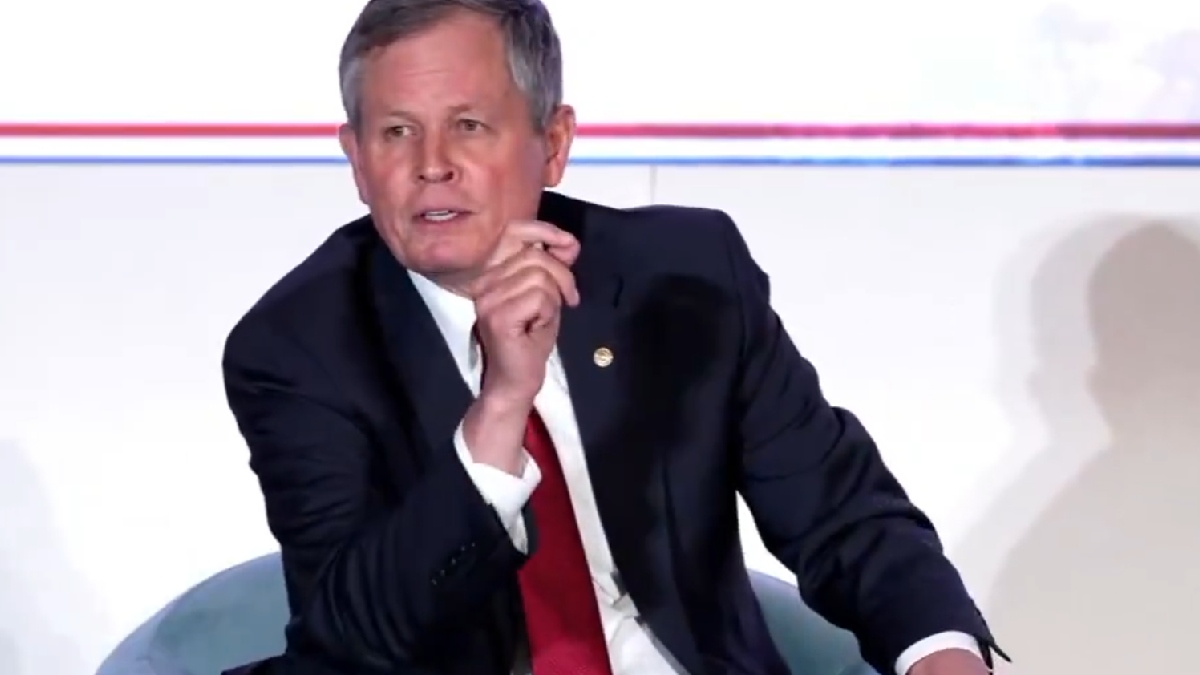
Daines detailed a personal story that demonstrated the difference in trust he has in India and China.
"When I travel to China, my phone doesn't go to Beijing with me. It stays in Washington. But when I travel to India, this phone goes with me. That’s a good example of a very trusted ally and friend. I can’t do that in China," Daines said.
US SENATOR :
— News Algebra (@NewsAlgebraIND) July 1, 2026
"When I travel to China, I leave my phone in Washington instead of taking it with me.
But when I travel to India, I bring this phone with me. That shows how much I trust India. I can't do the same in China"pic.twitter.com/Dq36gC9Sp7
The senator said the United States should be more strategic about developing a partnership with India in order to tackle the geopolitical challenges of China becoming stronger and stronger. Daines said closer cooperation between the world’s two biggest democracies is required to keep the world balanced and to foster innovation.
"The relationship that we have between the United States and India is not only important for our two countries. I think it’s important for the world too,” he said.
Daines, in spite of stressing the need to counter China's growing influence, said the United States should not completely sever ties with Beijing. Instead, he advocated for a policy of “de-risking” by reducing dependence on China while continuing diplomatic and economic engagement.
"But we can’t disengage from China. We need to engage, we need to de-risk," he said, reflecting a growing consensus among US policymakers who wish to diversify supply chains and minimize strategic vulnerabilities.
Daines also highlighted the convergence of the technological and educational strengths of India and the United States, saying that the partnership would be the only realistic option to match China's scale in science and innovation.
According to the senator, China produces about 3.5 million science and technology graduates each year; India produces 2 to 2.5 million STEM graduates and the United States contributes another one million annually. He said this combined talent pool gives India and the US a unique opportunity to compete globally.
"In other words, there is only one country in the world that can match the size and scale of China’s innovation ecosystem, and it’s India working with the United States," Daines said.
He added that although Washington often discusses the challenges presented by China, it has yet to develop a long-term strategy for working with like-minded countries to build stronger partnerships.
"We talk a lot here in Washington about the challenge with China, but not really have thought through a strategy for what relationships we need to strengthen as that counterbalance," he said.
Daines was awarded the USISPF Public Service Award as a result of his contributions towards strengthening India-US bilateral relations. The award is in recognition of his consistent efforts to advance closer cooperation in areas such as trade, technology, innovation, and strategic security.
His comments are coming at a time when India and the United States are growing collaboration in defence, semiconductor manufacturing, critical technologies, artificial intelligence, and supply chain resilience. As geopolitical tensions in the Indo-Pacific continue to evolve, Daines’ comments reinforce the increasing consensus in Washington that India will remain one of America's most important strategic partners in the years to come.