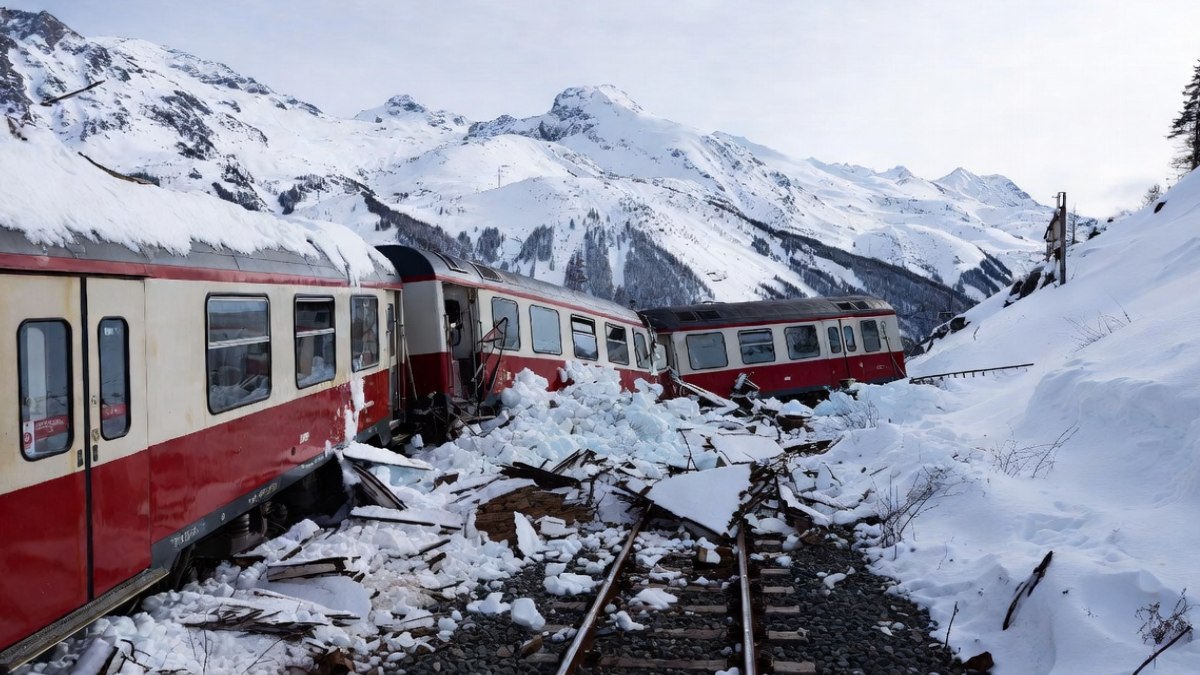
What went from a normal morning commute to the picturesque Lötschberg corridor was a possible life-threatening sequence of circumstances with the local transportation system going down until Monday around 7:00 AM. A RegioExpress train taking off from Spiez at 6:12 AM to Brig on Bern-Lötschberg-Simplon (BLS) was suddenly thrust into a giant avalanche. The snow accelerated towards the Stockgraben section between Goppenstein and Hohtenn where it forced many of the carriages off the tracks.
The Rescue Effort and Casualties
Initial reports on the number of passengers varied, with police saying there were around 29 to 30 people on board, but the local media reported back that numbers could be as high as 80.
- Injuries: Local police in the canton of Valais confirmed that at least five people were injured in the collision. One victim was airlifted to a hospital in Sion with more serious injuries, the other four were treated on-site.
- Evacuation: By noon, eight mountain rescuers, two ambulances and a rescue helicopter had helped pull dozens of passengers out of the snow-filled area.
- Coordination: Two fire and rescue trains were dispatched to the Stockgraben tunnel to clear wreckage and stabilize the remaining carriages.
Disruption of the Lötschberg Corridor
The derailment has significantly disrupted one of Switzerland's most essential north-south rail paths. The RE1 line that links Bern to Brig, in particular, has long been hit hardest.
- Suspensions: Rail traffic from Goppenstein to Brig has been totally stopped.
- Timeline: Although there were preliminary estimates that service might resume by late afternoon, the federal train operator CFF and BLS have since extended the closure. Services along the Frutigen–Brig route will continue to be suspended until 4:00 AM at least on Tuesday, February 17.
Dangerous Conditions in the Alps
The derailment follows nearly a week of extreme weather in the Swiss Alps. Just five days ago, the WSL Institute for Snow and Avalanche Research (SLF) raised the avalanche danger level to Level 4 (High), the second-highest on the scale. Recent heavy snow and a strong wind have produced unstable “wind-drifted” snow layers, making the slopes above the railway lines very vulnerable to spontaneous avalanches.
“The train hit an especially vulnerable location near the entrance of the tunnel,” a BLS news release said. “Safety checks on the slope environment are ongoing to ensure recovery teams’ safety.”
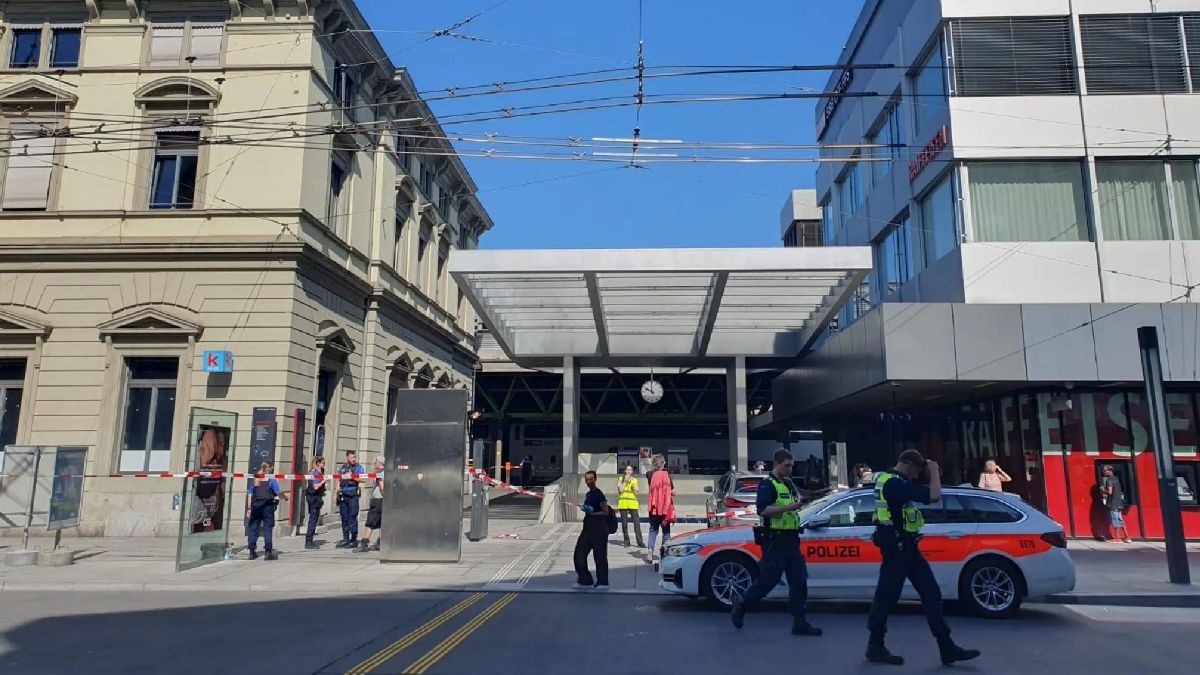
This event has brought the ongoing struggle of the alpine infrastructure on the one hand and nature elements on the other side facing an ominous reminder of the current avalanche danger in the area.