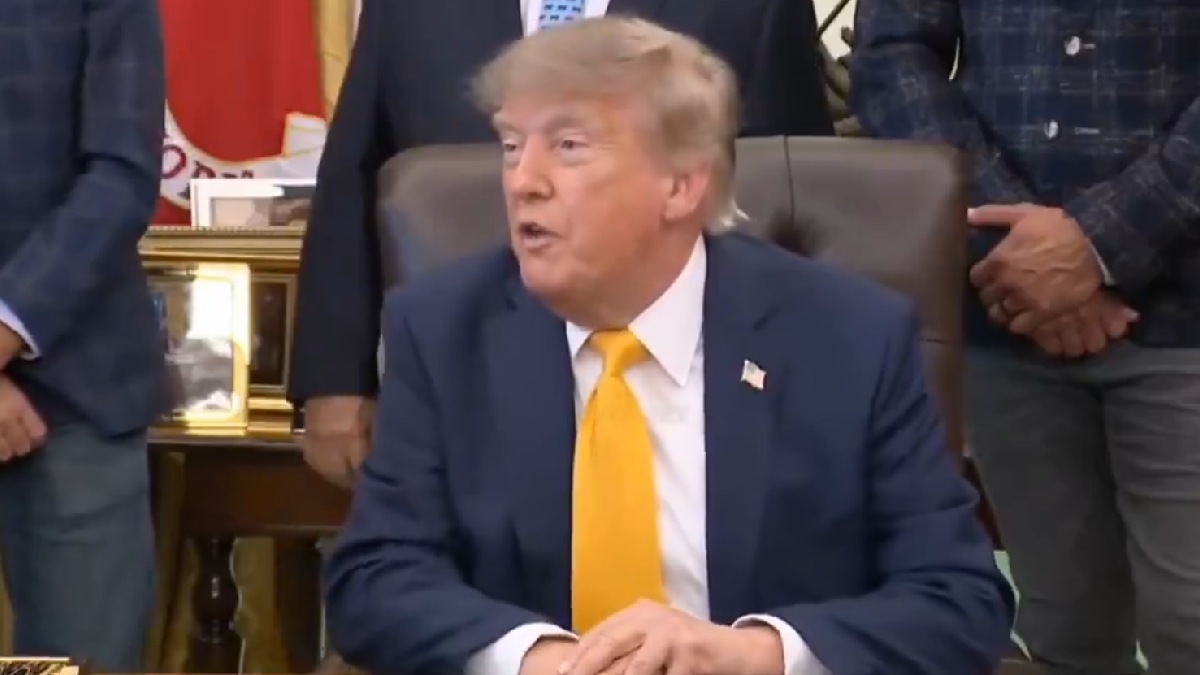
Trump has again raised the prospect of attacking an underground facility in Iran’s most secretive, heavily fortified underground facility, Pickaxe Mountain. Trump voiced his administration’s plans recently to strike that facility as he discussed with reporters in the Oval Office: If Washington senses there is suspicious activity coming from the facility, he said, the U.S. would strike “very soon” in order to build a more direct line of communication with the Iranian government if it could detect such activity.
These comments have revived a debate on the strategic significance of the highly protected mountain complex. Questions exist about what Iran might be hiding in its depths and if even the most advanced military capabilities of the U.S. would be able to obliterate or incapacitate such a deeply buried facility. We must do more than just talk about Iran’s nuclear ambitions; we need to talk about Iran’s nuclear ambitions and the global security implications.
Trump made clear in defense of ongoing military operations against Iran that the overall goal was to prevent Tehran from building a nuclear weapon. He said that American intelligence had the capacity to monitor Iran and he said that the U.S. was monitoring everything about the situation across Iran, including the mysterious Pickaxe Mountain. “We know everybody that’s moving at Pickaxe; we know everybody that’s moving everywhere across Iran,” Trump said in an open-ended speech that would make clear the U.S. would respond strongly in case it sees any real threats from the site.
These comments are coming on the heels of an increasing number of reported U.S. strikes against Iranian military infrastructure. U.S. Central Command said those strikes were directed at facilities associated with Iran’s Islamic Revolutionary Guard Corps such as air-defense systems, radar facilities, maritime facilities, mine-laying operations, and communication infrastructure. However, the complexities of Pickaxe Mountain present a far more complex military challenge than any other targets previously targeted.
So, what is Pickaxe Mountain?
Kuh-e Kolang Gaz La, or Pickaxe Mountain in Farsi, is located in Iran’s Isfahan province and is located very close to the Natanz uranium-enrichment facility. Because of its position, it is a subject of public interest, especially since it is associated with one of the most critical sites linked to Iran’s nuclear program.
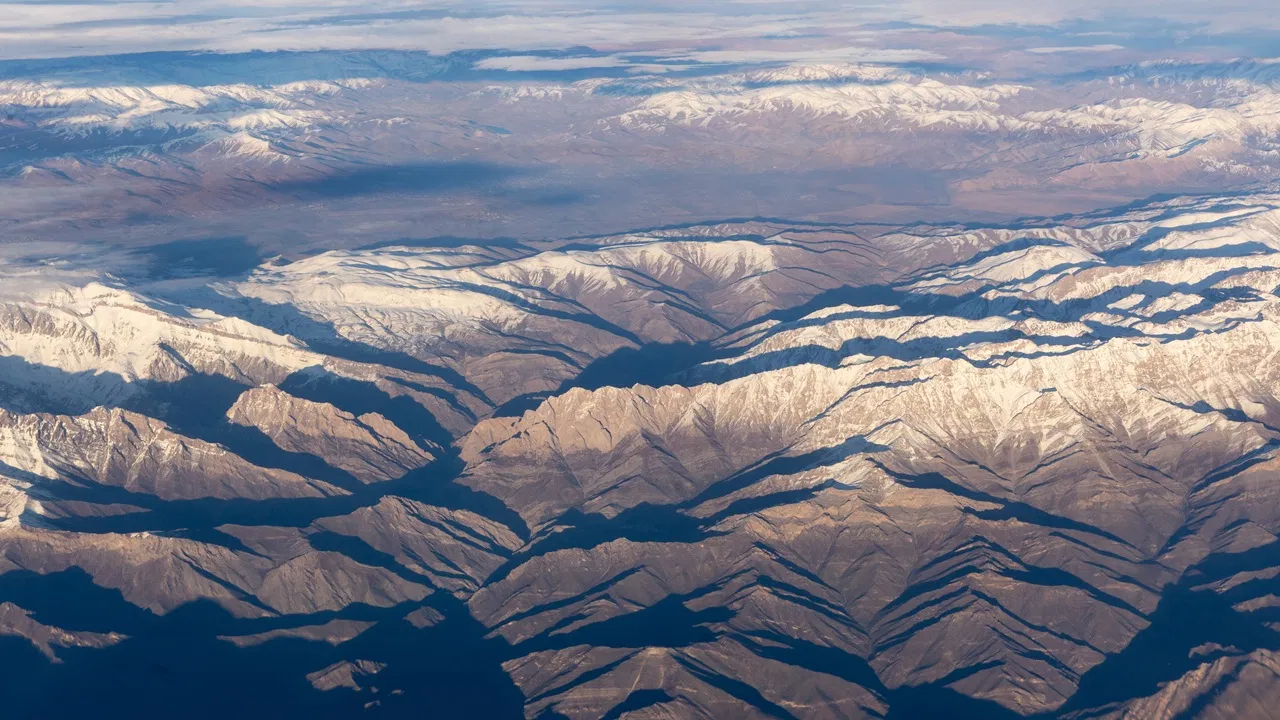
Iran has been notably reluctant to provide public information about the facility; inspectors from the International Atomic Energy Agency have not been able to penetrate this underground complex. Therefore, most of the information is gathered from satellite images, intelligence reports, and independent research.
Construction of Pickaxe Mountain has been ongoing since 2020, and development efforts seem to be booming after an explosion damaged an advanced centrifuge assembly workshop at Natanz. Iran announced plans for a much larger and more heavily fortified underground facility, which has only increased fears about its potential capabilities.
Some experts have suggested that parts of the Pickaxe Mountain complex may lie as deep as 80 to 100 meters below the surface. If the assessments are correct, the facility would be buried in the rock and earth so deep that it would be impossible to inflict damage with conventional strikes. And the depth and fortifications, therefore, have created a big question about the success of any military effort to destroy such a site.
🇺🇸⚔️🇮🇷 Trump threatens to strike Pickaxe Mountain, near Iran's Natanz nuclear complex. pic.twitter.com/bq3bLi6QhL
— brane mijatovic (@brane_mija64426) September 4, 2026
What could Iran be housing inside Pickaxe Mountain?
The precise purpose of Pickaxe Mountain is shrouded in mystery. Some reports state the Iranian authorities might have relocated sensitive nuclear-related equipment such as centrifuges or parts in this mountain. But there is little official information about what equipment or materials are currently stored in the mountain.
Trump himself has acknowledged the uncertainty surrounding the reports of centrifuges possibly being moved to Pickaxe Mountain. He said Iran “may have” transferred equipment there, but he also emphasized that the U.S. does not have definitive confirmation of the contents of the facility.
Some experts are convinced that Pickaxe Mountain could be a key element in Iran’s ability to reconstruct or develop advanced centrifuge technologies. Its proximity to Natanz and its heavily fortified underground construction underscore its strategic significance in relation to Iran’s nuclear ambitions.
In contrast, Iran has always insisted that its nuclear program is intended to be peaceful in nature and has consistently denied any desire to develop nuclear weapons.
Will the United States ever successfully destroy Pickaxe Mountain?
If Pickaxe Mountain were to be targeted, deep penetration weapons would almost certainly need to be used, which are nicknamed bunker-busters. These are meant to penetrate various layers of soil, concrete, or rock before detonating underground.
However, the depth of the facility is a major obstacle to complete destruction. Another problem is that nothing is publicly available about the underground structure of the complex. It is not exactly clear where the tunnels, chambers, equipment, and access routes are located in the mountain.
Military strategists might focus on disabling the facility rather than obliterating every underground chamber. A strike would focus on tunnel entrances, access roads, ventilation systems, power supplies, or other critical infrastructural elements.
Even if the deepest reaches of the subterranean system are still present, damage to these systems would just make the facility operable only very difficult.
The success of such an operation would also be difficult to assess. Surface-level destruction visible above ground would not necessarily give a good indication of the degree of damage sustained underground.
What would happen if Pickaxe Mountain were to be bombed?
The consequences of a big military strike would largely depend on the type of weapons deployed, the frequency of strikes, and the types of materials stored in the underground facility.
Repeated deep penetration attacks would fracture rock layers and destabilize the geological structures surrounding the mountain. Underground explosions would likely trigger tremors and rockfalls or landslides near tunnel entrances that would threaten the integrity of the facility.
Moreover, sections of the mountain above underground chambers could collapse if the surrounding geological structure were severely compromised.
Environmental contamination is another big threat. While there is no public evidence that Pickaxe Mountain has a nuclear reactor, a nuclear strike would not necessarily cause a massive radioactive disaster like that in nuclear accidents. However, if uranium compounds or other hazardous materials were stored in the facility, an explosion could disperse contaminated dust or debris into the surrounding environment. And pulverized rock, silica and concrete could also be released into the atmosphere. Damage to fuel storage, electrical systems or chemical equipment could lead to more environmental and health risks.
Concerns of groundwater contamination also must be taken into account. Major underground damage would destroy the flow of natural water and any hazardous materials released below the surface could adversely affect nearby soil and water sources.
Ultimately the scale of these risks would depend on information that is largely unknown— the true nature of the facility and the contents housed within it.
Would a military strike effectively neutralize the nuclear threat?
Although a successful military operation could potentially disable or severely damage Pickaxe Mountain, obliterating a single facility would not necessarily eradicate larger concerns related to Iran’s nuclear capabilities.
Nuclear knowledge, technical expertise and industrial capacity are not easily extinguished by a single military strike. Iran may be able to rebuild damaged infrastructure or relocate sensitive activities to other locations.
Trump has argued that the larger U.S. military campaign has already achieved its primary objective to prevent Iran from acquiring a nuclear weapon. “They’re not going to have a nuclear weapon,” he said while defending the ongoing campaign.
The future of Pickaxe Mountain is uncertain, but it is a very secretive location with strategic significance and therefore one of Iran’s most closely watched sites.
Even in the context of the ongoing tension between Washington and Tehran, Trump’s warning has catapulted this facility into the eyes of the international public. The United States is not certain that it will attack Pickaxe Mountain and if it does attack it would have the biggest military, environmental and geopolitical impact. But the stakes are very high and the world is watching with bated breath as this happens.