A video circulating widely on social media has triggered strong reactions after users alleged that Pakistani security forces placed the body of a young girl on the front of an armored vehicle and paraded it through the streets following a security operation in Khyber Pakhtunkhwa (KPK).
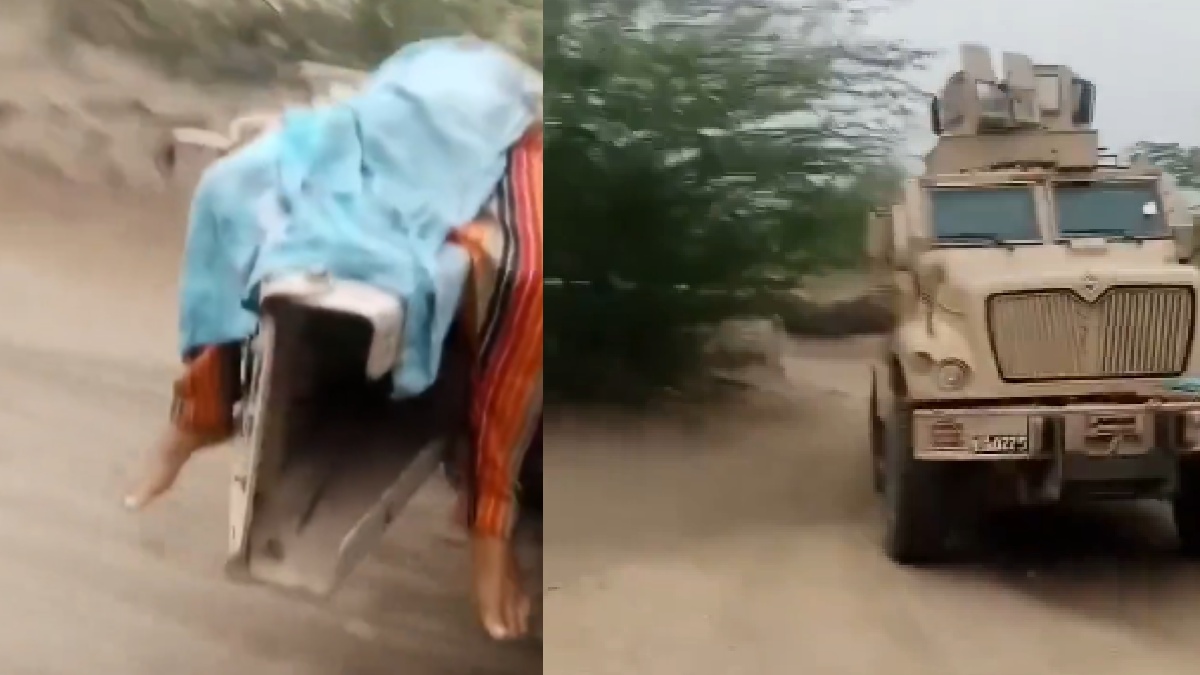
The footage has spread rapidly on platforms including X (formerly Twitter) and has drawn accusations from people who say the Pakistan Army is violating human rights in conflict-affected areas such as Khyber Pakhtunkhwa and Balochistan. Inhumane and unjustified, people said, as the victim was an innocent civilian.
Pak forces shot an innocent girl, then placed her body on the front of an armored vehicle as if she were some kind of trophy or prize.
— برهان الدین | Burhan uddin (@burhan_uddin_0) July 29, 2026
They paraded her through the streets.
This is what NaPak Army has been doing in KPK And Balochistan for many years.https://t.co/MnJy27fne7
Despite the video and the claims made, it has not been verified. At this point, there is no official proof of the identity of the victim, the circumstances of the incident, or whether the events happened as described in the viral posts.
The video has also stirred online debate, and activists, journalists, and political commentators have called for a balanced investigation of the allegations.
Any allegations of violations of civilians' rights and any allegations of abuse against civilians should be taken seriously by independent authorities, human rights groups have said.
Khyber Pakhtunkhwa and its neighbor Balochistan have been at the center of conflict for years between militants, separatists, and the security forces. They have been accused of enforced disappearances, civilian casualties, and excessive use of force with respect to terrorism in the past years.
Pakistan has said that their military is only to fight terrorism and protect citizens, as well as keep national security, and nobody is saying that it is targeting innocent civilians.
As graphic videos are circulated in conflict situations, it is hard for journalists and fact-checkers to figure out the exact location, date, and context of such footage.
Social media users should be careful about sharing emotionally charged content when the source or authenticity cannot be confirmed, experts say. Viral videos can shape public opinion very quickly, but they also miss important context or contain false information.
If established, allegations of the mistreatment of civilians or deceased individuals would be extremely serious under international humanitarian and human rights law. Such incidents, if proven, would probably trigger calls for accountability and transparent investigations.
The viral footage is currently an unverified claim until more information is available from authorities, independent investigators, and credible media organizations will review the incident to get to the truth.