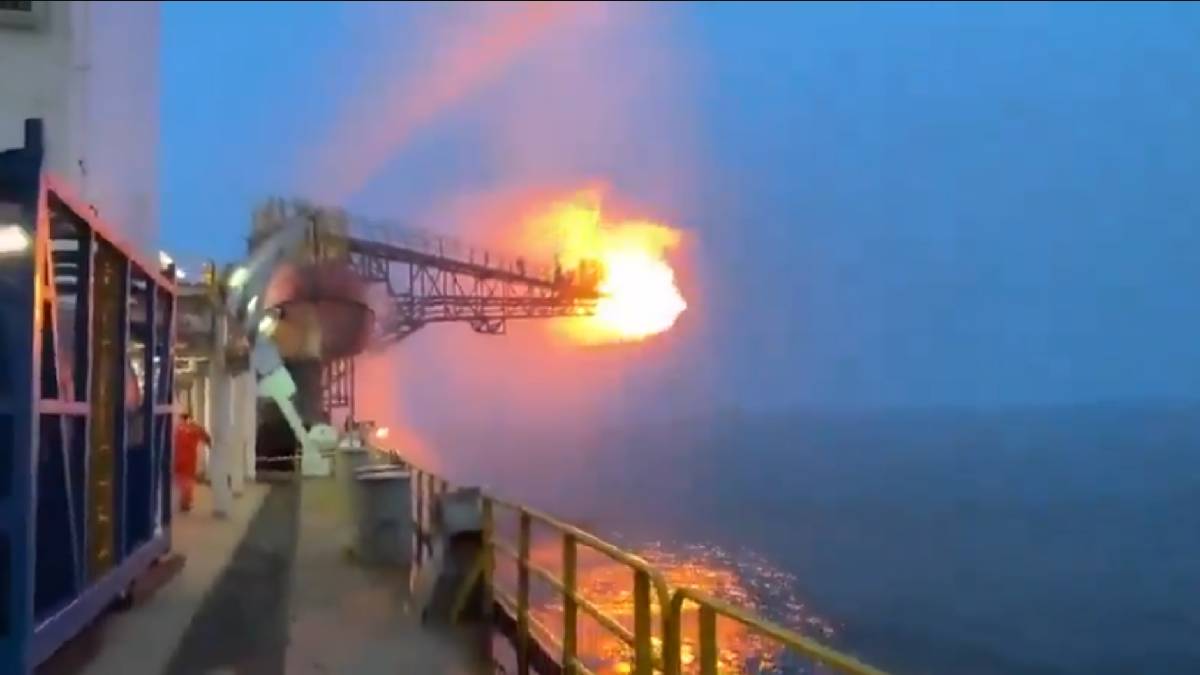
The United States unveiled sanctions today on Iran’s cryptocurrency network in response to recent attacks on the Strait of Hormuz, one of the world’s most strategically important maritime chokepoints. In addition to the sanctions, Washington also announced a reward of up to $15 million for information that would help to disrupt financial networks of Iran’s Islamic Revolutionary Guard Corps (IRGC) and escalate economic pressure on Tehran.
According to U.S. officials, the sanctions are aimed at individuals, companies and digital asset platforms that are believed to be facilitating financial transactions that benefit Iranian entities that are already under international restrictions. American authorities have alleged that cryptocurrency channels are increasingly being used to bypass sanctions, move funds from one place to another and support Iran’s military and security apparatus.
Those measures are coming as tension in the Persian Gulf has been rising following the recent attacks that disrupted maritime activity around the Strait of Hormuz. The narrow waterway is the key route for global energy supplies, and a vast majority of world oil and liquefied natural gas shipments pass through it every day. Any disturbance in the region would have severe repercussions for the international energy markets and global trade.
The U.S. Treasury Department said the sanctions are meant to cut off financial lifelines to the organisations that it says are involved in destabilising activities across the Middle East. The officials stressed that digital currencies and blockchain-based transactions have become increasingly prevalent methods for sanctioned actors to skirt the traditional banking controls. Washington is trying to curb the flow of money for military operations and regional proxy activities.
In parallel, the US Department of State announced a reward of up to $15 million under its Rewards for Justice program for information leading to the identification, disruption, or dismantling of financial mechanisms connected with the IRGC. American officials said it was part of a broader effort to expose funding channels, facilitators, and intermediaries that allegedly help sustain the organisation’s operations.
The IRGC remains one of the most powerful institutions in Iran, holding a dominant role in military, political and economic affairs. The organisation has long been subject to U.S. sanctions, and Washington has accused it of backing militant groups and of activities that threaten regional stability. Iran has consistently denied those charges, and says it is doing so to defend national sovereignty and regional interests.
The new sanctions package will put more pressure on Tehran at a time when Iran is already under pressure from banking, energy exports and international trade. Analysts say that targeting cryptocurrency networks is a reflection of the fact that the global financial system is now a digital one and so can be used to get around the sanctions.
Bankers and financial analysts say sanctions on crypto-related entities are usually not restricted to the targeted organisations but have more general implications beyond that. For example, financial exchanges, wallet vendors and financial intermediaries around the world should increase the number of compliance checks and monitoring for possible exposure to sanctioned networks to avoid exposure to sanctions. It could make it more difficult to move money through international digital finance channels for restricted entities.
Iranian officials have not yet articulated a clear response to the latest U.S. actions, but Tehran has historically called sanctions illegal and counterproductive. Iranian leaders often argue that economic pressure campaigns fail to achieve their objectives and instead hurt ordinary citizens and deepen geopolitical tensions.
These developments underscore the ever-more complex interplay between geopolitics and national security, and digital finance. In the midst of the Strait of Hormuz tension and as the sanctions and reward announcement are coming to light, Washington is looking to target what it believes is the heart of the financial system that underpins Iran’s strategic activities. Observers will now be closely monitoring the impact on regional dynamics, global energy markets and cryptocurrency in the enforcement of sanctions globally.