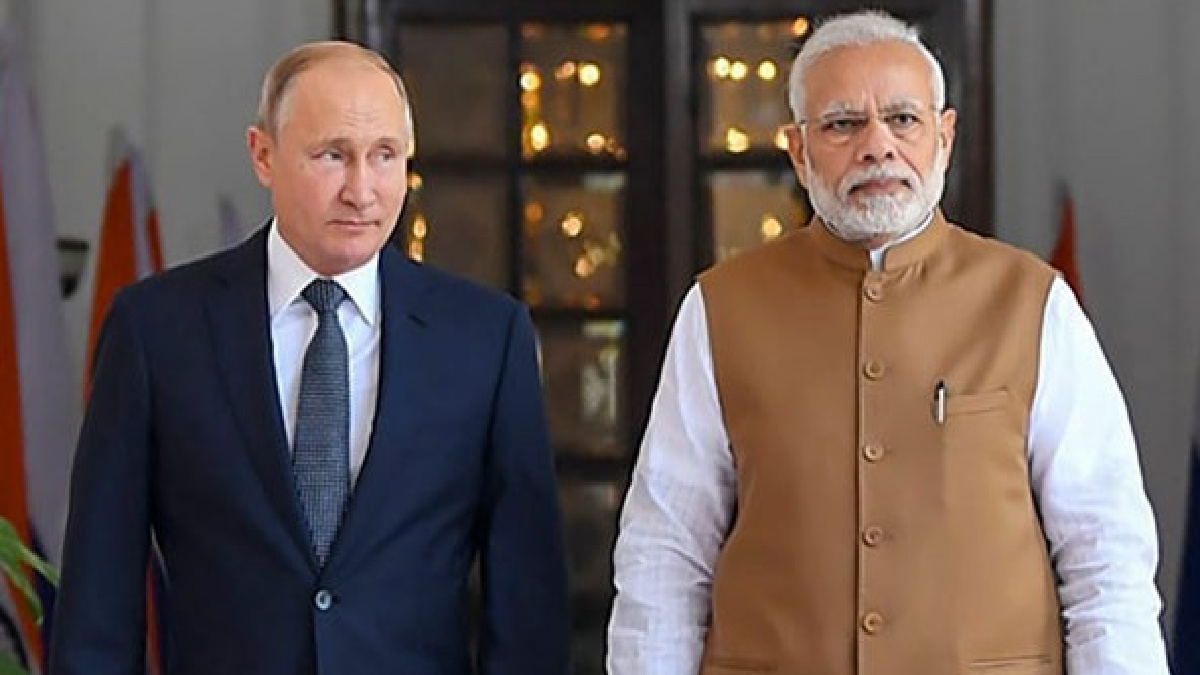
Russian President Vladimir Putin's two-day state visit to India for the Annual Summit with Prime Minister Narendra Modi successfully cemented the decades-long "Special and Privileged Strategic Partnership." The discussions were wide-ranging, focusing on traditional areas like defense and energy, while also forging new paths in economic, technological, and tourism cooperation.

Here are the ten key takeaways from the high-stakes visit:
Economic and Trade Ambitions
1. Strategic Economic Cooperation Roadmap until 2030
The leaders adopted a comprehensive "Programme for the Development of Strategic Areas of India – Russia Economic Cooperation till 2030." This long-term roadmap serves as the foundational document for future trade and investment collaborations across priority sectors like technology, mining, energy, and healthcare.
2. Bilateral Trade Target of $100 Billion
India and Russia reaffirmed their shared ambition to significantly boost bilateral trade to $100 billion by 2030. This commitment is a major signal to diversify the trade basket, which is currently heavily skewed by India’s imports of Russian crude oil and defense equipment.
3. Addressing the Trade Deficit and Boosting Indian Exports
A key focus for India was narrowing its significant trade deficit. Both sides agreed to explore multiple avenues to increase Indian exports, particularly in non-traditional sectors such as pharmaceuticals, automobiles, agricultural products (including marine products), and machinery, securing greater market access in Russia.

4. Progress on India-Eurasian Economic Union (EAEU) FTA
Discussions accelerated on the proposed Free Trade Agreement (FTA) between India and the Russia-led Eurasian Economic Union (EAEU). A successful FTA would remove trade barriers, significantly facilitate market access for Indian goods, and contribute directly to achieving the ambitious $100 billion trade target.
Strategic and Sectoral Cooperation
5. Deepening Defense and Military-Technical Cooperation
Defense remains the bedrock of the relationship. The visit underscored the commitment to the 2021-2031 military-technical cooperation agreement, focusing on joint research, development, co-production (like the BrahMos missile system), and after-sales support. Discussions included expediting the delivery of the remaining S-400 Triumf air defense systems and exploring upgrades for India’s Russian-origin fighter jet fleets.
6. Enhanced Civil Nuclear and Arctic Cooperation
Agreements were reached to broaden civil nuclear cooperation, particularly regarding the operation and construction of units at the Kudankulam Nuclear Power Plant. Furthermore, the two nations committed to regular consultations on Arctic-related issues, cooperating on the Northern Sea Route, and expanding scientific research in the region.
7. New Pacts on Fertiliser Supply and Labour Mobility
The two nations signed important sectoral pacts. An agreement on fertiliser supply was crucial for India's agricultural sector. A separate pact on labour mobility aims to facilitate the movement of Indian professionals and workers to fill gaps in the Russian labour market, strengthening people-to-people and economic ties.
People-to-People and Diplomatic Initiatives
8. Free Electronic Visas for Russian Tourists
In a significant move to boost tourism and people-to-people exchange, Prime Minister Modi announced that India would soon start issuing free 30-day electronic visas for Russian tourists and groups. This is expected to greatly simplify travel and increase Russian tourist arrivals in India.
9. New Institutional Mechanisms (Inaugural "2+2 Dialogue")
The visit formalized a new high-level institutional structure: the India-Russia 2+2 Dialogue involving the respective Foreign and Defence Ministers. This format, which had its inaugural meeting during the visit, demonstrates the deepening strategic convergence and trust between the two major powers.
10. Reaffirming the "Special and Privileged Strategic Partnership"
Beyond specific deals, the most important takeaway was the public affirmation of the enduring, time-tested relationship. In the face of intense global geopolitical pressures, both leaders reaffirmed that the partnership is characterized by mutual trust and is an "anchor of global peace and stability," signaling India’s intent to maintain its strategic autonomy.