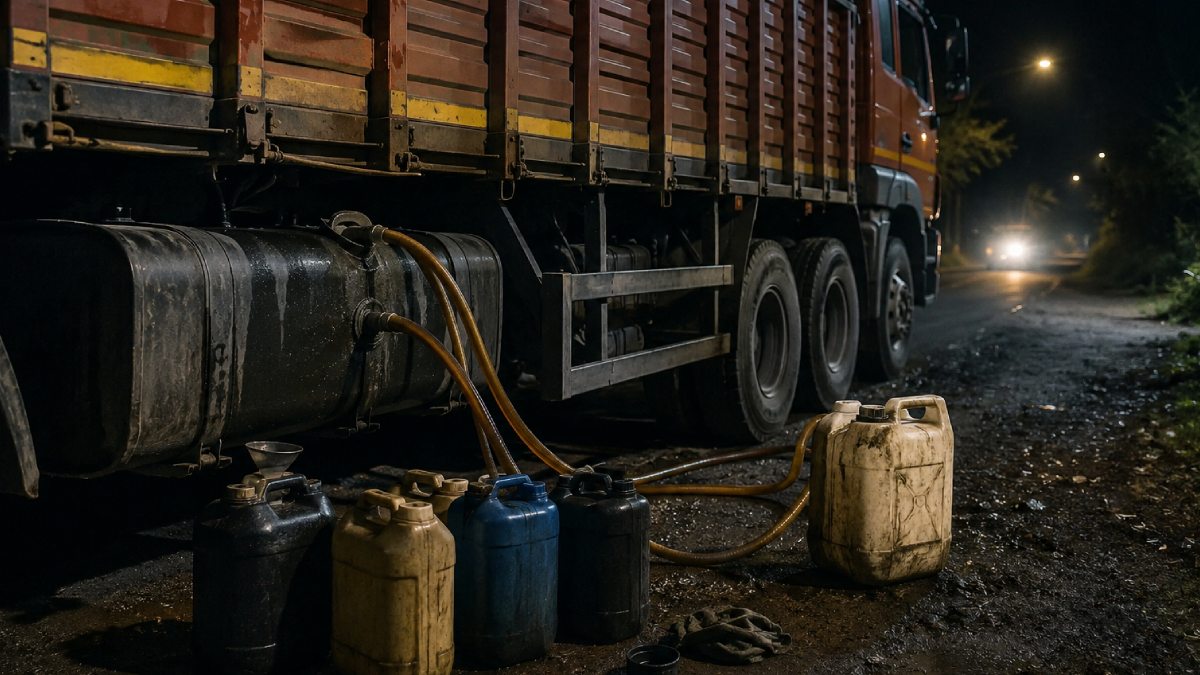
Diesel theft in Nelyadi in Kadaba taluk of Dakshina Kannada district. The truck is said to have had 400 litres of diesel stolen from a parked lorry by unknown miscreants, leaving it stranded on the roadside. We have been seeing fuel theft from heavy commercial vehicles parked along highways and roadside sites at night, and not only that of heavy commercial vehicles but also in the morning, when there are few vehicles parked.
According to the initial information, the lorry was carrying a load of bauxite from Mangaluru and was on the way to its destination when the driver decided to halt for the night at Nelyadi town. After parking the vehicle safely along the roadside, he returned home and started the journey again the next morning.
When the driver returned that day, he found that the diesel tank had already been emptied, and he was disarmed. Unknown thieves had siphoned off nearly 400 litres of diesel in the night without anyone in the vehicle or the nearby residents watching.
The driver did not know about the theft at the start of the journey and started the lorry to continue the journey. The vehicle soon stopped because there was no fuel left in the tank. The heavy truck was left stranded on the road without fuel to get it to leave, and therefore the driver was also unable to make it, and the cargo had to be shipped.
Diesel theft is growing for truck operators and logistics companies in different parts of the country. Commercial vehicles carry huge fuel reserves for long-distance routes, so fuel thieves are easily able to steal a lot of diesel. A theft of a few hundred litres of diesel can be significant in terms of financial losses at the current price of fuel.
Fuel theft not only has a direct monetary impact but also has a negative effect on the operations of transport companies. Delays in delivery or refueling costs, missed schedules, and unexpected maintenance problems affect transport operations. For independent truck owners and drivers, such incidents can be a major financial burden.
Police will analyze the theft, collect evidence from the scene, and check nearby surveillance cameras if they are available. At night, detectives could conduct interviews with local residents, shopkeepers, and drivers that were in the neighborhood to get a sense of who is responsible.
Fuel thefts are usually carried out by individuals or organized groups with hoses, containers, and other equipment that can quickly siphon fuel from parked vehicles, they say. Such thefts are frequently carried out late at night when traffic is low and drivers are away from their vehicles.
The incident has revived transport associations' calls for better security measures at highway parking areas. Truck owners have asked authorities to create more secure designated parking zones equipped with surveillance cameras, adequate lighting, and regular police patrols to deter theft.
We also recommend that commercial vehicle operators put in place additional safety measures that include lockable fuel caps, anti-siphoning devices, GPS fuel monitoring systems, and fuel level sensors that can help in the immediate detection of suspicious activity. Technologies are also being put into place to reduce fuel theft and increase vehicle security by fleet operators.
The theft also raises concerns about the vulnerability of trucks parked on roadside stretches, particularly in remote areas where security infrastructure is limited. As freight movement continues to grow across Karnataka and other states, ensuring the safety of commercial vehicles remains a priority for both transport companies and law enforcement agencies.
Residents and motorists have also appealed for increased vigilance and timely reporting of suspicious activities near parked vehicles. Community awareness, coupled with better policing, can help prevent such crimes.
The diesel theft in Nelyadi is a reminder of the problems faced by long-distance truckers and transport operators. As fuel is one of the biggest expenses in road transport, incidents like these can have serious financial repercussions. There will be a greater effort by the authorities to find out who is responsible for this and improve security measures to prevent the next theft in the future.