Abhijit Dipke has raised questions over the Bharatiya Janata Party's electoral victories, claiming that the party appears to win elections in politically and economically “important” states while other political parties are able to secure victories in comparatively smaller states.

The comments have brought a fresh political dimension to the debate over electoral results, the role of the big states in national politics and political parties in India’s electoral landscape.
Even Barkha Caught Hypocrisy of Abhijeet Dipke on Election Process
— Dear Men (@Dear_Men_Life) August 2, 2026
Dipke:
"All elections rigged by ECI"
"BJP wins Major states & let opp. Win others"
"Person who cheats never cheat 100 out of 100 marks"
Barkha:
"U r making very broad generalization"
Dipke:
"SIR ..bla bla"
🤡 pic.twitter.com/vH1yybzwrT
In his latest comments, Dipke questioned the BJP’s election results and claimed that the party’s success seemed to be concentrated in states with greater political importance. He claimed that other parties were allowed to win elections in smaller states while the BJP continued to emerge victorious in states considered strategically significant.
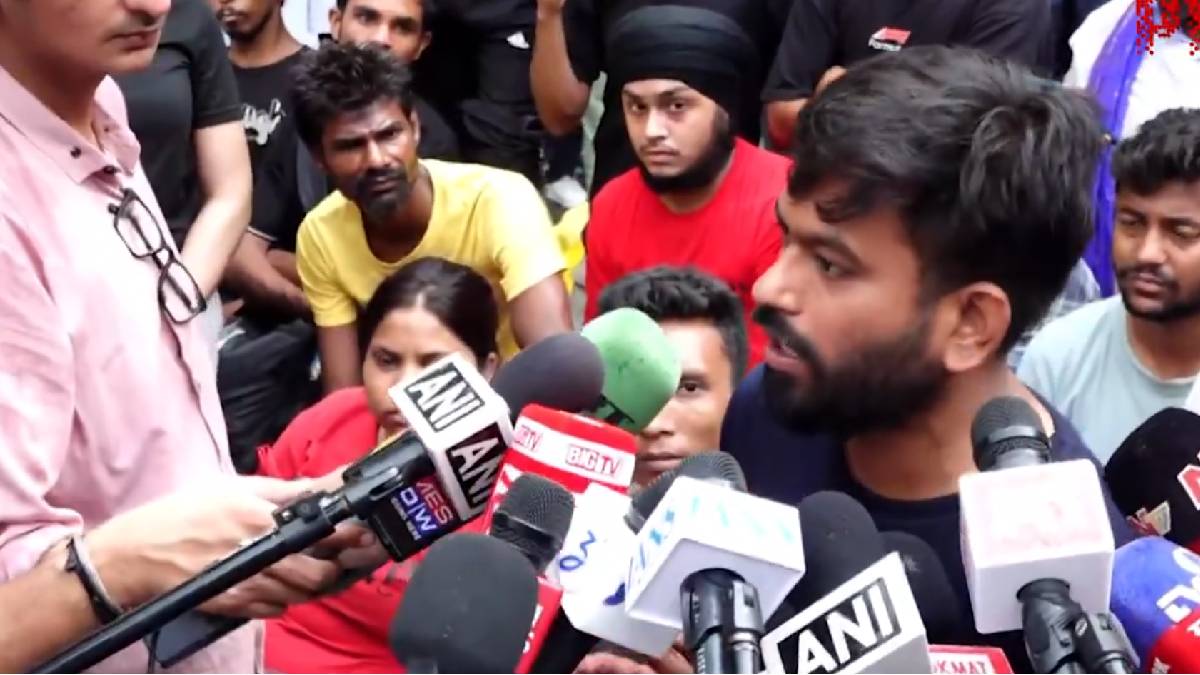
“He wins the important states while allowing others to win the smaller ones,” Dipke alleged, pointing out the BJP’s electoral performance.
The statement was presented as a political claim and did not contain any evidence, election data or other information about particular states. Dipke’s comments were therefore based on his interpretation of electoral trends and not the outcome of elections, as we now know.
The BJP has become one of India’s most powerful political parties in the last ten years and has won big in some state elections and has been able to maintain a strong presence at the national level. The party has suffered defeats in elections as well and has shared political space with regional parties and opposition alliances in different states.
India’s political landscape is politically diverse, influenced by regional leadership and local issues, caste and community dynamics, welfare programmes, economic concerns, campaign strategies and alliances between political parties.
Because of their population, parliamentary representation and influence on national politics, large states usually receive more attention. Uttar Pradesh, Maharashtra, Bihar, West Bengal, Tamil Nadu and Karnataka are considered politically significant due to their large populations and substantial number of Lok Sabha seats.
But smaller states can also play an important role in national politics, particularly when election results are closely contested, or coalition governments depend on the support of regional parties.
Dipke’s words seem to suggest that the BJP’s electoral success follows a larger political pattern. The statement could also be interpreted as a bid to draw attention to the difference between the success in big states and electoral outcomes in small states.
I think the comments will cause debate as well on social media. But supporters of the BJP could argue that the party’s wins are because of electoral support, organisational power, leadership and campaign strategy. Critics could also use Dipke’s comments to challenge electoral results and the concentration of power in politics.
The BJP has not been linked to a specific response to Dipke’s latest remarks. Without any further information from the political leader, it is not clear which election results or states he was speaking about.
The comments also come at a time when political parties are dissecting state elections and planning for future elections. The performance of governments in large states is crucial as it determines parliamentary representation, political momentum and party national standing.
Dipke’s statement has reignited the debate on election outcomes and the importance of winning large states. Again, his remarks will be of interest to others, but such a more general assessment of electoral outcomes would have to be based on results in terms of state-by-state voting patterns, as well as the political climate of individual elections.
For now, the claim remains a political allegation made by Dipke, and no evidence has been presented to establish that the BJP deliberately allows other parties to win smaller states while focusing on major or strategically important states.