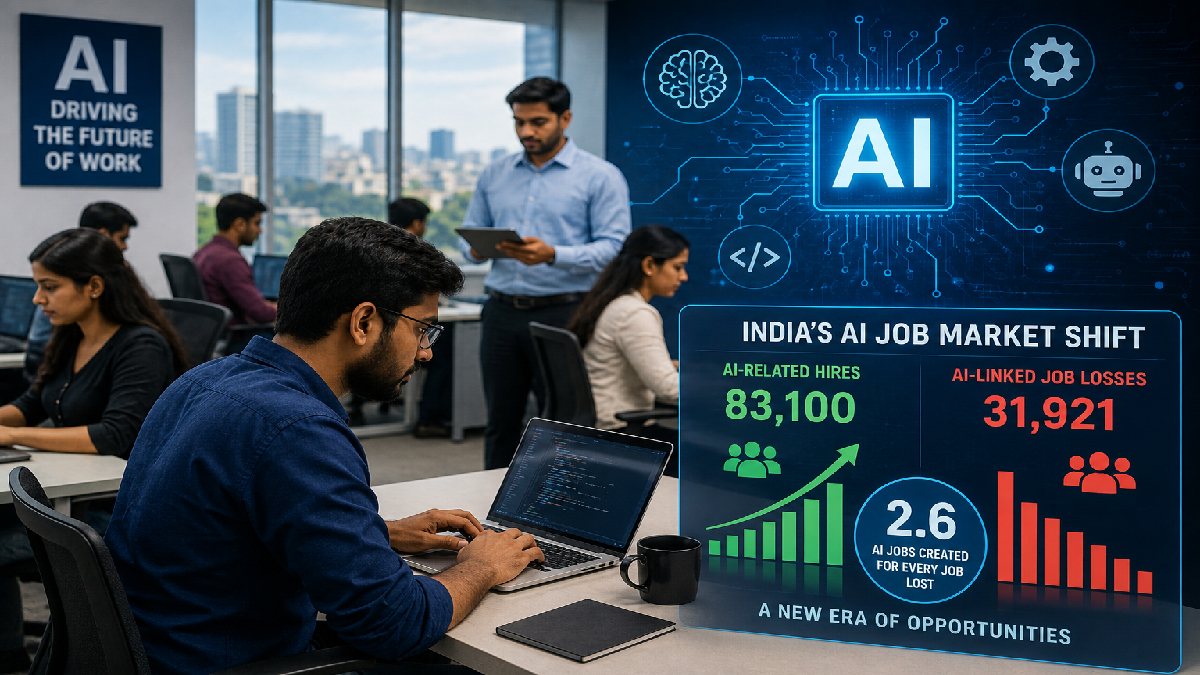
A global big survey just published today, told us world over that the time for the Age of the “AI Agent” has arrived and the younger ones are hot on the drawing boards. According to the 2026 Randstad Workmonitor report, a survey for 27,000 workers in 35 different markets reveals an increase of 1,587% in the number of job-opening opportunities that require "AI Agent" experience – indicating a major shift away from the transactional tasks being conducted by humans in a human environment, and toward automation.

The "AI Revolution," after all, has been a topic of debate for decades, but data from 2026 demonstrates the threshold at which the low-complexity, entry-level jobs – the ancient route ladder driving success for a young workforce – are disappearing faster than ever.
Gen Z-The Most Frantic Generation
Though the digital native generation, Gen Z (ages 18 through 28) is also the least secure generation in the workforce right now. According to the survey:
80% of workers predict AI will dramatically transform their workday to day this year. Two-thirds of Gen Z workers 52 percent worried that someone with an edge in AI would choose their own position over the next year. A majority of the young adults (41%) believe entry-level positions within their company will vanish altogether by 2030.
This “AI anxiety” is not the reality reported by Baby Boomers themselves, who said their biggest feeling was job security and confidence. Senior professionals, experts say, depend more than previous generations on “soft skills” and judgment two fields where A.I. still lags while Gen Z tend to be stuck in the “transactional” roles that are most susceptible to automation.
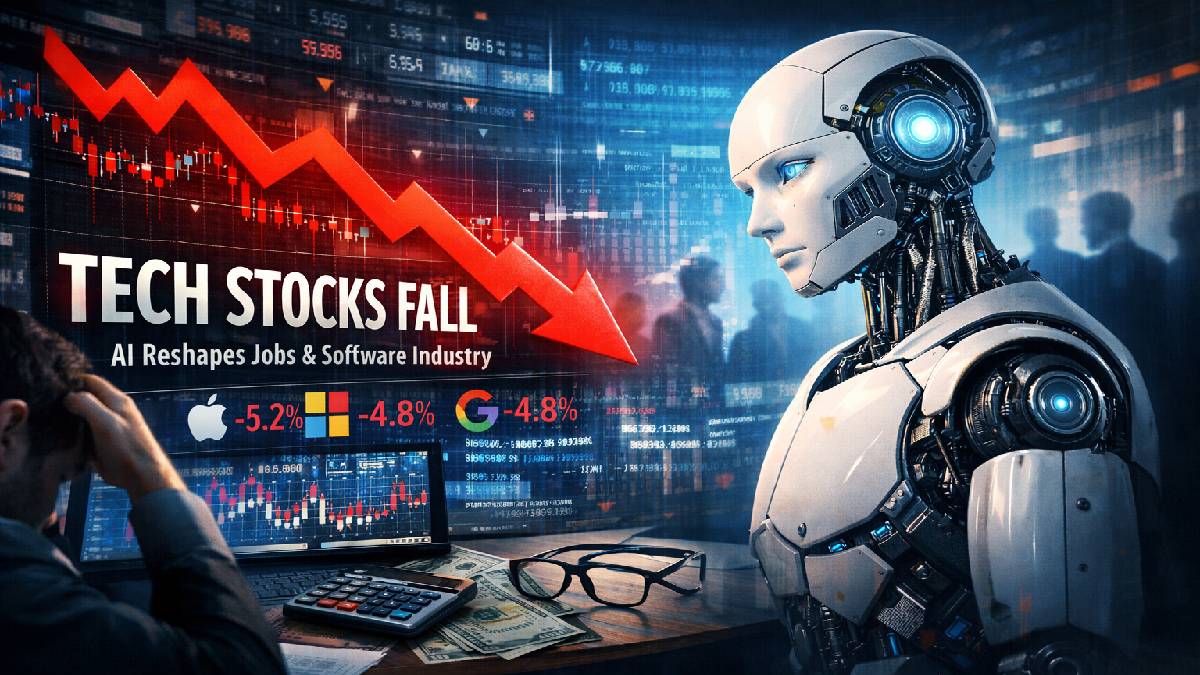
How The “AI Agent” Is Rising
The report points to a dramatic shift in the focus on hiring. But more companies are not only looking for those able to use “generative AI” to automate email writing; they want to hire people who can handle AI Agents, autonomous machines to perform a workstream of more complexity without human-side oversight.
“We’re seeing a shift by Sander van’t Noordende (the chief executive of Randstad) from AI as a ‘co-pilot’ to AI as an ‘agent,’ as we continue the cultural transfer of AI toward AI as ‘agent,’” Sander van ’t Noordende says. “This is replacing jobs that have low complexity, jobs that were the pipelines for Gen Zs into the corporate world.”
Connected Gap Between Employers and Employees
And the survey in 2026 also reveals a growing “optimism gap” between the elite and the front lines.
95% of employers expect greater revenues in 2026 with the help of AI-driven efficiency. In contrast, only 51 percent of employees report having that belief and for most workers AI is just a financial tool at the corporate level, not a means to work people and fill lost time.
This is also true for 47% of workers, who don’t think AI adoption will be beneficial to employees responsible for carrying out the job, but rather at corporations, and believe that it will be in greater good than for workers doing the hard work.
The Silver Lining: There's a Huge Reskilling Boom
Gen Z isn’t complacent; anxiety is widespread. 26 percent of Gen Z workers plan to commit to taking six to 10 courses related to professional development in 2026 as part of their “future-proofing” process about double the number of Gen X workers.
By 2026, it is clear that technical skills will not suffice in a world of reshaping an AI-facilitated transformation within the job market. Indeed, if we are to navigate our lives and exist in the “Agentic Era,” we need strategies: workers must be emotionally intelligent and strategic for solving complex problems skills that, at least for now, remain uniquely human.