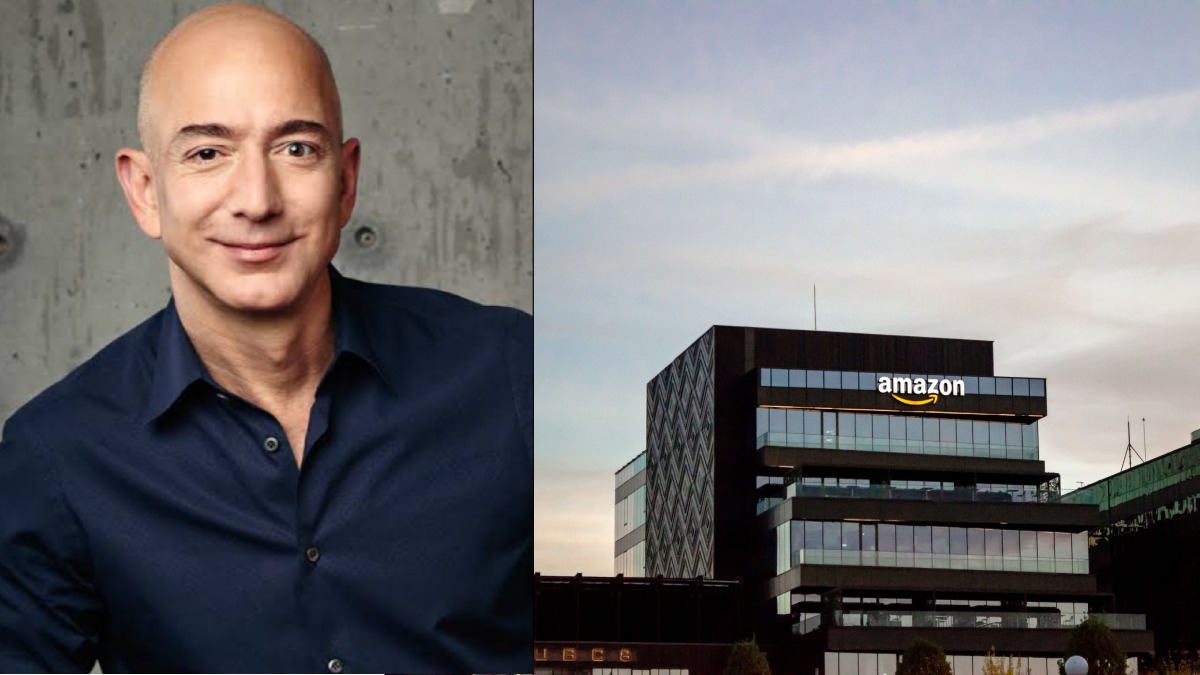
By annual sales, Amazon now is the world's largest company, surpassing Walmart in a landmark moment for international trade. The result is a major step change in the world market in which digital commerce and technology-driven retail models are all over the place. One way to do that, Amazon began last year, with sales in record time for just one individual month.

A Historic Milestone
For far too long, Walmart was the world’s No. 1 revenue-generating company — and the world’s highest-earning company — sustained the era, long-term, under the influence of its massive physical retail network and international supply chain. Amazon’s ascension to the top of the pyramid reflects a seismic shift in consumer behavior that was born of changing consumer habits, with digitization, online shopping, digital services and speedy logistics at the heart of modern economies.
Amazon’s diversified business has been instrumental in this rise over the past two decades. Amazon’s main e-commerce model is still taking off for the country, but high margin companies like Amazon Web Services (AWS), advertising services, subscription services like Prime, as well digital streaming, have given it a solid revenue base.
The Power of Diversification
Unlike traditional retailers, Amazon also operates in many high-growth sectors:
- E-commerce and Marketplace: An online platform aimed at providing goods and services to millions of customers across the globe.
- Cloud Computing (AWS): A global leader in cloud infrastructure services.
- Digital Advertising: A stream of revenue that is growing fast based upon data from the marketplace.
- Subscription Model: Subscription services, such as streaming, fast delivery, access to “super exclusive” deals, for free.
- Logistics and Supply Chain: A more independent global delivery network.
This diversified model enabled Amazon to grow its revenue from the base of the core market segments and continue driving growth even at a very high level of global economic uncertainty.
What That Means for Global Retail
Amazon’s ascent is a harbinger of a structural change, from traditional brick-and-mortar supremacy to integrated digital ecosystems. Although Walmart is still large enough to hold market share and make money with e-commerce and digital infrastructure, the balance of power is obviously shifting towards technology-based retail models.
The development also points to larger trends:
- Greater dependence upon online marketplaces.
- Expansion of global logistics networks.
- Cloud computing is the backbone of modern enterprises.
- Increasing role of data-driven advertising.
Implication for India and Emerging Markets
In markets such as India, Amazon’s ongoing expansion could drive online retail competition, spur digital take-up, and induce innovation around last-mile delivery and supply chain management. Local retailers and small businesses, meanwhile, may come under more competitive pressure and the temptation to digitalize or adapt to an omnichannel approach.
The Road Ahead
Revenue leadership is an important one, but the global retail war is not over. Walmart has doubled down on its e-commerce platform, invested in technology and built out around the world. Also in the background, Amazon is under regulatory pressure, logistics costs are increasing and other competitive dynamics are heating up in its primary markets.
But Amazon’s rise to the summit is telling: It’s a tipping point in the evolution of global commerce — a signal that increasingly digital-first, technology-driven business models are at the center of the world economy.