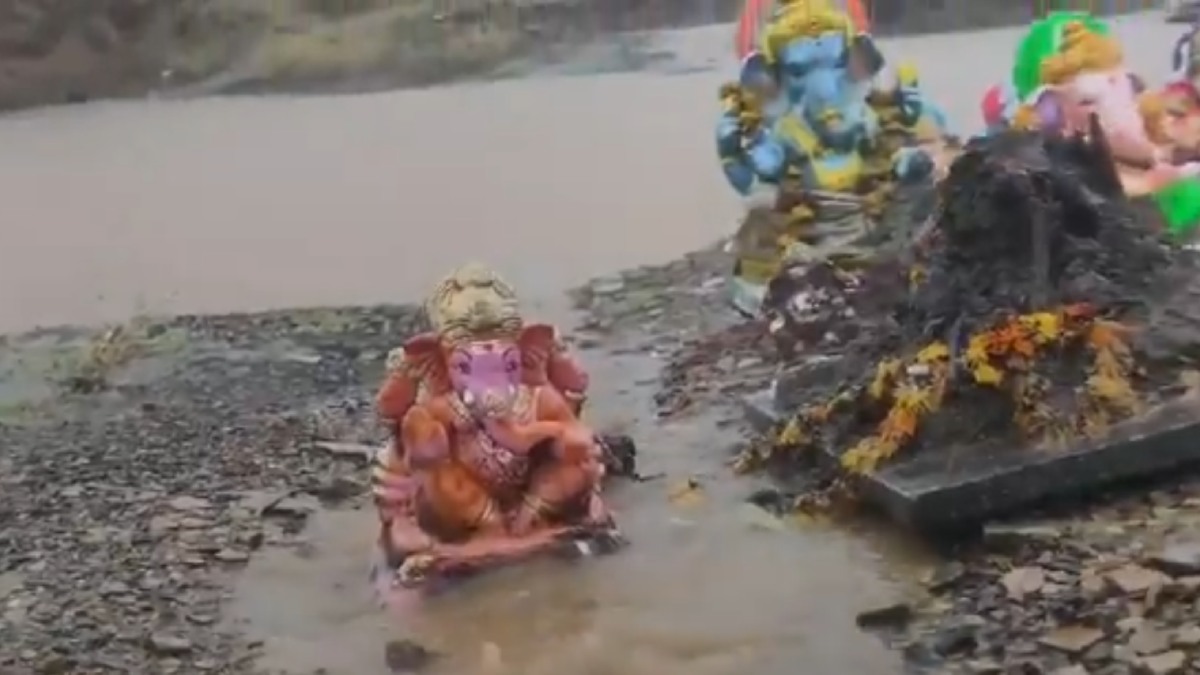
A striking scene from drought-hit Anantapur in Andhra Pradesh has drawn attention as devotees had to leave Ganesh idols on the dry bed of the Chitravathi River during the immersion ritual.
Whether the riverbed was dry or not, the Ganesh immersion ceremony for devotees in parts of the region was difficult. According to the report from September 2026, several water bodies in Anantapur district had dried up due to severe water scarcity and deficient rainfall.
The situation has also become emotionally fraught for local farmers. Some devotees were praying that the ritual would bring rain to the parched region, some say in accounts of the incident, for example.
Rainfall came in parts of Rayalaseema later, which is a relief to an area that has been suffering from a large water deficit. However, it has not been proven on this issue that rainfall was the heaviest in a decade in the region.
Ganesh Idols Left On Dry Riverbed
The Chitravathi River has become a visible symbol of the water crisis affecting parts of Anantapur. Devotees reached traditional immersion points only to find stretches of the riverbed completely dry, reports from the area said.
In some places, people had little choice but to put the idols on the dry riverbed after completing their prayers. Similar problems were reported in other parts of the district, with dried-up tanks, canals and streams creating obstacles for Ganesh immersion.
🚨 FAITH MEETS RAINFALL IN RAYALASEEMA!
— The Telugu Daily (@TheTeluguDaily_) September 21, 2026
Amid severe drought, devotees in Anantapur left Ganesh idols in the dry Chitravathi river, believing the ritual would bring rain.
The very next day, Rayalaseema reportedly witnessed its heaviest rainfall in a decade.
For farmers who… pic.twitter.com/U33Crqic1w
The unusual scenes highlighted the extent of the water shortage. Ganesh idols, normally immersed in water as part of the festival ritual, were instead seen placed on stretches of sand where water would ordinarily be available.
The shortage is not limited to festival arrangements. Government rainfall data shows that Ananthapuramu district had only 168.1 mm rainfall from June 1 until September 20, against a normal 269.6 mm for the period, which represents a 37.6 per cent deficit. In Andhra Pradesh, rainfall was 47.6 per cent below normal for the same period.
Rain Brings Relief To A Parched Region
The weather pattern changed around the time of the immersion. The India Meteorological Department's Anantapur observations recorded 48.6 mm of rainfall in 24 hours ending at 8:30 am on September 20. Rain and thunderstorms were also forecast over the following days, the IMD said.
Other parts of Rayalaseema also experienced significant rainfall as well. In Chittoor district, for instance, 23 mandals recorded rainfall in the 24 hours, while Kuppam received 112.2 mm, according to a district rainfall report.
The rain has provided some relief after weeks of water stress, although the broader situation remains difficult.
A report by The New Indian Express on September 21 said groundwater conditions had deteriorated sharply in Andhra Pradesh. Rayalaseema's average groundwater depth had risen from 9.15 metres to 14.48 metres over a year, indicating that the water table had fallen significantly. Anantapur had a 5.88 m drop year-on-year in groundwater levels.
For Farmers, Rain Means More Than Relief
For farmers in drought-prone parts of Rayalaseema, rainfall can determine the prospects of crops, groundwater recharge and the availability of water for livestock and households.
That is why the sequence of events surrounding the Ganesh rituals has resonated strongly with some residents. Devotees who had prayed for rain saw rainfall arrive soon after, so they felt that their prayers had been answered.
The connection between the ritual and the rainfall remains a matter of religious belief rather than something that can be proven scientifically. Weather systems and rainfall are governed by atmospheric conditions, and the recent showers were part of a wider weather pattern affecting Andhra Pradesh.
But the timing has given the farmers and devotees who participated in the prayers a moment of hope after a difficult monsoon season.
The episode is also a powerful reminder of the serious water crisis in Anantapur. When traditional immersion sites are reduced to dry stretches of sand, the impact of inadequate rainfall becomes visible not only in agricultural fields and groundwater levels but also in everyday cultural and religious practices.
So far, the rain has provided some much-needed relief. Whether it will help the water situation in the region to improve substantially will depend on the amount and distribution of rainfall in the weeks ahead.