A statement attributed to author and activist Arundhati Roy is generating attention on social media after posts claimed that she said, “For me, Love Jihad is romantic. I am in love with CJP.”
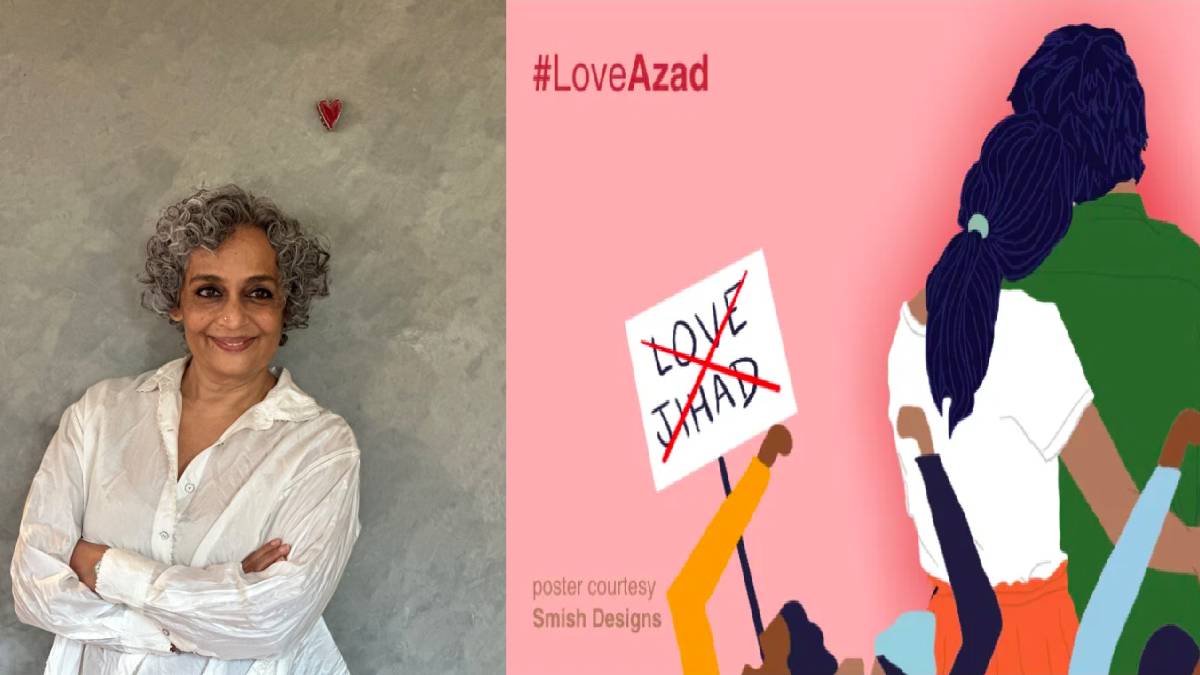
The reported quote was accompanied by dramatic pictures and strong comments, and some social media users claimed it to be a major political statement. The authenticity of the quote and its context could not be independently verified at the time of publication.
SHOCKING NEWS 🚨 Arundhati Roy says "For me Love J!had is romantic. I am in love with CJP" 😳 pic.twitter.com/Lcm6j7Juah
— News Algebra (@NewsAlgebraIND) August 1, 2026
No reliable source, full interview, official transcript, complete speech, or authenticated video establishing that Roy made the exact statement was immediately available. Thus, the claim should be treated with caution and should not be presented as a confirmed quotation.
The controversy is illustrative of the increasingly difficult task of verifying the statements made by prominent public figures in the age of viral social media. Short video clips, edited recordings, screenshots and text-based posts are fast to spread without knowing when or where a statement was made.
In some cases, a quote can be taken from a longer discussion and circulated without the surrounding context. In other cases, words may be edited, incorrectly translated, paraphrased, or falsely attributed to a public figure.
The proposed statement blends politically motivated references such as “Love Jihad” and the CJP. Since it has generated strong debate in several quarters, the claim has generated strong reactions by both supporters and critics.
Love Jihad is frequently used in political and social discussions about interfaith relations. It has also been a major topic of public debate, legal issues, and divergent political interpretations of it in India.
The term is often used by groups that claim organized religious conversion through romantic relationships. But critics say that it is a term that is used to sow suspicion on consensual interfaith relationships and should be looked at based on evidence, not broad assumptions.
The reference to the CJP has added another layer to the viral claim. Recently, political protests and public demonstrations have been associated with the organization, and a significant actor or activist's support is an important subject of interest.
But the absence of evidence on the subject means it is not known if Roy did say what she is alleged to have said, if she was quoted accurately, or if the claim came from a parody, edited video or an unverified social media post.
Arundhati Roy is a well-known writer and public speaker whose views on politics, social issues, civil liberties and public policy always bring up a lot of debate online. Given her public profile, statements from her are very quickly circulated online.
That is also why verification is so important. A false or misleading quote from a famous person can shape public opinion, generate political controversy and spread before the source has even been looked at.
Instead, we want to look for the complete video or interview—that’s the whole video or interview rather than just clips or screenshots. The date, location, and platform of the alleged statement should also be checked.
It is important to know whether the video has been edited and whether the words were spoken in the context suggested by viral posts. A full recording may provide details that are missing from a short excerpt.
Sensational language like “shocking news” can increase engagement, but it should not replace verification. A public figure’s claim must be backed up by solid evidence before it is reported as fact.
At present, the alleged quote attributed to Arundhati Roy is unverified. This is a viral claim until an original and authenticated source is made available.
If a full video, official transcript, or credible report is available, the claim must be reassessed based on the context. So until now, readers can’t make conclusions from social media posts alone.
The episode is an excellent example of how viral political content needs to be watched for, especially emotionally charged language or sensitive issues surrounding religion, identity and political movements.