Maharashtra RSS Sah-Sarkaryavah Atul Limaye has launched a strong attack on the Cockroach Janata Party (CJP) movement, saying that the agitation on Delhi’s Jantar Mantar should not be viewed just as an anti-BJP protest.
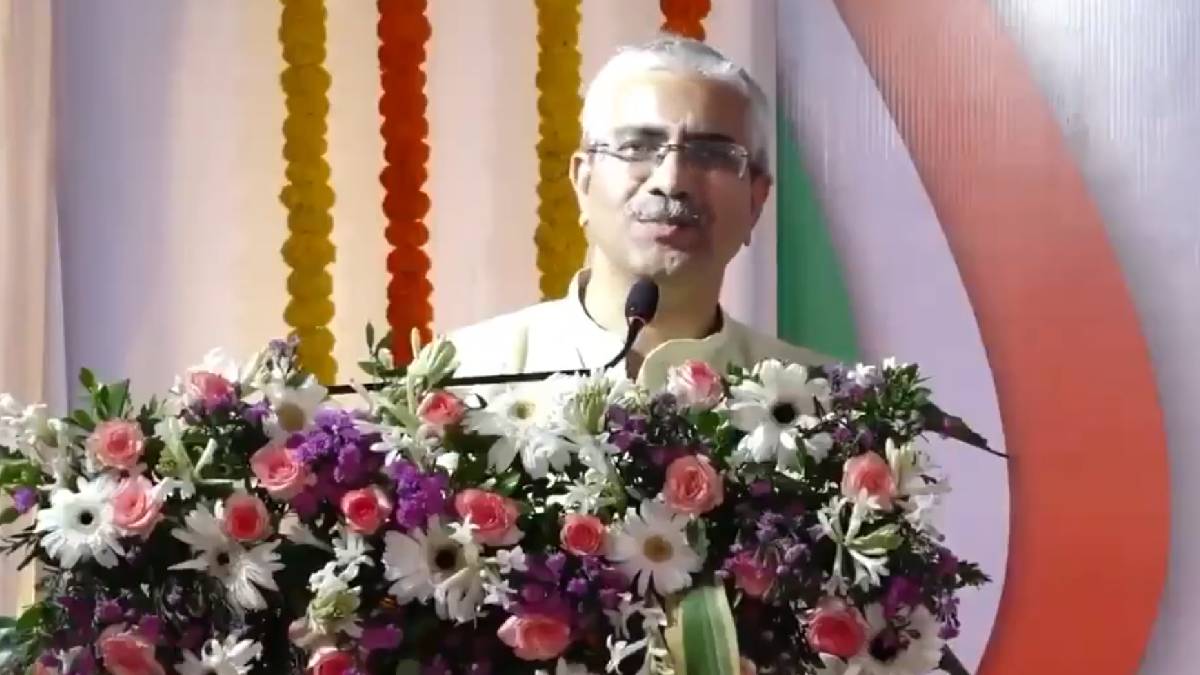
Limaye described the Jantar Mantar agitation as a project rather than a traditional public protest, and in sharp terms about the movement and its larger political impact. “The movement was used as a weapon against the Constitution and against the nation,” he said.
“Jantar Mantar wasn’t a protest. It was a project,” Limaye said, questioning the nature, direction and wider purpose of the CJP’s movement.
Maharashtra RSS Sah-Sarkaryavah Atul Limaye exposes CJP Protest:
— Megh Updates 🚨™ (@MeghUpdates) August 3, 2026
JANTAR MANTAR WASN'T A PROTEST. IT WAS A PROJECT. Movement should not be seen merely as "anti-BJP," but as one "used as a weapon against the Constitution" and "against the nation." pic.twitter.com/NkelcRBtVq
The comments will also escalate the political debate around CJP agitation, which began with examination irregularities and the demands for accountability and is also likely to take it to a bigger stage in which various groups and problems are involved.
CJP movement attracted a lot of public attention after large numbers of students, young people and supporters gathered at Jantar Mantar. The protest was mainly about examination-related issues and demands for reforms and accountability. But the protest site also became a platform for other grievances and political demands as participation grew.
Limaye argued that the movement must not be viewed only through the prism of opposition to the BJP. To say that the agitation is simply “anti-BJP” does not address what he sees as its political and ideological implications.
He said the movement had been used as a weapon against constitutional institutions and the nation. Limaye did not provide concrete evidence in the statement to support that the protest had been organized or had been carried out with the express purpose of acting against the Constitution or national interests.
And so his remarks are not really a judicial or official finding, but a political and ideological evaluation of the movement.
CJP protest at Jantar Mantar had drawn people from different backgrounds. The protest venue became associated with demands beyond the examination-related issue, and as the agitation spread, different groups raised issues of employment, women’s representation, government policies and other social and political issues.
The expansion of the movement also had different interpretations. The protest was seen by supporters as a response to anger and a movement for accountability from youth. But others questioned whether the movement had moved beyond what it was intended to do in practice, and whether various political groups were using the gathering as a vehicle for greater ends.
Limaye’s comments place the movement within a larger ideological debate over protests, political mobilisation and the role of public demonstrations in a democratic system.
The RSS leader’s description of Jantar Mantar agitation as “a project” suggests that the movement was planned or had purpose beyond the demands that its organisers made publicly. And his claim could also be seen as an attempt to debunk the narrative that the protest was just a spontaneous movement against the BJP or the government.
The CJP agitation was finally ended after talks with the government and developments on the CJP’s major demands. The organisation announced the withdrawal of the protest after assurance from the government and the resignation of then Union Education Minister Dharmendra Pradhan.
The end of the protest was not the end of the political debate around it. Questions were still raised over leadership of the movement, the participation of various groups, the extension of its demands and the events that took place at the large meetings in Jantar Mantar.
Limaye’s comments are expected to provoke responses from the CJP leadership, protest supporters and opposition parties. The movement’s supporters will dismiss the charge and say that the protest was motivated by public discomfort about examinations, employment and government accountability.
The CJP leadership has previously said that the movement was driven by its stated demands and that it supported protesters hit by police action.
As of now, Atul Limaye’s statement has added a new political dimension to the debate. His view that the Jantar Mantar agitation was “a project” and was used against the Constitution and the nation remains his view of the movement and has not been taken as an official finding.
The remarks show how the CJP protest continues to have diametrically different interpretations at a time of formalisation of the protest. While supporters see the protest as a youth-driven movement demanding accountability, critics such as Limaye believe it has a much broader political scope.