Bank branches will be closed on national holidays, regional festivals, weekends, and the second and fourth Saturdays in August 2026 for bank customers who are planning to visit them. In India, online banking, mobile banking, UPI, ATMs and other digital payment services will remain business as usual, but physical branch operations will be down on notified holidays for different reasons in different states.
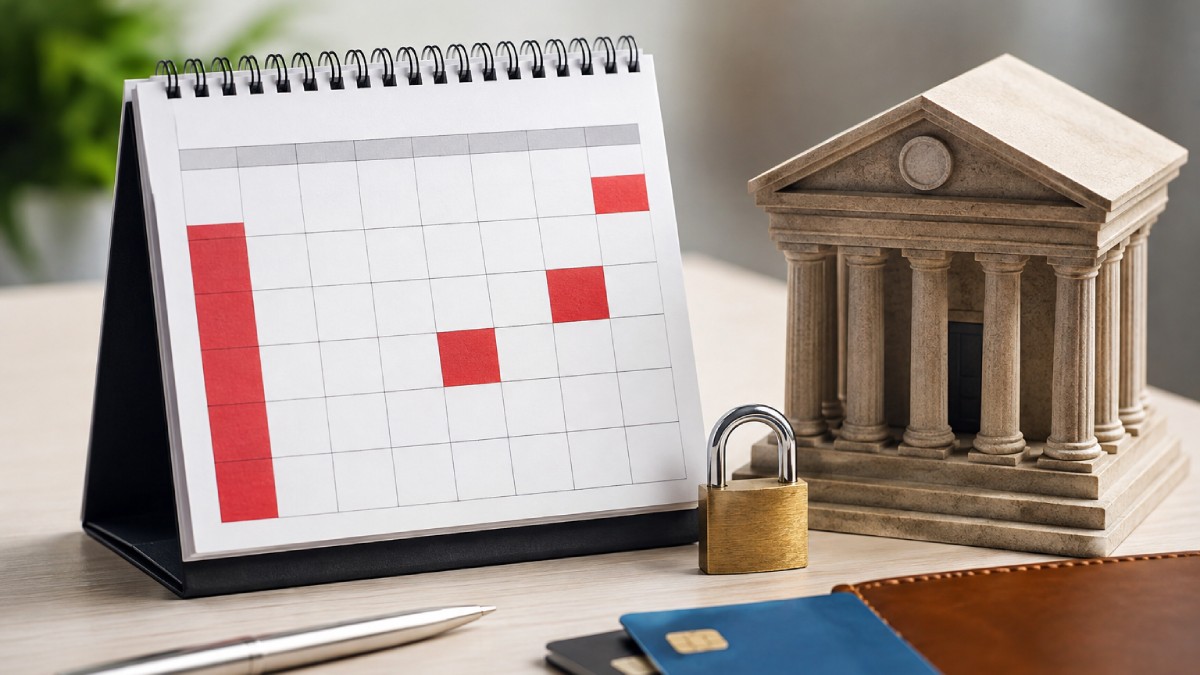
The RBI publishes a holiday calendar for every state every year under the Negotiable Instruments Act, and holidays vary across states for different reasons such as local festivals, cultural festivals and administrative notifications. So, customers need to check the date of holiday in their state before they start planning banking activities such as cash deposits, cheque clearing, loan documentation or account-related activities.
Apart from the week-on-week closures on Sundays and the second and fourth Saturdays, regional festivals in August are expected to affect banking activities in different parts of the country.
Depending on the state, banks might be closed on Independence Day, Raksha Bandhan, Janmashtami, Parsi New Year (Navroz), Ganesh Chaturthi, Onam celebrations and other region-specific festivals which are declared by the state government and the RBI. Because these holidays are not done in a uniform manner across India, customers should check their state's holiday schedule to find out if their local branch will be open or closed on that day.
The regular weekly holidays in August are all Sundays and the second Saturday and fourth Saturday, when banks are closed nationwide. Cheque clearing and some branch-based transactions can also be delayed if a public holiday comes just before or after a weekend. Planning financial transactions in advance can minimize inconvenience for businesses, traders, and people in the business of making time-sensitive payments.
In spite of branch closures, most banking services are still available through digital channels. Customers can still access internet banking portals, mobile banking applications, Unified Payments Interface (UPI), NEFT, RTGS (when operating hours are available), IMPS, debit cards, credit cards, cash withdrawals through ATMs, and digital wallets. These services support financial transactions even when bank branches are shut down.
Banking experts recommend completing important branch-related work (demand draft issuance, locker operations, passbook updates, cheque deposits, KYC verification, and document submissions) before scheduled holidays. Businesses that rely on physical banking must coordinate salary processing, vendor payments, and cash management activities well in advance so that there is no disruption due to consecutive holidays.
Customers are encouraged to follow the banks for official announcements from their banks of local holidays, branch timings, or other banking arrangements. Most public and private sector banks have state-wise holiday calendars on their websites and mobile apps that can be taken into account in the planning of their visits with customers.
Below are the nationwide weekly bank holidays in August 2026:
- August 2 (Sunday) - Weekly Holiday
- August 8 (Second Saturday) - Bank Holiday
- August 9 (Sunday) - Weekly Holiday
- August 15 (Saturday) – Independence Day (banks can also have holidays depending on RBI notifications and local schedules)
- August 16 (Sunday) - Weekly Holiday
- August 22 (Fourth Saturday) - Bank Holiday
- August 23 (Sunday) - Weekly Holiday
- August 30 (Sunday) - Weekly Holiday
Apart from these dates, banks in some states may be closed for local festivals such as Raksha Bandhan, Krishna Janmashtami, Ganesh Chaturthi, Onam, and other regional celebrations, depending on RBI and the respective state governments.
Digital banking services are ubiquitous across India and customers can now manage their finances even over holidays. Services that require branch visits still need to be planned ahead. By checking the August 2026 holiday schedule and making use of online banking facilities, customers can ensure that their financial activities proceed smoothly without unnecessary delays.