Bengaluru’s Baiyyappanahalli Metro station saw heavy commuter rush, with a long line at the security-check point stretching for over 100 metres. A commuter took to social media to highlight the situation and asked Bengaluru Metro Rail Corporation Limited (BMRCL) to increase the number of baggage-checking machines at the station.
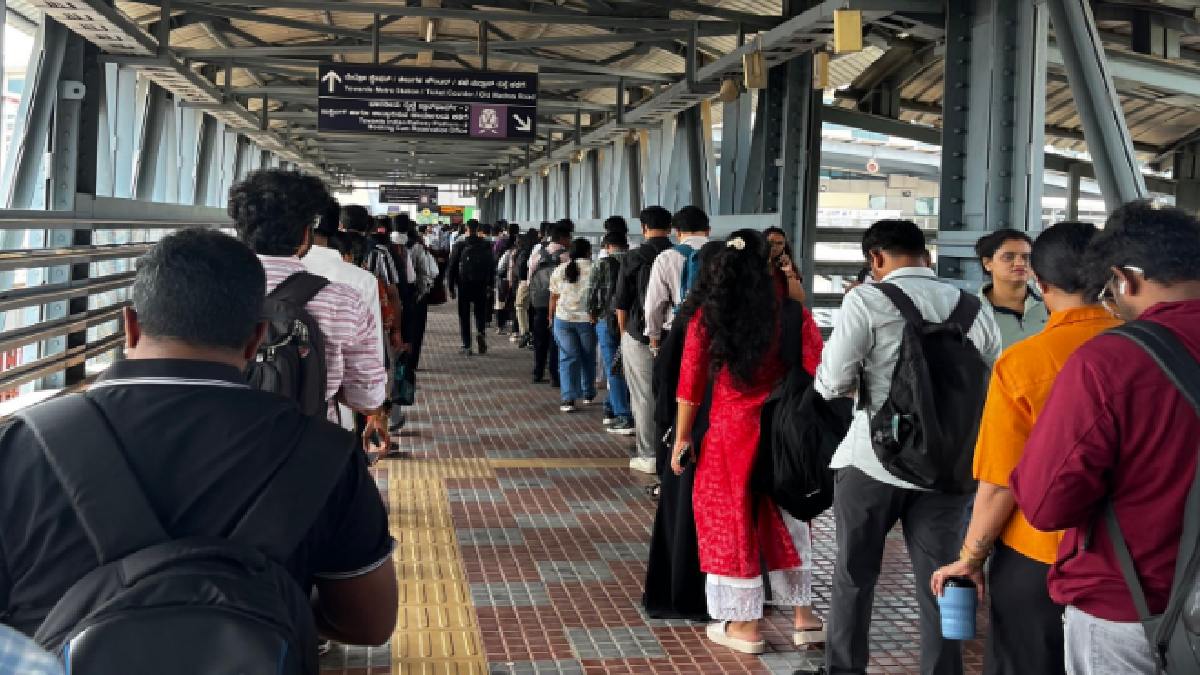
The commuter claimed that passengers were waiting for 10 to 15 minutes in the queue before getting to the platform. The post was shared on X and tagged the official BMRCL account and asked for more baggage-checking machines to help manage the crowd and shorten waiting time.
The situation has raised the level of pressure on the passengers in the busy Metro stations during peak hours. With the number of passengers on metro serving thousands of people every day in Bengaluru Metro, one can get stuck in the line at entry points with congestion as many people arrive at the same time, and travel times are long at entry points (which is the main cause of the delay in the metro).
Long Queue At Baiyyappanahalli Metro Station
According to the social media post, the queue at Baiyyappanahalli was more than 100 metres long. The passenger pointed to baggage checking as a bottleneck and asked for more machines to be installed to speed up the security-screening process.
Security checks are a necessity for Metro travel but with increased passenger volumes, limited screening capacity can cause longer queues. For commuters traveling to work, schools or appointments, even a 10-15-minute delay at the entrance of the station can affect their overall journey time.
Crazy rush at Baiyyapanahalli with the queue extending more than 100 meters!@OfficialBMRCL please add more bag check machines. We are wasting more than 10-15 minutes just to reach platform @ChristinMP_ @bengalurupost1 @NammaBengaluroo @srinualavilli @anil_lulla @HennurBlr pic.twitter.com/1KBGb1JTj8
— Shivram1150 (@shivram1150) September 16, 2026
The post is part of a larger concern among public transport users about handling passenger movement effectively at major metro stations in Bengaluru. Baiyyappanahalli is very important in Bengaluru's Metro network and is a major point in the day with a lot of passengers so smooth entry and security screening are crucial when it is full.
Commuters Seek Faster Security Screening
The commuter’s request was simple: add more baggage-checking machines and more space to cope with the rush. Such screening could have the benefit of distributing passengers across multiple points and relieving pressure on existing facilities at times of great demand.
Metro passengers’ time inside a station also doesn’t only have to do with the train journey. Queues at ticketing areas, entry gates and security checkpoints can add layers to the journey time for passengers. When multiple processes are crowded, commuters may need to leave home earlier than expected to get there on time to reach their destination.
The social media post has thus highlighted the importance of infrastructure and crowd management at high-footfall Metro stations. Security screening is necessary but commuters also want systems that can handle peak-hour passenger volumes without lengthy delays.
Bengaluru Metro Commuters Face Peak-Hour Challenges
Bengaluru Metro network has become a primary part of daily commuting in the city, with people moving between the city’s residential areas and major employment and commercial centres. As ridership increases, stations need to manage large passenger numbers while maintaining security and efficient movement.
Crowd management is especially important during the morning and evening peak hours. A bottleneck at one stage of the entry process can quickly lead to queues extending through station areas and slowing the movement of passengers.
The Baiyyappanahalli incident, as described by the commuter, has brought this issue into focus. The passenger’s appeal to BMRCL was not about eliminating security checks but rather adding more baggage-checking capacity so that passengers can complete the process faster.
BMRCL Response Awaited
The social media post tagged BMRCL and urged action to address the reported congestion. The decision on additional baggage-checking machines, staffing or changes to passenger-flow arrangements would depend on the Metro operator's assessment of crowd levels and station infrastructure.
On the other hand, the big concern for commuters is shortening waiting time while ensuring that security procedures continue to be followed. Improving the flow of passengers could help make journeys more predictable, particularly for those relying on the Metro for time-sensitive daily travel.
Bengaluru’s Metro network is currently serving increasing numbers of passengers and efficient station management will be important in a city in which public transport is becoming more and more a part of day-to-day life. Baiyyappanahalli’s queue is once again a prime example of how one needs to balance security requirements and the practical needs of an ever-growing passenger population and how we can handle it.