Volvo has unveiled new international versions of its XC60 and XC90 plug-in hybrid SUVs with a wide range of new electric powertrain features that will see significant changes in their electrified powertrains. The biggest upgrade is a much larger battery pack: both SUVs now have a 41.2kWh battery instead of the 19kWh battery.
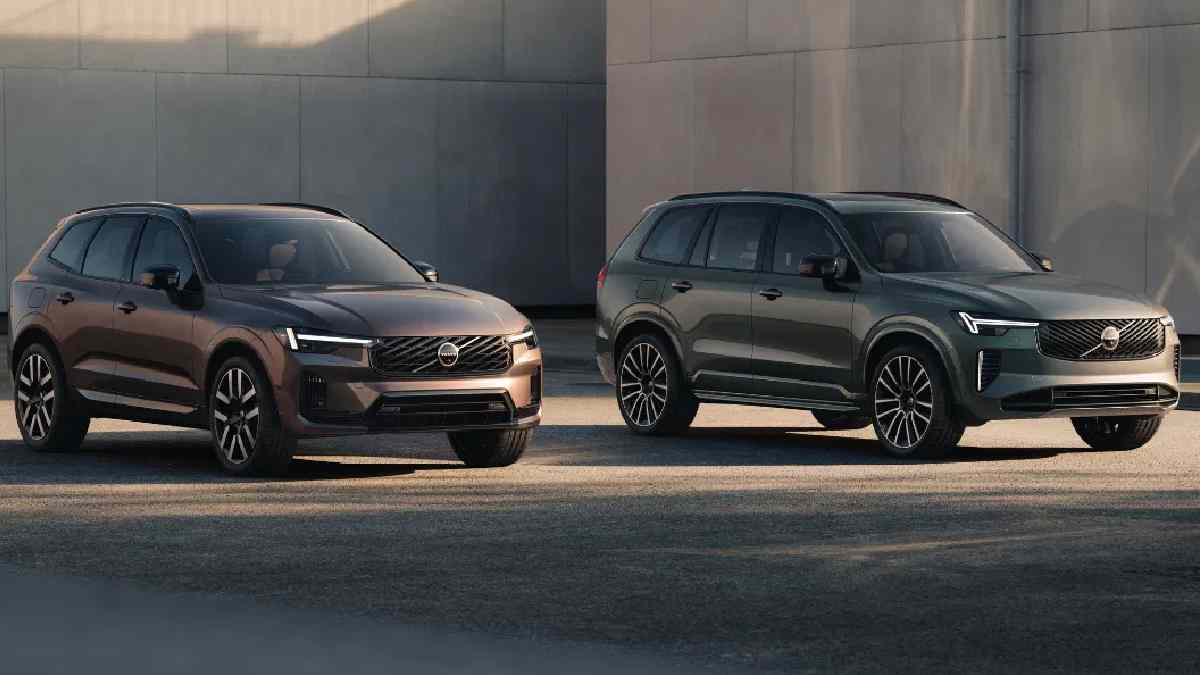
The battery upgrade is aimed at extending the electric-only driving range of both premium SUVs. The XC60 is given the more dramatic styling update, and the XC90 retains the existing external design and equipment on the outside.
The new update follows Volvo's refresh of its 40 Series which consists of the XC40, EX40 and EC40 models.
Volvo XC60 gets Styling and Technology Updates
The new XC60 is not only redesigned inside but also outside. There is also a new infotainment app that Volvo has added to the SUV so that it is in line with the new technology available from the company.
But the most radical change is going on underneath the skin.
The XC60 plug-in hybrid now has a 41.2kWh battery and over twice the battery capacity of the 19kWh version. In that way, Volvo says that the SUV can drive up to 200km on electric power alone within the WLTP testing cycle.
That is an increase of about 121km from the previous model's claimed electric range.
The larger battery does add weight. The kerb weight of the XC60 has increased by 47kg to 2,197kg.
XC60 PHEV gets more power
The XC60 still uses a 2.0-litre four-cylinder petrol engine powering the front wheels and electric motors powering the rear axle. This setup has all-wheel drive.
The new powertrain outputs an output of 461hp and 759Nm. Compared with the previous version, this is a 55hp and 90Nm increase.
The additional performance also increases acceleration. Volvo says a new XC60 PHEV can accelerate from 0 to 100kph in 4.8 seconds, which is 0.1 seconds faster than the outgoing model.
The XC60 PHEV has a much improved powertrain package with a bigger battery, stronger electric assistance and much more power for the system.
Volvo XC90 has a bigger battery.
The bigger XC90 also gets the 41.2kWh battery upgrade. Although the exterior design is largely unchanged, the battery and infotainment upgrades are major changes to the SUV.
With the new battery, the XC90's claimed electric-only WLTP range increases from 66km to 162km.
This means that the new SUV has around 96km more claimed electric range compared to the original SUV.
The bigger battery has also increased the vehicle's weight. The XC90 now has a claimed kerb weight of 2,386kg (36kg more than before).
XC90 PHEV Produces 461hp
The XC90 still uses a 2.0-litre four-cylinder petrol engine for the front wheels and electric motors for the rear axle.
The combined system output has increased to 461hp and 751Nm, a 55hp and 90Nm increase over the previous model.
Volvo claims that the new XC90 PHEV can accelerate from 0 to 100kph in 5.2 seconds. This is 0.2 seconds quicker than the previous version.
The difference in torque figures between the XC60 and XC90 means the two SUVs do not have exactly the same powertrain outputs, despite the same basic electrified setup and battery capacity.
What Are Volvo SUVs in India?
Volvo currently offers the XC60 and XC90 with 48V mild-hybrid technology along with a 2.0-litre four-cylinder petrol engine for the Indian market.
The India-spec mild-hybrid setup produces 250hp and 360Nm.
The new international plug-in hybrid versions therefore represent a very different powertrain configuration from the current ones sold in India.
There is no confirmed information in the supplied information about when or whether the updated 41.2kWh PHEV versions will be available in India. The international update, however, does demonstrate Volvo’s continuing focus on increasing battery capacity and electric driving range across its plug-in hybrid SUV line-up.
Larger Batteries became a Key Focus.
The change to a 41.2kWh battery is a big deal for both Volvo SUVs. The old 19kWh battery had far less electric-only capability, and this new unit enables the XC60 and XC90 to travel much longer distances with electric power under the WLTP cycle.
With customers who frequently drive shorter urban distances, the increased electric range could give rise to a greater proportion of everyday journeys to be completed without reliance on the petrol engine, according to real-world conditions and charging availability.
The updated XC60 and XC90 therefore combine Volvo's existing petrol-electric all-wheel-drive architecture with much greater battery capacity, higher system output and improved electric range.
The XC60 also gets exterior and interior changes and the XC90 also has technology and powertrain upgrades, but Volvo has taken somewhat different approaches to updating its two premium SUVs.
The new international variants also highlight the Swedish automaker’s strategy to make the electric capabilities of the plug-in hybrid models, though it still offers petrol-electric powertrains and its entire electric range.