Students and residents of Bhendigeri village in Belagavi taluk staged a sudden protest by stopping buses to demand an increase in public transport services on the Parashiwad-Belagavi route. The protesters said the village has a lack of buses and students and the public are unable to travel much even in peak hours.
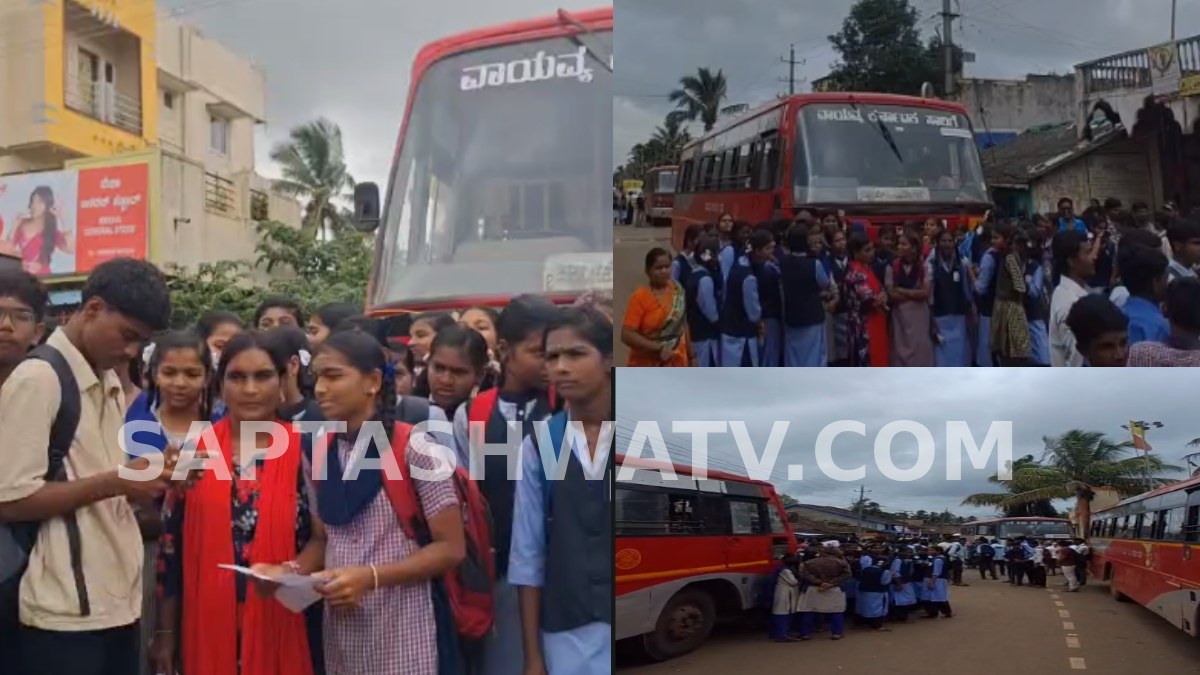
The protesters say the bus services are insufficient for the growing number of students and daily commuters from Bhendigeri and nearby areas. There are very few buses in the city, and passengers are forced to travel in overcrowded conditions, according to them.
The students and villagers have asked transport authorities to introduce additional buses in the morning time zones of 8:30 am and 9:30 am. These are the times students go to school and colleges and people go to work and other activities in the morning.
The protesters have also sought more bus services during the evening peak period. They’ve sought buses around 4:30 pm and 5:30 pm so that students and other commuters returning from schools and workplaces don’t have to go into overcrowded services.
One of the main demands of the protest was that all buses operating on the Parashiwad-Belagavi line should be allocated a stop at Bhendigeri. Villagers said the lack of stopping services has made it difficult for students to get to their destination in time.
The bus-stop protest quickly attracted attention in the village as students rallied to express their feelings. The demonstrators said they were driven to organize their protest because they had a long list of problems traveling due to the shortage of buses.
Overcrowding was a particular concern for the students and villagers. They said people are sometimes forced to depend on one bus and the situation is extremely congested. Students traveling in this way have said they are worried about their safety at the busy morning and evening times.
The villagers are asking the transport authorities to address the problem immediately. Increasing the frequency of buses would be an important relief to students and to the general public in Bhendigeri, they said.
They also warned that they would escalate their protest if their demands are not met. They appealed to the authorities not to ignore the transportation difficulties of students and residents and urged them to take immediate steps to improve bus connectivity.
"Do not play with the lives of students,” villagers said, calling for safer and more reliable public transportation. Their concern stems from the overcrowding and the difficulty students face in boarding and traveling in buses during peak hours.
Public transport has a significant role in the daily lives of students, particularly in rural areas where students depend on buses to get to schools and colleges in nearby towns. Without services, there is a lack of students’ presence in school and on schedule, and the students are not able to travel safely.
The Bhendigeri protest has therefore increased the importance of having public transport facilities in villages that are connected to Belagavi. Many people believe that increasing the number of buses in the morning during peak hours and ensuring that buses stop at the village will reduce overcrowding drastically.
The protesters’ demands include additional buses at 8:30 am and 9:30 am, as well as services at 4:30 pm and 5:30 pm. They have also sought mandatory stopping of buses on the Parashiwad-Belagavi route at Bhendigeri.
Now the transportation authorities should consider the demands of students and villagers. A quick response may alleviate the problems for commuters and avoid further protests.
Bhendigeri’s residents have their own needs: enough buses, convenient times, and safer travel conditions for students and the public. Until the shortage is addressed, villagers have indicated that they will continue to demand better transportation services.
The protest has highlighted how limited bus connectivity can become a major concern for rural communities. With students at the heart of the agitation, residents are hoping that authorities will take the issue seriously and introduce additional services on the route soon.