A special forest department team has been launched in Belur taluk of Hassan district to help with the growing fight between elephants and local people. Six trained elephants from different elephant camps have come to the region to help in tracking and capturing wild elephants.
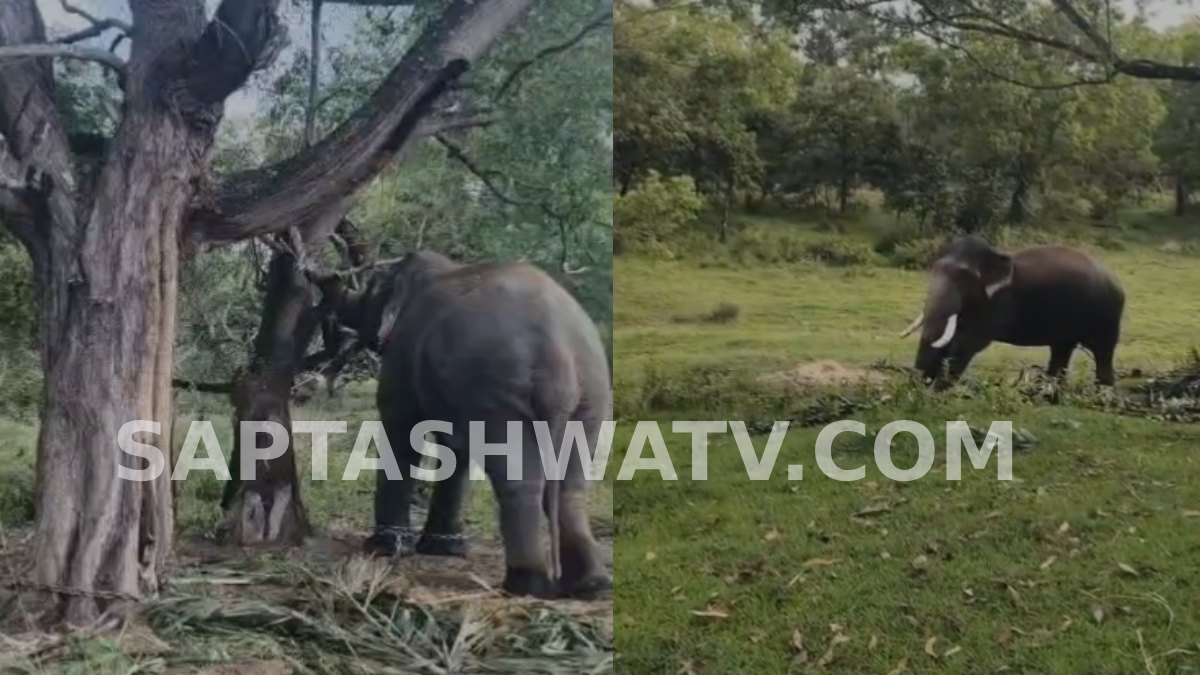
The operation was initiated as wild elephants continue to come into agricultural areas and damage crops. Residents and farmers in the Belur taluk have been affected by elephant movement and there are fears of danger to human safety as well, they said.
To strengthen the operation, trained elephants have been brought from Dubare, Mattigodu and Bheemanakatte elephant camps. The six elephants selected for the operation are Ekalavya, Prashantha, Dhananjaya, Ajay, Eshwara and Lakshmana. Forest personnel are expected to work with the trained elephants and follow the movement of wild elephants in places where conflict has been reported.
The trained elephants are commonly used by forest teams when working with wild elephants because they can assist forest employees to navigate forest terrain and to find wild elephants.
Based on the plan of the Forest Department, the operation has two big aims. The plan also states that radio collars will be fitted to two wild elephants in order to track them more accurately. Radio-collar technology can provide information about the animals in the area and movement patterns, and forest authorities can track them to find out where human or elephant encounters are more likely.
The department also plans to capture one rogue/aggressive wild elephant as part of the operation. So officials have been developing a robust plan to carry out the capture with minimum risk for humans and animals.
The trained elephants have arrived at Kottanahalli camp in Belur taluk where preparations for the operation are ongoing. Forest staff will be closely connected during the field operation with teams to monitor elephant movements and respond according to the situation on the ground.
Human-elephant conflict has become one of the most common problems in many parts of Karnataka, especially where forest boundaries lie very close to agricultural land and villages. Farmers risk huge crop losses when wild elephants enter farmland. People and elephants’ interactions can also be dangerous in terms of safety for the community that lives in close proximity to elephant habitats.
For farmers in Belur, the new operation should provide some relief from the continuing problem. If the movement of elephants can damage household incomes and create uncertainty for farming communities, this will affect farmers’ livelihoods. Therefore, residents of Belur have been seeking a solution to reduce the number of elephant incursions.
The use of radio collars would give the Forest Department a better understanding of elephant movement. Tracking data would assist in identifying the routes that elephants follow and provide early warnings of elephants moving closer to populated areas.
The capture of the identified rogue elephant is another important part of the operation. Forest officials will have to carefully assess the animal’s behaviour and location before attempting capture. Such operations require coordination, trained personnel and appropriate equipment to ensure that the animal is handled safely.
The deployment of six trained elephants shows the magnitude of the operation going on in Belur. Forest officials will continue to monitor and adapt their strategy depending on wild elephant movement.
The operation is a big deal to farmers and citizens for good farming and agriculture, and the farmers are hoping that the change will minimize crop damage and help their safety in affected areas. The Forest Department is in the process of managing the conflict while ensuring that wildlife protection remains a big part of that.
The installation of radio collars on two wild elephants would provide authorities with useful information as the operation progresses. Meanwhile, the capture of one of the rogue elephants will be a key focus of the field operation.
The Belur operation shows how wildlife conservation and the safety and livelihood of communities living close to forest areas is a complex issue. Now that six trained elephants and forest personnel are in place, the authorities can take control of the situation and curb the impact of wild elephant activity in the region.