Bengaluru: For millions of commuters suffering from the long hours stuck in Bengaluru’s traffic, we can expect the future of the city to move off the roads and fly. Electric flying taxis, also known as eVTOL (electric vertical take-off and landing) aircraft, could be widely commercialized in India in 2028, National Civil Aviation Minister Ram Mohan Naidu said. Bengaluru is one of the cities that could be an early adopter of this futuristic transportation system.
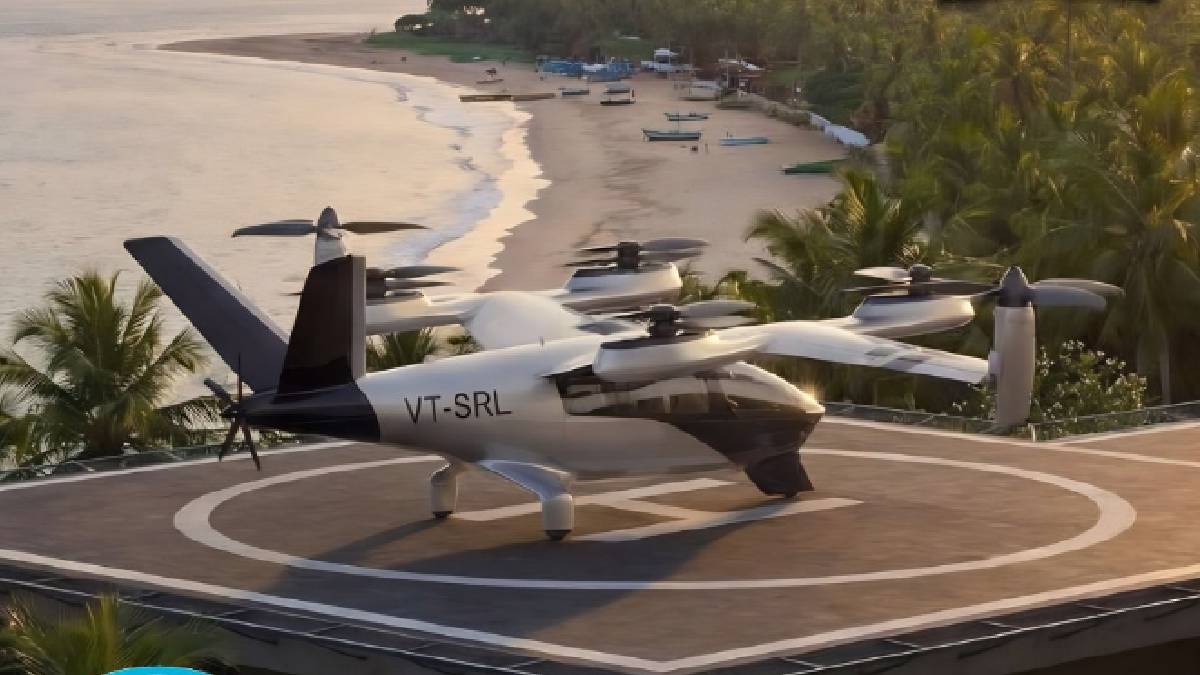
The proposed flying taxi service could transform the way people travel across India's busiest metropolitan cities. Instead of driving in traffic with its heavy traffic, passengers would be able to take off to their destination on small electric aircraft that take off vertically and fly directly through the air.
Bengaluru could be a key market
Bengaluru is ideally positioned to be one of the early markets for flying taxi services because of its chronic traffic congestion and rapidly growing demand for faster airport connectivity. The city has high traffic congestion and a growing demand for faster connections between central business districts and Kempegowda International Airport, especially in peak hours, which can make that an especially long journey from central business districts to Kempegowda Airport during peak hours.
Air taxi could cut the time by about an hour or two from the road by eliminating road congestion. A trip that can take well over an hour on the road on a busy day could become much shorter with an aerial route.
Besides Bengaluru, Delhi and Mumbai are also discussed as potential launch markets for India's emerging electric air-taxi ecosystem.
What exactly is a flying taxi?
Flying taxis are mostly based on eVTOL technology. These aircraft use multiple electric motors and rotors to take off and land vertically, so they do not need a runway at an airport for every trip.
The technology is being developed as a form of advanced air mobility and is aimed at short-distance passenger transportation within and between urban areas.
In contrast to conventional helicopters, a lot of eVTOL concepts are designed to be quieter, more energy-efficient, and a lot of these are more automated. If the electric propulsion systems are equipped with electric motors that could also reduce local emissions as much as possible compared to conventional fossil fuels powering them, too, their electric propulsion systems could also reduce local emissions in comparison to fossil fuel-based aircraft.
Airport connectivity could be the first use case
One of the most practical applications for flying taxis in cities like Bengaluru could be airport transfers.
Instead of trying to serve every neighbourhood from the beginning, operators could start focusing on high-demand routes connecting airports to major business districts, transport hubs and other strategically important locations.
This could allow companies and regulators to build the necessary infrastructure and operating procedures as a matter of course, slowly and incrementally before expanding the network.
For Bengaluru residents, it could eventually mean we could soon have another option to go to and from the airport, particularly for passengers who value time and are willing to pay a premium for faster transportation.
Several challenges remain
Despite the excitement of flying taxis, commercial operations cannot be launched simply because the aircraft are technically ready. Several regulatory, safety and infrastructure-related issues have to be addressed first and foremost.
India will need to have appropriate rules about eVTOL certification and pilot requirements, airspace management, passenger safety, maintenance and emergency procedures. The authorities will also need to decide where these aircraft can go and where dedicated take-off and landing facilities can be implemented, usually called vertiports.
Another important issue will be public acceptance. Flying taxis will be in the midst of urban areas that are very densely populated, so safety will be of ultimate importance under these circumstances.
Battery technology, charging infrastructure, aircraft range, weather conditions and operating costs will also influence how quickly the sector can scale.
When will flying taxis replace conventional taxis?
Flying taxis will not replace road-based taxis anytime soon. And they will be more likely to emerge as a premium transportation option for certain routes where saving time is particularly valuable.
The initial cost of an air-taxi journey could be much higher than travelling by conventional cab, especially in the early days of Uber and Lyft, when there is still work to do and the technology and infrastructure are still evolving. As aircraft production increases and the industry matures, costs could be less expensive.
If the technology is successful commercially, Bengaluru could eventually see conventional taxis, metro services, buses and aerial mobility working together as part of a broader urban transportation network.
A new chapter for Bengaluru’s mobility
The vision of flying taxis to be operational in Bengaluru by 2028 creates an ambitious vision for the future of the city's transportation system. Many technological and regulatory challenges remain, but developing eVTOL aircraft would provide a completely new way to solve some of the challenges of rapid urbanization.
If the idea of bypassing crowded roads and traveling through the sky is very appealing to a city where traffic congestion is one of the biggest daily frustrations, that city’s biggest daily frustrations, one of the biggest urban problems, the idea of bypassing crowded roads and travelling through the sky is certainly appealing.
If the required safety approvals, infrastructure and regulatory frameworks are put in place, 2028 could become an important milestone for India's urban air mobility sector, potentially putting Bengaluru, Delhi and Mumbai at the forefront of a new era in city transportation.