BJP MP Janardan Mishra has stirred up a controversy on a sharp remark while defending the Centre’s ethanol-blending policy and E20 petrol use in India. Speaking in Rewa on Sunday, Mishra questioned critics who have been demanding the continued availability of pure petrol and asked, “Will pure petrol come from your father’s house?”
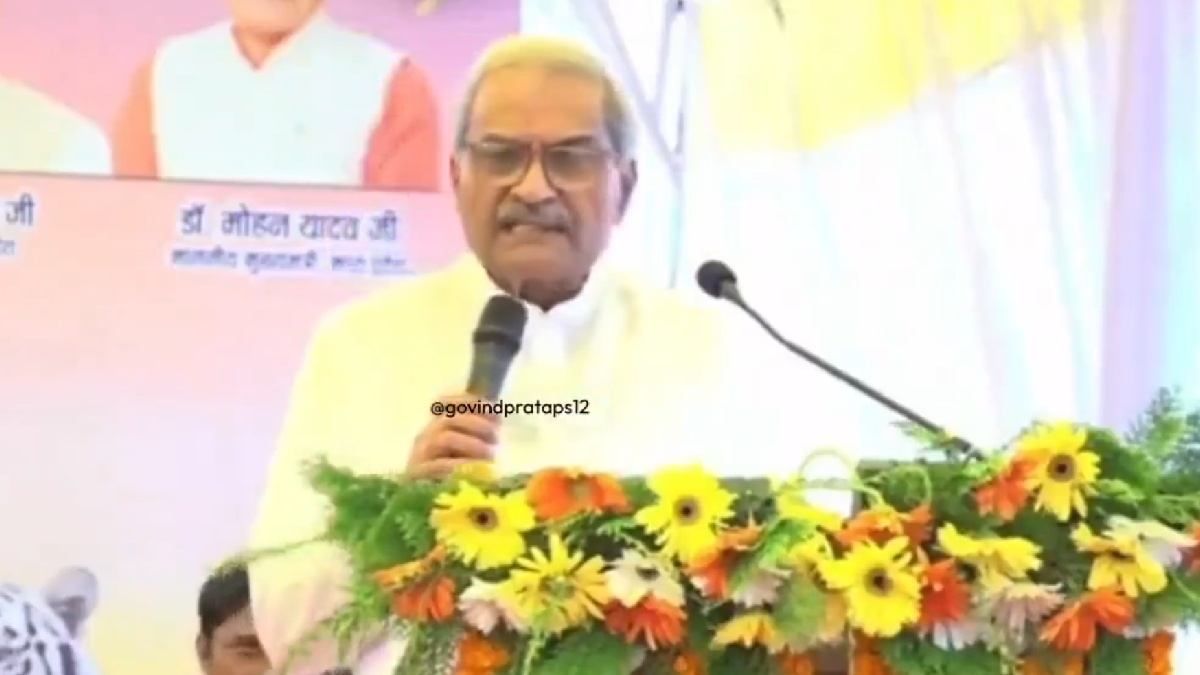
Mishra, representing the Rewa Lok Sabha constituency, spoke at an event to inaugurate new flight services connecting Rewa with Bhopal and Kolkata when he spoke about India’s dependency on imported crude oil and the government’s efforts to promote ethanol as an alternative fuel source.
By defending the Centre’s ethanol policy, the BJP MP said India produces only about 20 per cent of its oil domestically, while the remaining 80 per cent has to be imported from other countries. He said this dependence on foreign oil puts India at risk of international conflicts, geopolitical tensions and disruptions in major shipping routes.
"India produces 20 per cent of its oil domestically, while 80 per cent has to be imported from abroad," he said. He went on to talk about the geopolitics of the Strait of Hormuz, which is an important maritime passage between Iran and Oman that is key to oil transportation worldwide.
Mishra said ongoing geopolitical tension and disruption in the region have made it increasingly difficult and expensive to transport crude oil. Oil has to travel an additional 18,000 kilometres because of the disruptions and the resulting difficulty of India’s reliance on imported fuel, he said.
The BJP leader then criticised those opposing the government’s target of blending 20 per cent ethanol with petrol. While E20 petrol has been promoted by Prime Minister Narendra Modi as part of India’s energy strategy, some people still want only pure petrol for their motoring.
And when Prime Minister Modi talks about blending 20 per cent ethanol in petrol, people protest. People are saying that only pure petrol should be used. Will pure petrol come from your father’s house? If there’s no pure petrol in the country, where will it come from?” Mishra said.
The remark has attracted attention because the E20 debate has increasingly become a contentious issue in India. Ethanol blending proponents say it will reduce the dependency of India on imported crude oil, lower the oil import bill and support domestic production.
The government has also presented ethanol blending as an important component of India’s broader energy security strategy. Ethanol can be produced from agricultural feedstocks, including sugarcane, making it a domestically available fuel source. So the proportion of petroleum required in blended petrol can be reduced as ethanol is used.
But E20 proponents have raised questions about fuel efficiency, vehicle compatibility, and how the higher ethanol levels can impact older vehicles. Drivers whose cars and two-wheelers were made before engines were developed or optimised for higher ethanol blends have been most affected by this transition.
Mishra, however, sought to counter such concerns by pointing towards automobile manufacturers. He said vehicle manufacturers have indicated that engines capable of handling ethanol blends are available and that Indian vehicles can operate with ethanol-blended fuel.
“Automobile manufacturers say they have the engines and expect no issues. India has the capability to run vehicles on ethanol. Indian vehicles will run and can run on ethanol,” he said.
The BJP MP also cited Brazil to emphasize the use of ethanol as a transport fuel as well. In Brazil, vehicles running on 100 per cent ethanol can be operated without any problems, Mishra said. Brazil has indeed established an extensive infrastructure around ethanol-based transport fuel and has a long history of using ethanol in vehicles.
Mishra also connected the ethanol debate with the larger issue of employment and economic opportunities in India. He claimed that if there is any place in the world where employment is currently at its highest, it is India.
“Do you expect pure petrol to come from your father’s house? When there isn't any pure petrol available in the country at all...”
— Shruti Dhore (@ShrutiDhore) August 9, 2026
Madhya Pradesh – BJP MP Janardan Mishra made this remark directed at those opposing ethanol.#JanardanMishra pic.twitter.com/gVieDtHdfG
The comments are part of a wider national debate over India’s transition to alternative and locally produced fuels. Ethanol supporters see it as an alternative fuel that would boost energy security and agricultural opportunities, but critics insist that E20 fuel has a lot to say about mileage, maintenance of vehicles and consumers’ health and welfare.
The debate about Mishra’s comment is likely to go beyond the wording to make a global point of view on the benefits and challenges of India’s ethanol-blending program. As the country increases ethanol blending in petrol, the debate will continue to be about energy security, consumer concerns, automobile technology and the economic interests of domestic fuel production.