The Chhattisgarh government launched a unique 24-hour “Ration ATM” programme in order to make accessing subsidised foodgrains simpler, technology-based and beneficiary-friendly.
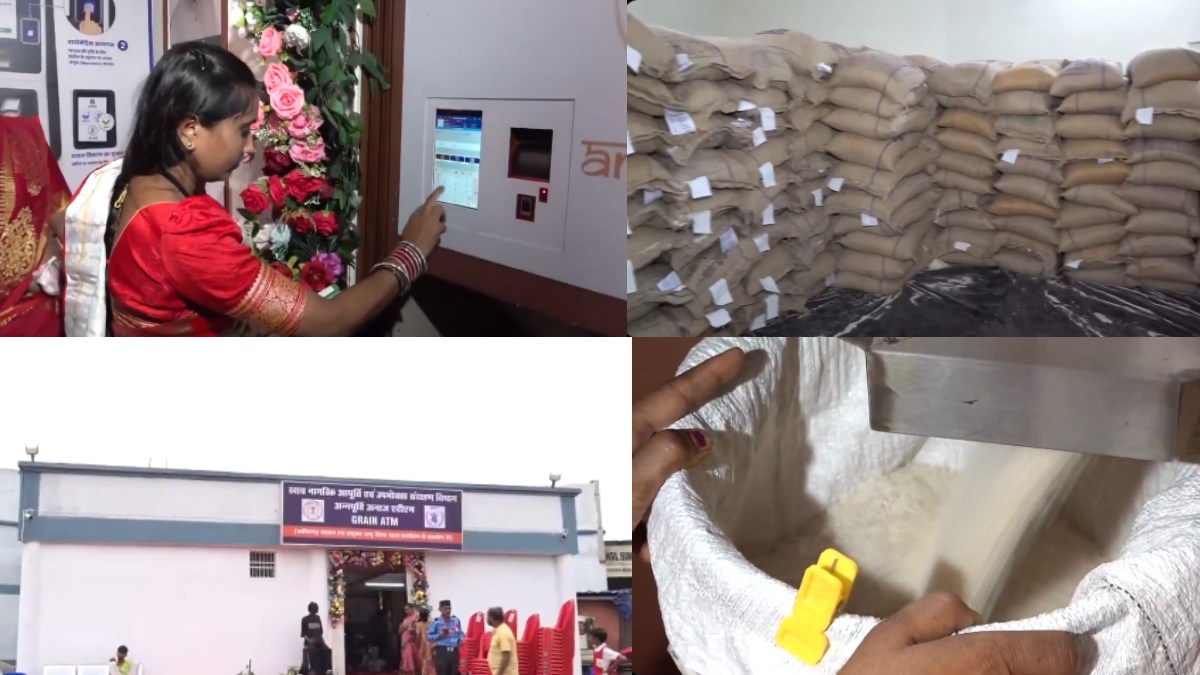
The new machine is designed to enable ration beneficiaries to receive rice at an automated dispensing system and can also reduce the reliance on regular fair price shop timings and manual distribution. At 2,500 kg storage, the Ration ATM is a great step in upgrading the public distribution system and bringing basic services nearer to people.
The initiative is seen as an example of how technology can be integrated into welfare delivery systems. Under the traditional ration distribution system, recipients will usually go to ration shops at specified times of the day to receive their monthly allowance. The automated facility could make that easier, especially for workers, senior citizens and people who aren’t able to go to ration shops at regular hours. And it puts the welfare service within a lot easier reach of beneficiaries, reflecting the idea of “government at your fingertips.”
The Ration ATM is said to hold 2,500 kilograms of rice. Instead of manually weighing and dispensing the foodgrain, the machine uses an automated system to load and distribute the foodgrain. Such automation can make the distribution process faster and more systematic while reducing the amount of manual handling at the point of delivery.
The introduction of the machine is also reflective of the larger push in India for digitisation of government welfare schemes. Public distribution systems have been digitizing in the past years in terms of digital identification, electronic point of sale, web records and automated monitoring. This has been done to improve transparency, cut down on administrative delays and to send benefits to eligible households faster.
A 24-hour ration facility would be particularly useful for beneficiaries whose daily schedule is not in consonance with the typical hours of ration shop hours. People working at factories, construction sites, shops, transportation services and other jobs may not have much flexibility in the afternoon. With an automated distribution center in place at any point of the day, beneficiaries might be able to get their foodgrain at a more convenient time.
The system could also reduce waiting times during peak distribution periods. Traditional ration shops may sometimes experience queues when a large number of beneficiaries arrive at the beginning or end of a distribution cycle. An automated facility with controlled dispensing could help distribute demand over a longer period, depending on how widely the system is deployed and how many beneficiaries are authorised to use it.
Another possible benefit is standardisation. Automated dispensing systems can be programmed to release a particular quantity according to a beneficiary’s entitlement. This can reduce errors associated with manual measurement. But in order to work, the beneficiary records, reliable authentication and regular maintenance of the equipment should be important for this to be successful.
But the initiative also calls for accessibility: technology-based welfare delivery can be convenient, but it must be easy for all sections of society to use. Rural beneficiaries, elderly citizens and people not comfortable with digital interfaces could need help at the inception stage. Clear instructions, friendly support personnel and easy authentication methods for such technology will be key to make sure that it does not exclude anyone.
The 2,500 kg storage capacity is another great feature of the machine. A large amount of rice is stored in it which allows for multiple beneficiaries to use it before it needs to be replenished. At the same time, authorities should have good inventory management so that stocks are kept up to date and that the machine is running whenever beneficiaries need it.
Foodgrain quality and hygiene will also be important considerations. Since the machine stores rice for distribution, regular cleaning, inspection and maintenance will be necessary. Good storage conditions will protect the foodgrain from moisture, contamination and other issues. A reliable maintenance system will therefore be important if similar machines are deployed at more locations.
This initiative could also provide useful data to administrators. Automated ration machines can potentially record transactions digitally, helping authorities track the quantity distributed, frequency of use and stock levels. Such information would assist inventory planning and may indicate unusual patterns that need to be verified.
Benefit for beneficiaries might be more convenient. Welfare schemes are most effective when eligible people can access benefits without any unnecessary delay or procedural difficulty. A 24-hour automated ration facility will help alleviate some of these barriers by providing a more flexible collection mechanism.
The Chhattisgarh government’s action also fits in with the larger trend in public administration in which governments are experimenting with automated service delivery. And we are also seeing that the same strategies are being applied in banking, ticketing, healthcare registration, utility payments and other citizen services. In general, technology and public services must be merged to make routine transactions as simple as possible.
But technology alone cannot guarantee the success of such initiatives. The system needs reliable electricity, connectivity, technical help and regular servicing. If authentication, dispensing or transaction recording is not done properly, beneficiaries might not be able to access it. The authorities will therefore have to create processes to resolve complaints and make sure beneficiaries do not lose access due to technical difficulties.
The initiative can be expanded if the performance of the first installations is evaluated. Such factors as beneficiary satisfaction, machine uptime, distribution accuracy, stock management and operating costs could be examined by authorities. Additional Ration ATMs could be introduced in other locations if the model works and they can improve access to subsidised foodgrains.
There is also potential for the concept to be part of a digital public distribution ecosystem. Automated ration facilities could eventually integrate with digital beneficiary records and real-time inventory monitoring systems. This could be a way for authorities to track stocks more efficiently and beneficiaries to be better served.
At its core, the Ration ATM program is about making a basic welfare service much more accessible through automation. The availability of a machine capable of storing around 2,500 kilograms of rice and dispensing it through an automated process is a major deviation from the traditional ration shop model.
That means the Chhattisgarh government’s experiment will be closely watched to see whether automated, round-the-clock ration distribution can deliver the promised improvements in convenience, efficiency and transparency.
Chhattisgarh govt launches a unique 24-hour ‘Ration ATM’ for beneficiaries.
— Radio India 🇮🇳 (@Radio_India_) August 10, 2026
The machine has a storage capacity of around 2,500 kilograms, with rice loading and dispensing handled through an automated system.
Govt at your fingertips pic.twitter.com/eCjhQst3ui
But much of its success will depend not only on the technology itself but also on how well the system is maintained and integrated with existing welfare infrastructure. If done right, the initiative can be a good model for how digital technology can be used to enhance last mile delivery of essential government services. And for millions of families on subsidised foodgrains, even small improvements in accessibility and convenience can have a big impact.
The 24-hour Ration ATM is far more than a new machine and the introduction of it is a call for a change in the delivery system of welfare benefits to go beyond the present system to improve the delivery of welfare benefits and to respond to the changing needs of the public. Its performance as the programme is developed could be useful to other states to modernise their public distribution networks from now on.