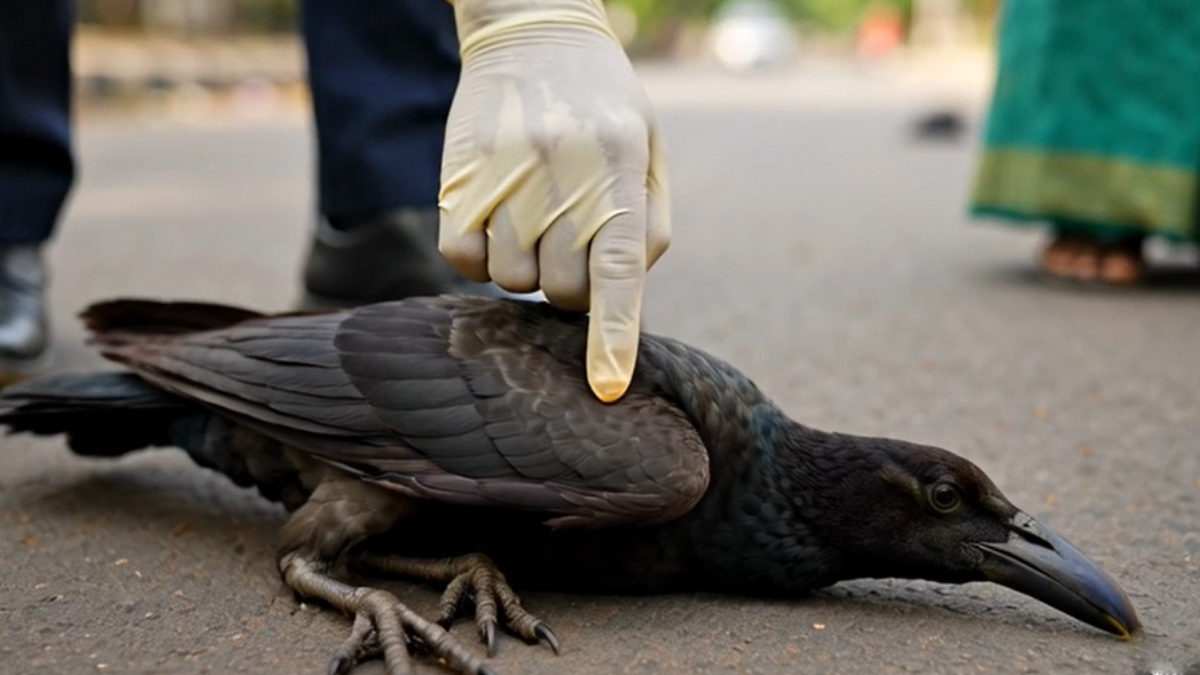
Vedasandur residents were anxious this week when several crows were discovered dead next to dense vegetation and old trees. The move follows a major bird flu alert in Chennai, where the H5N1 avian influenza virus has been confirmed among wild birds.
Surveillance in Vedasandur and Chennai
In Vedasandur, local officials downplayed any rumors of “hundreds” of deaths, explaining that although one or two crows have been dying sporadically, six to seven died in clusters on February 8. “We collected the carcasses and buried them according to safety protocols,” an official said. “Veterinarians have taken samples to determine the exact cause, but public alarm is unnecessary.”
The situation in Chennai, meanwhile, continues to be closely watched. Between January 29 and early February, an estimated 1,000 to 1,500 crows died in areas including Adyar, Velachery, and Besant Nagar. Samples sent to the ICAR-National Institute of High Security Animal Diseases (NIHSAD) in Bhopal confirmed the strain H5N1 and a state-wide high alert was issued.
Government Response: 'Vigilance, Not Panic'
Tamil Nadu Health Minister Ma. Subramanian has responded to the situation, stating that the risk of bird-to-human virus transmission is still extremely low. “Currently, there is no impact or risk to the public due to bird flu in Tamil Nadu,” the Minister said in a briefing on February 10. "Along with the Animal Husbandry department, the state health department is now monitoring areas around poultry hubs like Namakkal," he said.
Public Health Advisory
Authorities have released a list of recommendations to prevent the virus from spreading to the public and to commercial poultry:
- Don’t Touch: No contact with dead or sick birds with your bare hands.
- Report it: Report any unusual bird mortality in your community straight away to the Animal Husbandry Department.
- Food Safety: Cook poultry and eggs carefully at higher temperatures. Avoid “half-boiled” eggs or undercooked chicken.
- Hygiene: Clean hands especially if you are working in a location full of birds.
The virus is fatal for birds but human infections are uncommon and are usually transmitted by direct, prolonged exposure to infected carcasses. No human cases of H5N1 have been reported in India over this recent surge.