If commuters were suspicious that a man was secretly recording women, they would have stopped him from entering the train, the report said.
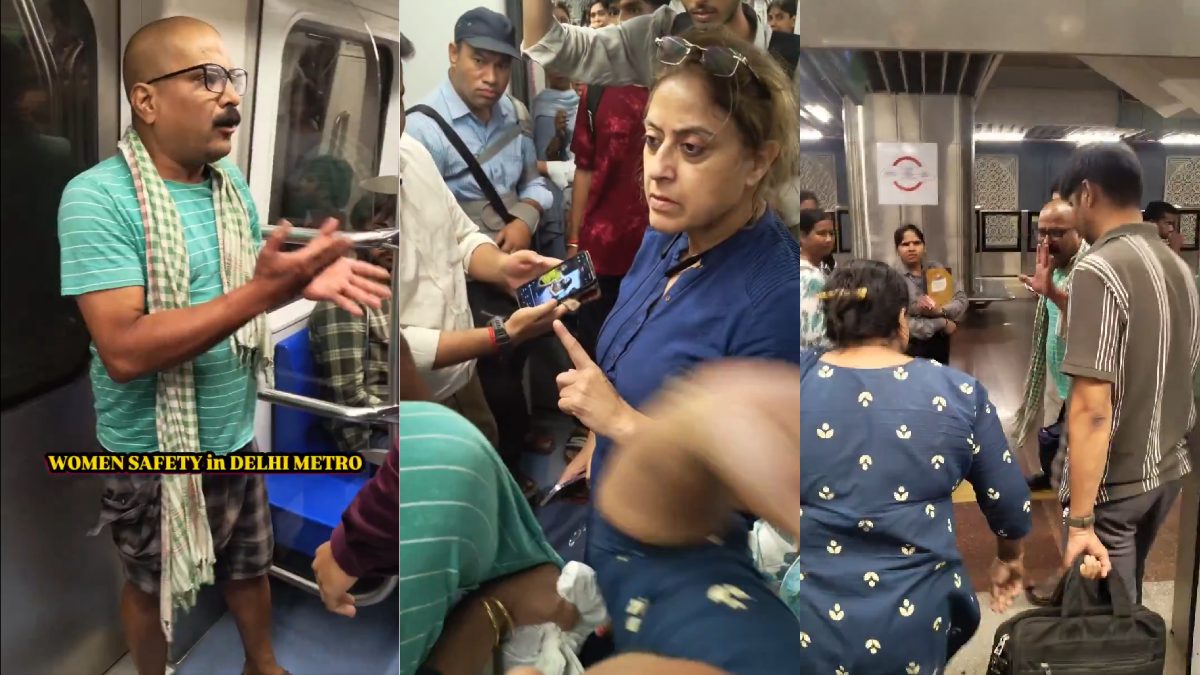
The situation ballooned when passengers asked the man to unlock his phone and show them the contents. But the demand was also made on the basis of growing suspicion that the device was being used to capture photographs or videos of women in the crowded Metro coach. In public transport systems in which passengers are often constrained and not able to see or hear who is filming them, that is to say, in the passenger's personal space.
When the phone was checked, passengers allegedly found photographs and videos of other women stored on the device. The discovery further fueled their suspicions. But the exact circumstances for which the images and videos were taken, and where they were taken and whether they were taken without consent, would be determined in a formal investigation.
The passengers then took the man off the Metro at Sarai Kale Khan–Nizamuddin station and took him to security personnel. The incident shows the role of alert commuters and security workers when it comes to responding to threatening or intrusive behaviour of passengers.
The risk of secretly taking images or recording people without their consent can be very serious privacy-related, especially when the targets are women. Public transport networks like Delhi Metro carry thousands of passengers every day; surveillance, personal privacy and passenger interaction are all key components in the maintenance of a safe commuting environment.
The incident also raises how passengers should respond when they believe someone is recording others without consent. Even if commuters are able to intervene to trigger security personnel’s attention, it could also be illegal and dangerous for them to take a phone and check on the person. Generally the safest approach would be to report to Metro security or police officials and let them investigate.
Women using public transportation can feel insecure when they are filmed without consent, the notion of which can be very worrying when the group is very crowded and nobody can see what is happening around them in real time.
Sarai Kale Khan-Nizamuddin railway station has very large passenger movement because of its proximity with major transport facilities in the area. So, incidents around busy interchange points can be very busy and require that security measures are in place and that complaints are quickly dealt with.
At the same time, allegations should not be viewed as proof of criminal wrongdoing. Finding photographs or videos of women on a person’s phone does not by itself establish how those files were created or whether they were obtained unlawfully. Those questions need to be answered by authorities, including checking the device and statements from the people involved.
A man was stopped by passengers inside a Delhi Metro coach after they suspected him of secretly recording women.
— Gems Of Railway (@GemsOfRailway) August 25, 2026
Passengers asked him to unlock his phone and show the gallery.
They also find other women’s photos and videos.
he was taken off at Sarai Kale Khan–Nizamuddin… pic.twitter.com/s2EZC07v6Q
Nevertheless, the incident is a reminder for Metro passengers to remain vigilant about privacy and personal safety. Authorities can also play an important role by ensuring that complaints about suspected recording, harassment or inappropriate behaviour are handled quickly and sensitively.
As the matter is with security personnel, more details would be necessary to determine whether any formal complaint was filed, if the man’s phone was examined by authorised investigators and if legal action followed. Until that information is official, the incident should be considered an allegation of covert recording, not a conviction of criminal activity.
Truly this is what the episode just makes public with such a big crowd of people, and as smartphones have a camera that can take very good photographs and video, good training and effective reporting are still required. For commuters, the message is very clear: suspicious behaviour should be reported immediately and investigations should be left to authorised personnel so victims and suspects have due process.