The Rekha Gupta-led Delhi government approved the Delhi Right to Service Bill 2026, a proposed reform to make public service delivery more transparent, accountable and time-bound.
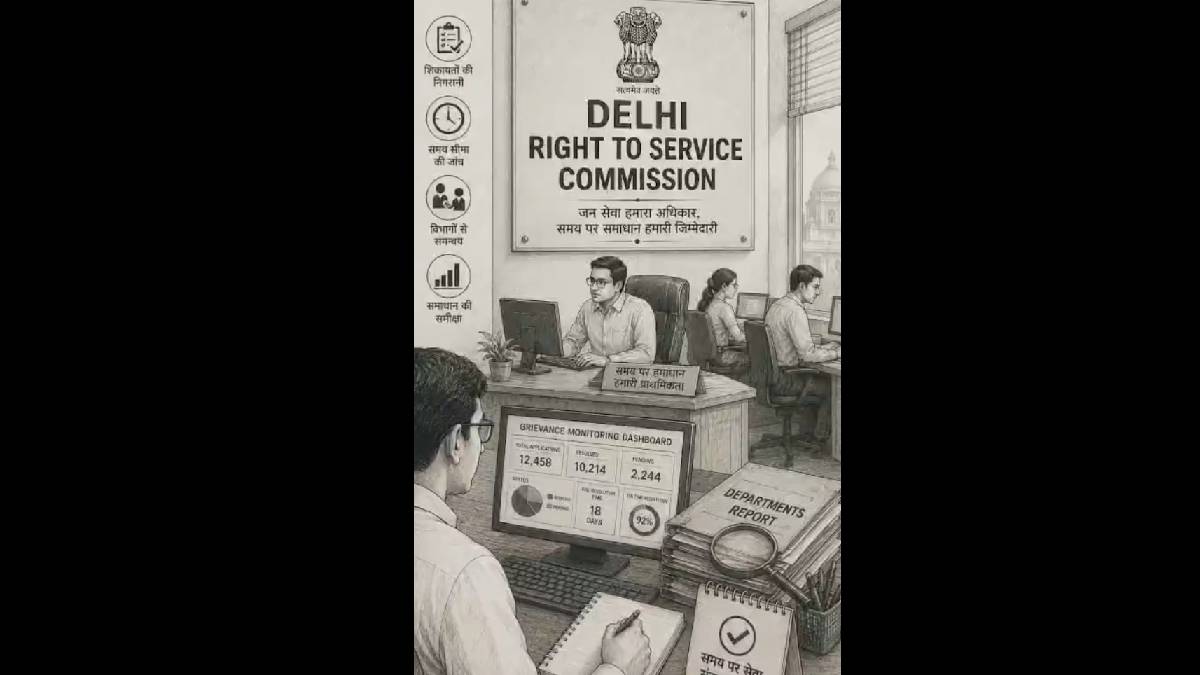
The new law will provide citizens with a mechanism to keep track of their government service requests in real-time. It will also allow for automatic escalation to be triggered when applications are delayed and provide financial punishment to those who do not provide services in the allotted time.
The announcement has been welcomed as a major step towards reducing delays and improving accountability in government offices.
For many citizens, ‘Kal Aana’ (coming tomorrow) has become an all too familiar phrase which is associated with repeated visits and pending files and uncertainty about government services. The Right to Service framework is a step towards this in terms of clear timelines and a more transparent way to monitor applications.
Under the approved Bill, citizens should expect to have greater visibility on their requests’ progress. The applicants would be able to see the status of their applications in real time, not only through in-person visits and repeated follow-up, but instead of depending on home visits or repeated follow-ups, and they would be able to do so online.
The system is also likely to include automatic escalation. If a service request is not made within the specified time, the matter can be referred to a higher authority without the citizen having to file complaints or visit.
This feature will reduce the burden for the citizens and help to keep delayed applications at a higher level of administrative attention.
One of the most important provisions in the announcement concerns penalties for service delays. Those responsible for unjustified delays will pay ₹250 a day, with a maximum of ₹5,000.
The penalty mechanism is to enable accountability and for government departments to consider applications within the time frames set out in the legislation.
The proposed system could cover a range of public services, but the list of services and specific timelines for each category are expected to be detailed through rules and notifications.
Government services usually involve applications for certificates, licences, registrations, approvals, and other official documents. Delays in these services affect citizens’ access to education, employment, welfare benefits, property-related processes and other essential activities.
With defined timelines and tracking mechanisms, the Delhi government is trying to make service delivery more predictable.
The real-time tracking system could also improve transparency. Citizens may be able to see when an application was submitted, which department is handling it, and whether the request has moved to the next stage.
Automatic escalation would also reduce the possibility of applications being left waiting without explanation. If a deadline is missed, the system will either notify or forward the issue to a senior official for review.
The Bill has been approved to make it law, but the legislation has to complete the legal and administrative processes to be implemented.
The success of the project for digital infrastructure, service timetabling, and departments' ability to respond to applications efficiently are all important.
Officials will also require training in the new monitoring and escalation systems. Government departments will have to work together to ensure that service requests are accurately recorded and updated regularly, but they have to be synchronized and made properly to keep track of service requests in place in order to accurately and regularly update the record.
The penalty provision could create incentives for timely action. But in what would surely be the case for a fair system of responsibility to be established for those who are delayed because of technical problems, incomplete applications, or circumstances that are beyond the control of an official.
The proposed Right to Service framework is part of a larger movement of technology-enabled governance and citizen-led public administration.
If implemented correctly, the Bill may minimize the need for repeated visits to government offices and provide citizens with a better sense of when a service is expected to be provided.
The initiative is also a strong one to say that public service should be time-bound responsibilities as opposed to open-ended administrative processes.
With real-time tracking, automatic escalation and penalties for avoidable delays, the Delhi Right to Service Bill 2026 could remake how citizens interact with government departments.
For now, the approval of the Bill is a significant policy step for the Delhi government. The evidence of implementation of the legislation will be key to whether the “No More Kal Aana” of the future will be followed through on faster, more transparent, and accountable public services.