In 2026, child marriage continues to exist in India even though it has been banned for decades, creating a gap between law and social reality. The problem has come up again as India aims to be a child marriage-free country by 2030.
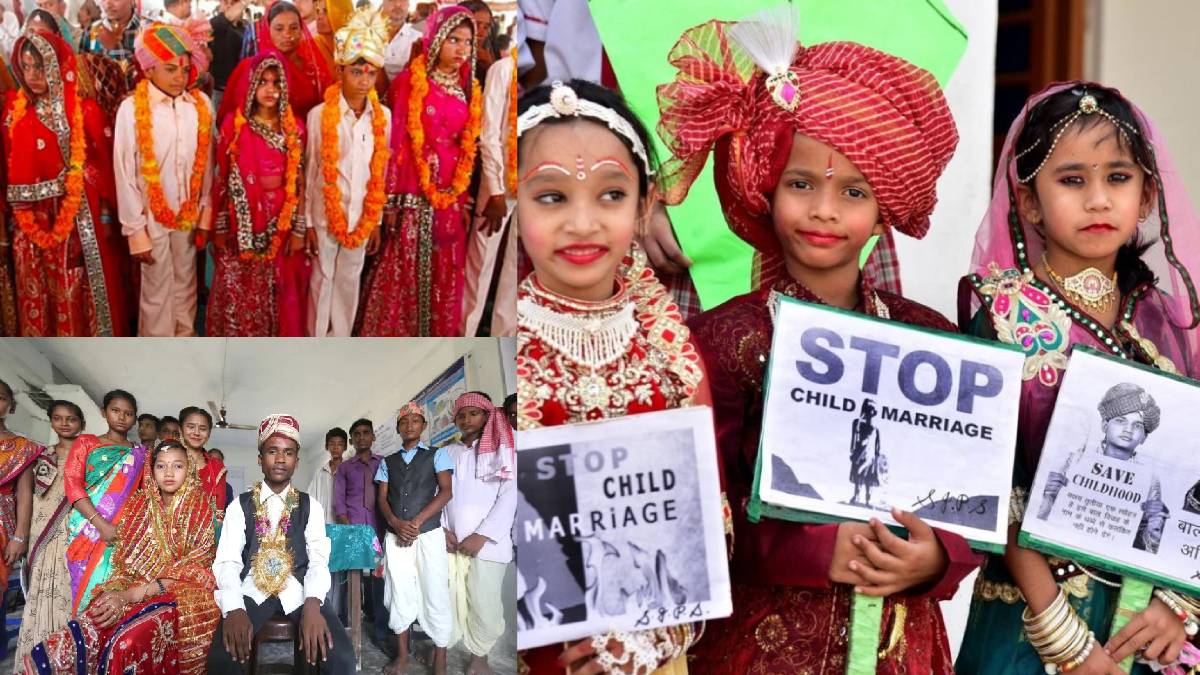
The national Bal Vivah Mukt Bharat campaign is aimed at preventing child marriages through better public awareness, greater community involvement, better reporting mechanisms and better protection for children who are at risk of early marriage. The campaign has outlined a target to eliminate child marriage by 2030.
The continued existence of child marriage has raised an important question: How can the practice still exist in 2026 when it is prohibited under Indian law?
The answer is social, economic and cultural factors. Poverty, lack of access to education, gender discrimination, social pressure, family honour and a lack of awareness of legal protections can result in early marriages in some communities.
Child marriage affects girls and boys in the same way, as girls are disproportionately impacted by child marriage. Early marriage can disrupt education, limit economic opportunities, and put them at risk of early pregnancy and health complications. It can also put girls at risk of suffering from domestic violence, exploitation and long-term financial dependence.
According to data cited by the government, 23% of women aged 20 to 24 were married before 18 in the National Family Health Survey-5 in 2019–21. Yet despite progress, child marriage remains a big social problem.
India has made efforts to strengthen prevention through the Prohibition of Child Marriage Act, 2006, which provides a legal framework to prevent and address child marriages. But it is not enough for legislation to eradicate a practice that has been at the core of those social customs and economic difficulties.
The government’s campaign involves parents, schools, local communities, religious and community elders, Child Marriage Prohibition Officers and government institutions. It also helps early identification of children who might be at risk and promotes continued education and skill development for adolescent girls.
The National Commission for Women (NCW) has also continued to raise issues about women’s rights, gender justice and legal reforms. Efforts to end child marriage are closely connected with the larger goal of ensuring that girls have access to education, safety, healthcare and equal opportunities.
The 2030 target is significant as it fits in well with national and international efforts to eradicate child, early and forced marriage. Therefore, it will be important for the Centre, state governments, local authorities, schools, civil society organisations and communities to work together to achieve this target.
The campaign has already seen widespread public participation with awareness campaigns, community participation and a significant number of people making promises to oppose child marriage. But long-term progress will depend on whether awareness is translated into effective prevention and timely intervention at the local level.
Researchers have also stated that keeping girls in school is one of the most effective ways to reduce the threat of child marriage. Access to secondary education, financial support for families, skills development and jobs help young people make sound decisions about their future.
The challenge is to stop marriages that are about to take place but also to deal with the very conditions that lead families to think about early marriage. A better reporting system, local monitoring and early intervention are key.
The target of making India child marriage-free by 2030 is ambitious, but it has set a national timeline for action. Child marriage in 2026 shows us that legal prohibition needs education, social change, economic empowerment and enforcement.
For now, the national campaign has put a new impetus on protecting children and making sure marriage does not end childhood. It will be the next ten years that will determine whether India will be able to convert this 2030 commitment into a long-term change in every state, district and community.