Popular YouTuber Dhruv Rathee has ignited a fresh political storm after comments made during his appearance on the podcast Learn By KK Create. In widely circulated clips, Rathee flipped a troll nickname and provocatively claimed that a donkey was “better than Modi,” drawing sharp reactions across India’s political spectrum.
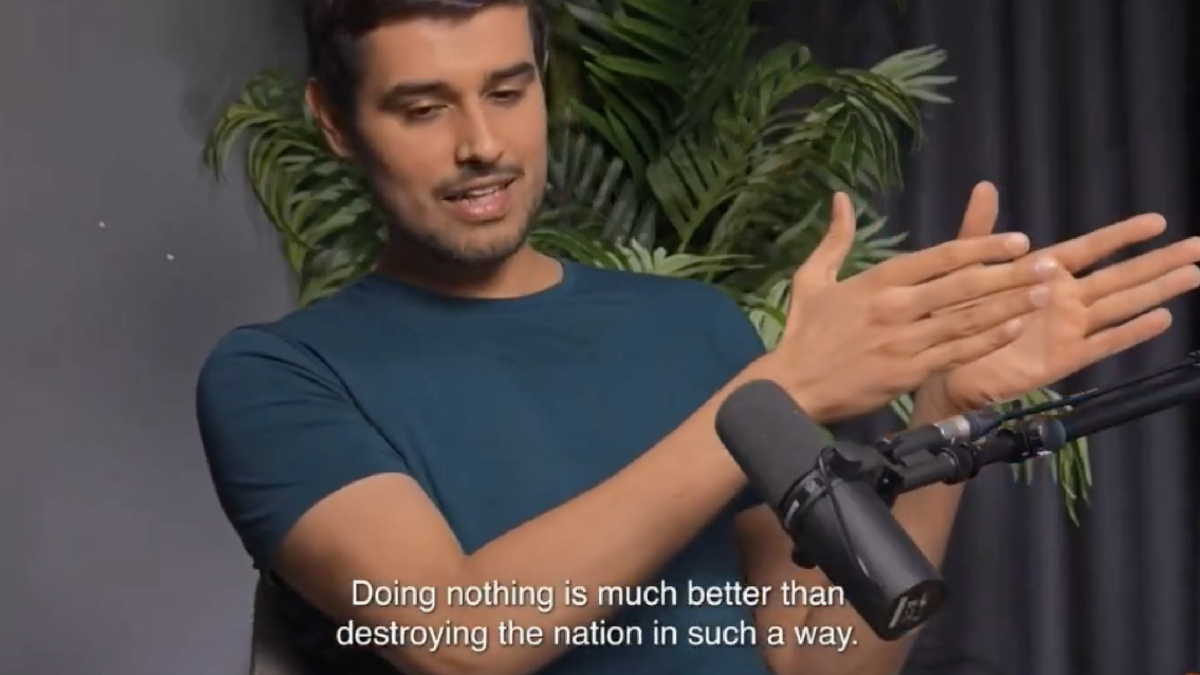
During the discussion, Rathee criticized Prime Minister Narendra Modi’s policies, alleging that they have harmed India’s economy, jobs, and democratic institutions. He also argued that the Rashtriya Swayamsevak Sangh (RSS), the ideological parent of the ruling Bharatiya Janata Party, draws inspiration from German and Italian models, pointing to fascist-style drills and uniforms. His remarks were met with cheers from opponents of the government but also triggered demands for his arrest from supporters.
Dhruv Rathee thinks Rahul Gandhi is a donkey, hence a good PM candidate 💀😂 pic.twitter.com/oZKf6aObTh
— Mr Sinha (@Mrsinha) February 15, 2026
Historians have long debated the RSS’s early influences. Founder K.B. Hedgewar introduced khaki uniforms in 1925, while later leader M.S. Golwalkar expressed admiration for certain aspects of Nazi Germany’s policies. Critics argue these elements reflect authoritarian leanings, though the RSS has consistently rejected any association with fascism, maintaining that its focus is on cultural nationalism and social service.
Rathee’s comments have amplified existing political divides. Opposition voices hailed his boldness, framing the remarks as a reflection of growing dissatisfaction with the government. Meanwhile, BJP supporters condemned the statements as disrespectful and inflammatory, calling for legal action against him. The controversy underscores how deeply polarized India’s political discourse has become, especially on digital platforms where Rathee commands a massive following.
As the debate intensifies, the incident highlights the intersection of history, ideology, and contemporary politics. Rathee’s critique has reignited discussions about the RSS’s origins and Modi’s governance, while also illustrating the risks faced by outspoken critics in India’s charged political climate. Whether the uproar leads to further action or fades into the cycle of online outrage remains to be seen, but the episode has once again placed Dhruv Rathee at the center of a national conversation.