Dr B.R. Ambedkar National Law University (DBRANLU) hosted a well attended international seminar with an international forum of legal professionals, judges, academics, policymakers, researchers and students from India and abroad to discuss emerging legal trends and contemporary global issues. It was an academic forum in which ideas were exchanged and research was conducted and discussions were had on the law, governance and justice.
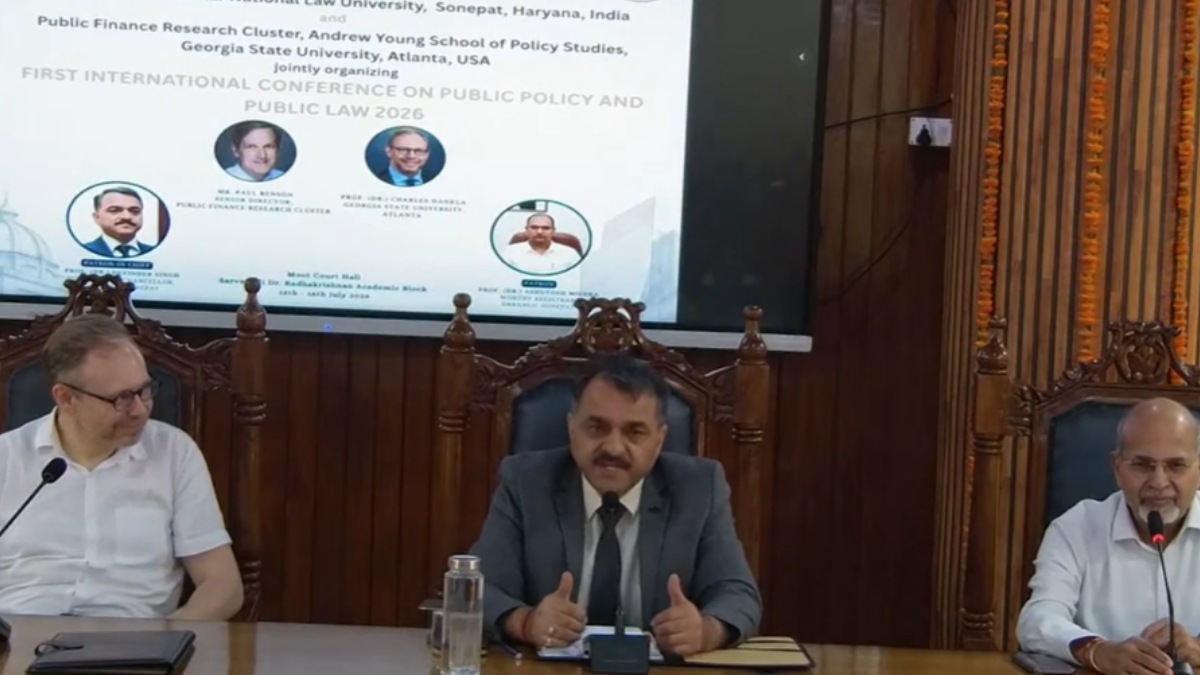
The seminar was attended by experts from universities, research institutes and legal groups; hence it shows how interdisciplinary cooperation is increasingly relevant for the solution of legal problems in the world. The participants presented by keynote speeches, technical talks, panel discussions, and a lot of talk on legal issues in the world.
At the opening session, university officials highlighted the relevance of academic dialogue for better legal education and for better management of justice. International seminars are important forums for scholars and students to get to know one another, compare a legal system and develop innovative solutions to contemporary legal problems, they said.
Speakers discussed the rapid change taking place in legal institutions due to globalization, technological advancement, artificial intelligence, environmental concerns, digital governance and evolving constitutional jurisprudence. In doing so they said that academic work and informed policy debates are needed so that we may keep legal frameworks relevant and effective.
The seminar was dedicated to the growing impact of technology on the legal profession. Artificial intelligence, data privacy, cybersecurity, digital evidence, online dispute resolution and ethical issues of emerging technology were among the major topics that people discussed. The participants felt that future legal professionals need to acquire technology along with traditional legal knowledge.
The discussions of constitutional law and human rights were also prominent. The speakers discussed how to defend a fundamental right and at the same time in the context of national security, the public good and technology. It was in these discussions that we got closer to other jurisdictions to understand how countries approach similar legal problems in different constitutional frameworks.
Environmental law was also one of the key topics discussed and researchers presented papers on climate change, sustainable development, biodiversity conservation and environmental governance. Legal systems have a growing role, it was said, to tackle global environmental problems through effective legislation, judicial oversight, and international cooperation.
The seminar also covered commercial law, arbitration, international trade, intellectual property rights and corporate governance. Legal professionals observed that cross-border transactions continue to be more complicated and legal standards need to be harmonized in order to develop international business and to protect the public interest.
Students were active throughout the seminar, presenting research papers, participating in question-and-answer sessions and interacting directly with senior legal experts. Such academic activities, faculty said, are useful for students who are interested in analytical thinking, research skills, public speaking abilities and a better appreciation of contemporary legal issues beyond the classroom.
The event offered young researchers an opportunity to receive positive feedback from the great minds of the faculty and practitioners in the field. Such interactions promote high-quality legal research and promote evidence-based research at universities.
We are proud to promote legal education excellence with conferences, seminars, workshops, moot court competitions, and joint research programs for the legal community. International engagement in education is increasing in universities now as students and professors learn different kinds of legal traditions and the ways they can compare to each other.
We discussed the need to enhance cooperation between universities, governments, judicial institutions and international organizations in response to the emerging legal challenges. Collaborative research projects, faculty exchange programs and joint publications are all great ways to expand academic partnerships.
The seminar ended with suggestions for continuous legal changes, more research investment, technology-enabled legal education and global cooperation to better solve complex legal problems. The legal profession needs to grow with society and technology, as the participants agreed.
The university authorities appreciated the enthusiastic participation and good discussions were very much appreciated by the quality of our students and faculty, speakers, faculty, research professionals, and students who came and participated in the seminar. They expressed satisfaction with the level of participation and quality of discussions during the whole event.
With law and justice systems worldwide changing so rapidly (in terms of social, technological and economic aspects), such international seminars like this one are essential for the next generation of lawyers. Dr B.R. Ambedkar National Law University is evolving with its commitment to supporting legal education and contributes to law and justice and the development of the nation through dialogue, research, and collaboration.