The Directorate of Revenue Intelligence (DRI) has busted an alleged international gold-smuggling syndicate in a major operation on the part of its Mumbai Zonal Unit and has seized nearly 692 grams of 24-carat gold worth around Rs. 1.10 crore in a one-time operation. Chinese nationals and Indian accomplices were accused of bringing gold to India through commercial imports to bring it into India through smuggled imports, the company said.
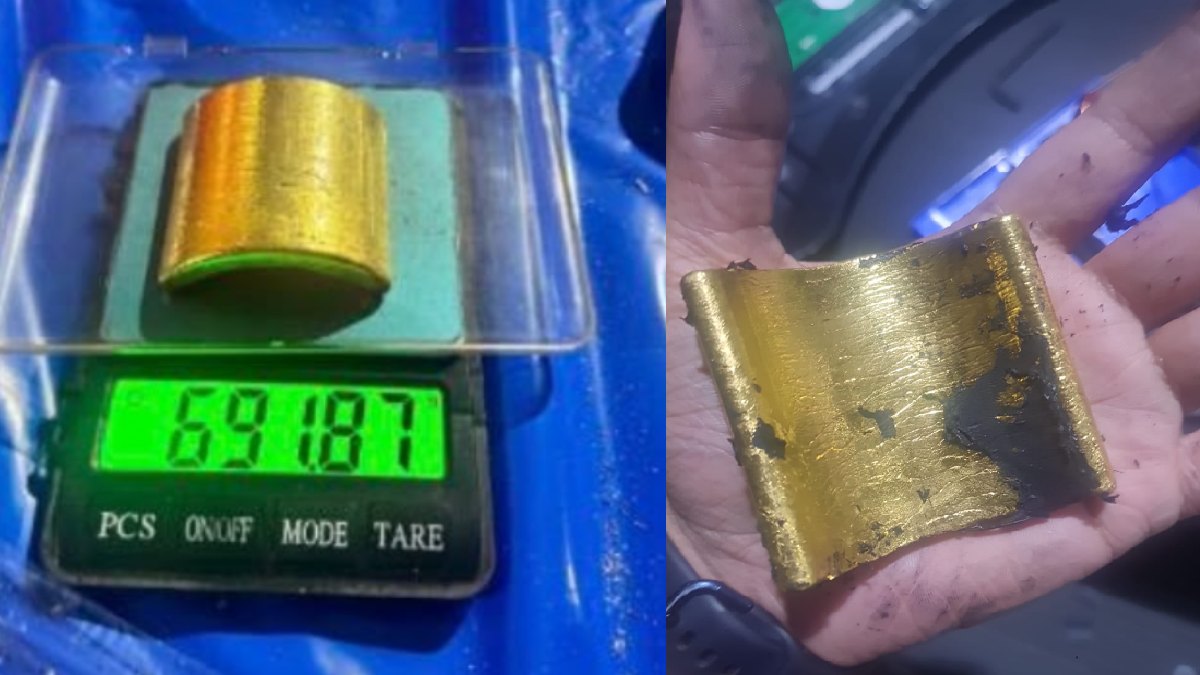
The DRI said that the seized gold weighed 691.870 grams and was recovered from a consignment imported from Hong Kong. Officers searched Mumbai's Air Cargo Complex, where they found the precious metal inside a treadmill motor.
According to the agency, the examination of the imported equipment led to the recovery of an arc-shaped bar of 24-carat gold. The gold, weighing 691.870 grams, was valued around Rs 1.10 crore. The concealment strategy is believed to have been done to avoid detection by portraying it as a legitimate commercial import.
Following the seizure, the DRI launched further searches and investigations in a number of locations. Swift follow-up action was undertaken in Mumbai, Chennai, Tiruvallur and Chengalpattu to locate the full extent of the alleged smuggling network.
The investigation also found that a group of Chinese nationals worked with Indian accomplices to create a sophisticated system for smuggling gold. The network used commercial import channels and concealed the precious metal inside imported goods, so the consignments would be believed legitimate when transportation of gold and other goods took place.
Two people have been arrested in connection with the case. The arrested individuals include a Chinese national and a person who was apparently the owner of the importing company. Both were arrested under provisions of the Customs Act, 1962.
The case underscores the difficulty faced by Indian enforcement agencies to catch sophisticated gold smugglers. Smugglers often hide gold in machines, electronic equipment and other commercial goods to avoid customs checks. The treadmill motor in the most recent case is a case in point of smugglers exploiting legitimate import routes to hide high-value contraband.
The DRI investigation will focus on identifying other individuals who may have been associated with the alleged network, and whether other consignments had previously entered the country. The import records and business operations linked to the importing company are likely to be studied further as part of a wider investigation.
The Mumbai operation comes as customs and intelligence agencies are continuing to hunt down attempts to smuggle gold and other high-value items into India.
In another recent case, Delhi Customs officials seized a diamond-studded gold bracelet valued at more than Rs 1 crore from two Turkish nationals at Indira Gandhi International Airport. The passengers had arrived from Istanbul at Terminal 3 of the airport.
According to Delhi Customs, officers of Airport Customs Preventive intercepted the two passengers and conducted a detailed baggage and personal search. The search led to the recovery of a gold bracelet studded with diamonds.
The bracelet was made of 750-purity gold and weighed 87.5 grams. It also contained about 50 carats (around 10 grams) of diamonds. The provisional value of the seized item was Rs 1,07,86,301.
The bracelet was seized under Section 110 of the Customs Act, 1962, and both passengers were arrested under Section 104 of the Act. This case illustrates customs authorities’ efforts to detect and block illegal movements of gold and jewellery through India’s airports and commercial import channels.
So the Mumbai seizure could lead to further action against individuals and businesses in the operation. It's still an important case because of the alleged international links, the sophistication of the concealment method and the huge amount of gold recovered.