The Bar Council of India (BCI) Chairperson and Senior advocate Manan Kumar Mishra, who in May 2026 claimed that about 35–40% of people appearing as advocates in court complexes may be practicing with fake degrees or fabricated educational credentials, has recently made a bold claim and has revived the debate on the verification of law degrees, advocate enrolment and the need for stronger safeguards in India’s legal system.
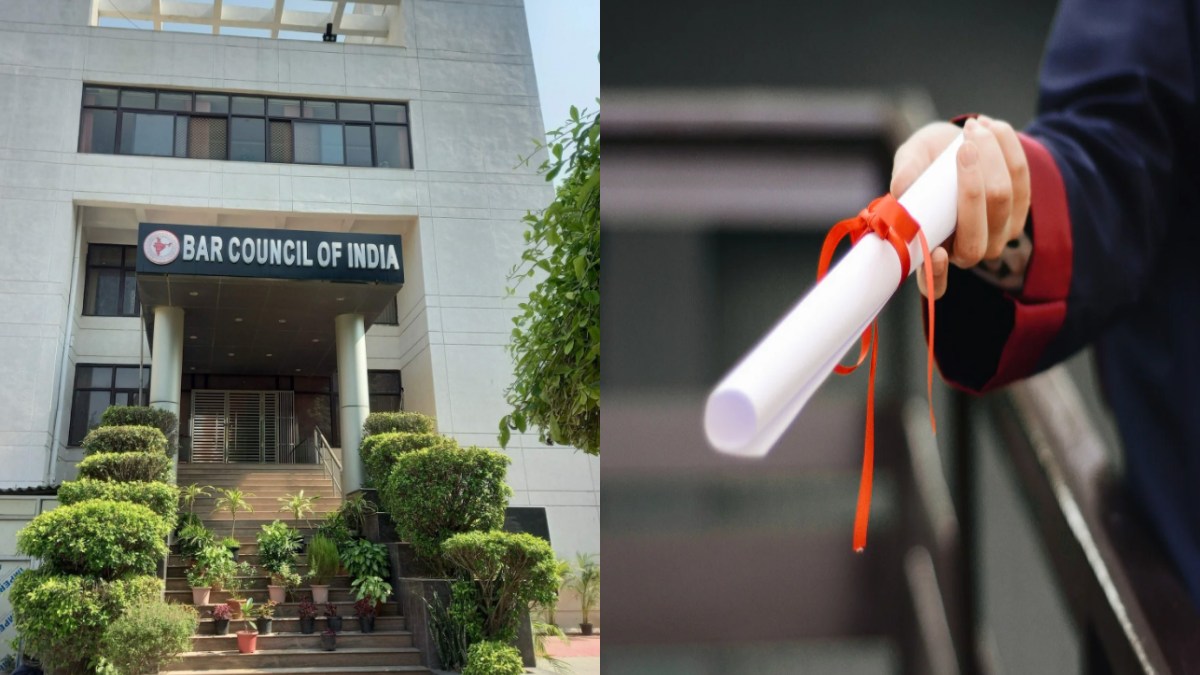
It is important to note that the 35-40% figure was stated by the BCI chairperson and should not be taken as a truly nationwide statistic which proves that 35-40% of all Indian advocates are fake. Nevertheless, the case has been brought before the Supreme Court on a national verification mechanism and it is very serious.
The issue then is whether the educational qualification of a person seeking to practice law is legitimate. A person who wishes to become an advocate must satisfy prescribed educational and enrolment requirements. The integrity of this process is crucial since advocates are in the business of representing clients before courts, and are in charge of the administration of justice.
According to reports on Mishra's comments, the BCI was aware of problems in people who entered the legal profession with what they say is fabricated degrees and certificates. The statement has raised questions about how well academic qualifications are checked before people are allowed to practise and whether existing verification systems are robust.
The situation is not entirely new. In 2023 to verify advocates, the Supreme Court said it was essential to certify educational qualifications and certificates of practice and that verification of advocates’ credentials was to protect the integrity of the administration of justice. It also noted concerns raised by the BCI about people who may not be qualified to practise law.
India has tried to strengthen the verification process. The BCI Certificate and Place of Practice (Verification) Rules, 2015 were written with a view to identifying fake and non-practising lawyers. The Union government had also informed Parliament in 2017 that the BCI was doing verification of degrees and certificates of advocates registered with State Bar Councils.
The renewed debate now has raised the question of whether a more comprehensive and technology-based system is required. A national digital register of advocates is one such idea that has been put forward in the Supreme Court. That system would link an advocate's identity with verified educational qualifications, enrolment details and other professional information.
In June 2026, the Supreme Court agreed to take up a petition for a national digital register. It would offer a centralised way to verify advocates, and it could help curb fake credentials, said reports. It has added a judicial dimension to the matter of how the legal profession should authenticate qualifications.
A transparent verification process might make it easier for courts, clients and regulatory bodies to determine whether an advocate’s educational and enrolment credentials are genuine. A system like that would also help reduce the chance that the enrolment process is a fraud.
For ordinary citizens, the issue is especially important because choosing a lawyer is often a big decision. People who come to courts may be already dealing with complicated disputes involving property, family matters, employment, business or other legal issues. They need lawyers in law to represent them.
If individuals without legitimate qualifications were able to practise law, it could undermine public confidence in the legal system. Clients might receive inadequate legal help and courts might have even more obstacles to meet those before them.
At the same time, the vast majority of advocates should not be viewed through the lens of an unverified generalisation. India's legal profession includes a very large number of qualified lawyers who have received recognised degrees and complied with enrolment requirements. Hence, any investigation into fraudulent credentials must differentiate between genuine and unsubstantiated cases.
The developments in Prayagraj are one reason why the issue has been discussed in the media. The government in that city has filed several FIRs against advocates who are said to have written fake law degrees and other lawyers have come under investigation. These are individual cases to be investigated and not generalised to all lawyers.
At the same time, this controversy raises questions about universities and educational institutions. Verification can’t stop at checking whether a certificate looks genuine. Regulators may need to check whether the issuing institution actually gave the degree and whether the student completed the required programme.
Technology can play a crucial role in this. Digitally verifiable academic records, secure databases and direct university-to-regulator verification could make it harder for fabricated certificates to make their way into professional systems. A centralised database might also make future verification faster and more consistent.
But creating such a system would also stress privacy, accuracy and due process. A database of professional and educational information would need strong safeguards against misuse. The same would be a system for advocates to challenge the incorrect records or administrative errors.
The issue also highlights the importance of coordination between multiple institutions. The BCI, State Bar Councils, universities, the University Grants Commission and judicial institutions all have different responsibilities. A fragmented verification process could leave gaps, whereas coordinated digital verification could potentially provide stronger safeguards.
The Supreme Court proceedings may therefore become an important part of the wider discussion about professional regulation. If a nationwide verification mechanism can be established, the credentials of advocates who practise across India would be much more clear.
For the legal profession, stronger verification might ensure the reputation of genuine advocates. Professional lawyers who have received legitimate legal education and have satisfied professional requirements are going to have a strong motivation to make sure unqualified individuals don’t undermine public trust in the profession.
At the end of the day, the issue is much more than a percentage. The question is whether every person appearing before a court as an advocate can be confidently identified as someone with the qualifications and professional authorisation required by law.
The BCI chairperson's 35–40% claim has brought that question into sharp focus. And yes the figure should not be taken as a national statistic (at all) but the calls for systematic verification have brought to light a legitimate regulatory issue that Indian institutions have been dealing with for years now.
And the Supreme Court will need to respond to the plea for a national verification mechanism (with respect to certification for all legal professionals) as the legal community and public will be closely watching it. A credible system of qualifications which is able to protect the accuracy of enrolment data and protect against fake credentials will strengthen the confidence of the people in India’s legal profession.
The main takeaway, for now, is that fake degrees should be looked at in a specific context and verified by proper verification and due process. But the controversy shows that only those who truly meet the educational and professional requirements and are qualified to enter the legal field are to be admitted.