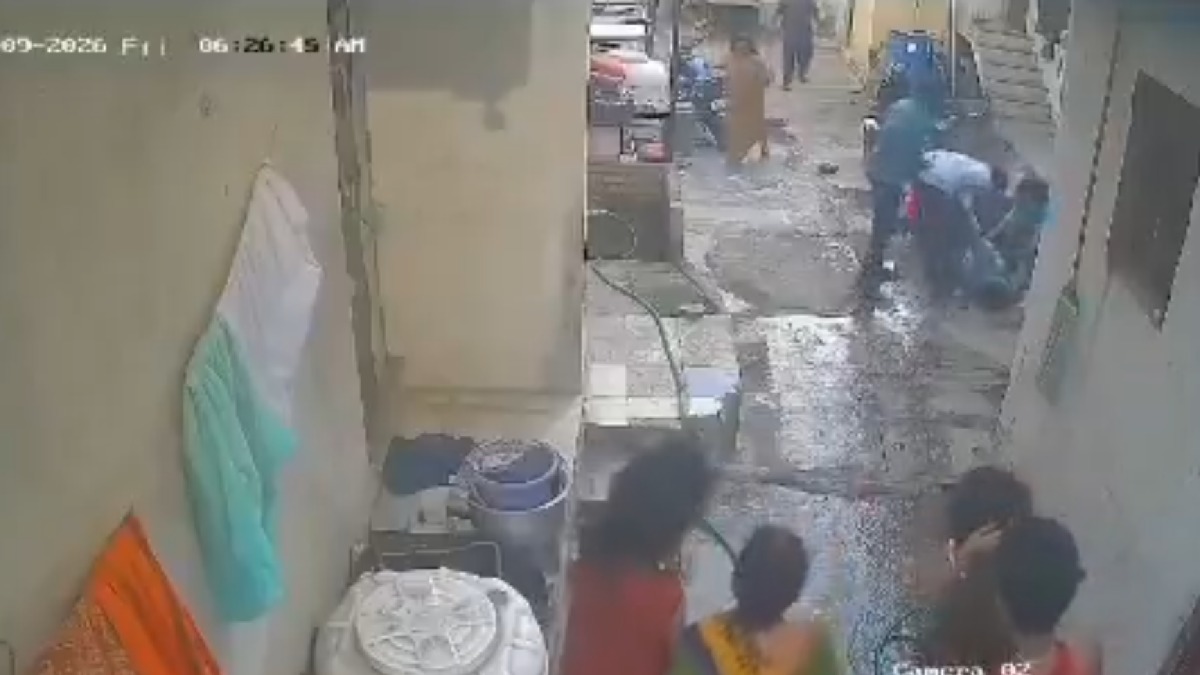
In a bizarre scam that has left many shocked, three elderly women in Tamil Nadu fell victim to a fake government scheme after a man posing as a government employee convinced them to shave their heads in exchange for a cash reward. Instead of receiving financial assistance, the women were left humiliated and cheated, raising new concerns about the growing number of scams targeting vulnerable citizens.

The accused introduced himself over the phone as an employee of the Attur Tahsildar's Office. He told the women that he represented a special government initiative, saying that the government was giving them financial rewards for those who shaved their heads as part of a public health campaign.
The fraudster had also told the story that a new infectious disease, similar to the coronavirus outbreak, was spreading in certain regions. He had said, to prevent the spread of the illness, that people were voluntarily shaving their heads and that the government had launched a welfare scheme to hand over money to participants.
The three elderly women believed in the caller and shaved their heads, expecting to receive the promised financial assistance. However, they never received any payment in return, nor were they able to contact the person again.
The women only found out later that they had been deceived. The family members and residents, who were shocked by the incident, were very shocked and were talking about it a lot, said the report.
The unusual fraud has recalled a famous scene from Telugu blockbuster 'Vikramarkudu' (1996), which was later adapted in Kannada as 'Veera Madakari' by actor Sudeep. In the film, the women are induced to shave their heads after believing a fake religious leader’s false promises. It’s a situation we see in our own life now that misinformation and deception can be used to win people’s trust.
Police are investigating to find out who the caller might have been.
And officials have also advised people to be suspicious of unsolicited phone calls from government departments. They stressed that legitimate government welfare schemes are only announced through official channels and never require citizens to perform odd acts in exchange for financial support.
In fact, fraudsters are more likely to prey on elderly people, as they have less knowledge of current scam methods and are more likely to trust people claiming to be government officials. Authorities said that people should verify any government scheme through official websites, local administrative offices, or authorised helplines before acting.
The incident is a stark reminder that misinformation and impersonation scams continue to evolve in unexpected ways. Digital fraud is so common that criminals are also using people’s fears about public health and government welfare programmes to mislead unsuspecting victims.
Police have appealed on a general level to citizens to report suspicious phone calls and to raise awareness among elderly family members about the problem in order to prevent them from happening again in the future.