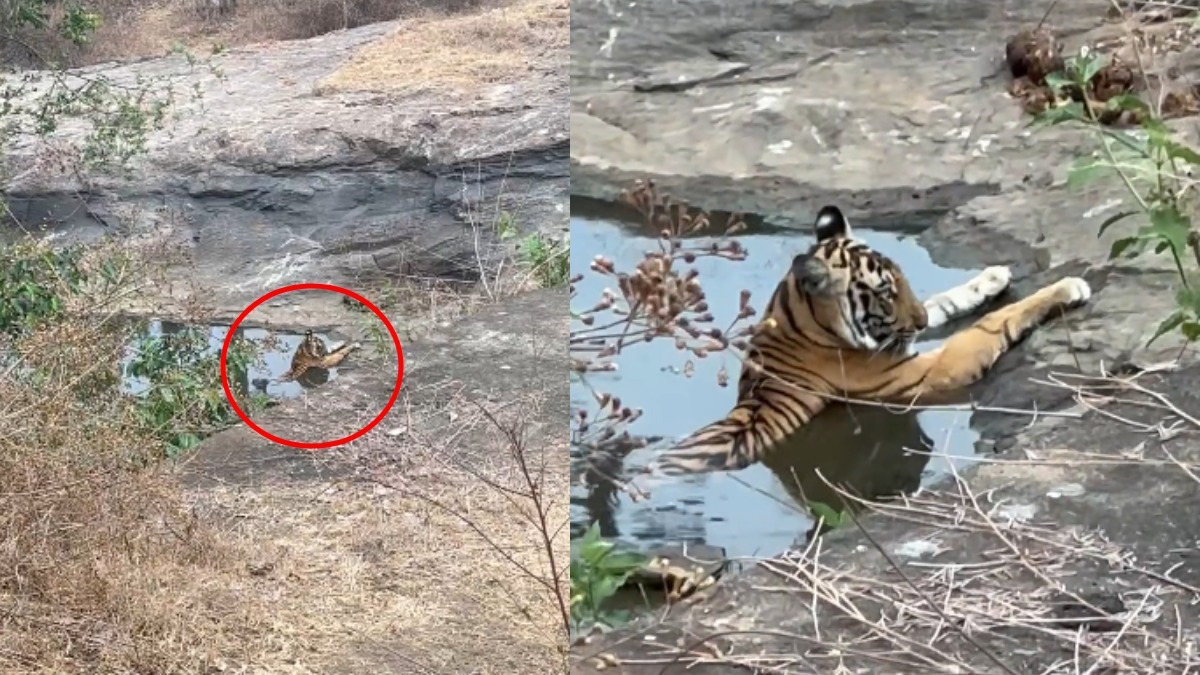
Mudumalai tiger reserve’s wildlife moment caught the eye of nature lovers and wildlife lovers across Tamil Nadu for the first time today (September 15, 2014). A huge female tiger resting in a forest waterhole was just the perfect sight for visitors and forest officials who had ever seen the kind of natural behaviour of one of India’s most iconic predators.
Mudumalai Tiger Reserve is situated in the Nilgiri Hills and is one of South India’s top wildlife destinations. The reserve borders Bandipur National Park in Karnataka and Wayanad Wildlife Sanctuary in Kerala, which is part of the larger Nilgiri Biosphere Reserve - one of the richest biodiversity hotspots in the country.
The reserve’s thick forests, lush grasslands, and abundant water sources provide a perfect habitat for tigers and many other wildlife species. Mudumalai is now one of the best places to see tigers in their natural habitat in India, thanks to conservation efforts.
A rare summer wildlife moment
A sight was quite remarkable on a safari when tourists and forest officials saw a female tiger lying comfortably in a small waterhole deep inside the forest.
The tiger looked relaxed in the hot weather and submerged herself in the cool water to escape the heat. Instead of showing the angry personality of a big cat, she was calm and just relaxing in the woods, where it was natural.
The tiger’s elegant black stripes were reflected on the water’s surface, and a picture out of place in the green forest came to mind. And it was a picture that wildlife photographers and tourists who saw it appreciated instantly.
Why do the Tigers spend time in water?
Tiger experts explain that when hot weather occurs, tigers usually seek water bodies to keep their body temperature.
Tigers are known to enjoy swimming in ponds, lakes, and forests, and soaking in rivers and streams, whereas many other members of the cat family don’t. They are kept cool for long periods of time so they can conserve energy and avoid heat stress in the hottest summer months.
This behavior is well-known and is totally natural, and the most common in well-protected forest habitats, in which water is available throughout the year.
Conservation Efforts Paying Off
The presence of healthy tiger populations in Mudumalai shows years of dedicated conservation work by the Tamil Nadu Forest Department.
As a result, the reserve’s ecological health has been greatly enhanced with strict anti-poaching measures, protection of the forests, restoration of water sources, and reduction in human interference.
Conservationists stress that the conservation of tigers is more than just saving one species. Tigers are apex predators in the ecosystem, and they regulate the number of prey and forest ecosystem health.
It is considered a good sign that a healthy forest has a healthy tiger population.
Responsible Wildlife Tourism
Forest officials say it is responsible to observe wildlife, and visiting wildlife is part of your responsibility.
Tourists are advised to remain silent during safaris, stay in protected vehicles, not to use camera flash, and never disturb animals in their natural settings.
Responsible tourism means wildlife will continue to behave naturally with little to no human intervention or stress, and no further human disturbance.
A Haven for Biodiversity
Mudumalai Tiger Reserve is home not only to tigers but also to elephants, leopards, gaur, deer, sloth bears, wild dogs, and hundreds of bird species.
The reserve has become one of India’s top eco-tourism destinations, and wildlife photographers, researchers, and nature lovers from around the world are coming to visit there regularly.
At the same time, however, the reserve also helps local livelihoods and promotes awareness of biodiversity conservation.
A Reminder to Protect Nature
And the picture of a female tiger sitting in a forest waterhole that we have is a good reminder of what conservation can do is a beautiful thing.
The more wildlife are provided with safe habitats and little disturbance, the more extraordinary moments of nature that make us respect them are revealed.
As climate change and habitat destruction continue to pose a threat to wildlife all over the world, preserving forests like Mudumalai is as much of an issue for tigers as it is for us, for the species that depend on these areas.