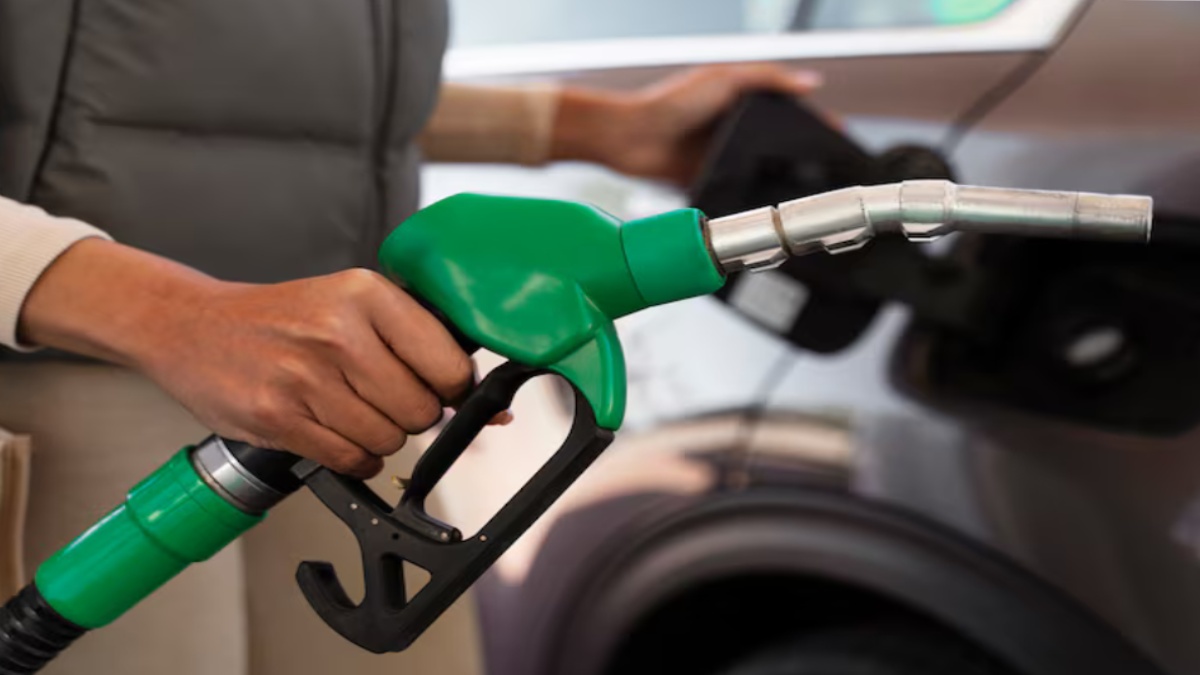
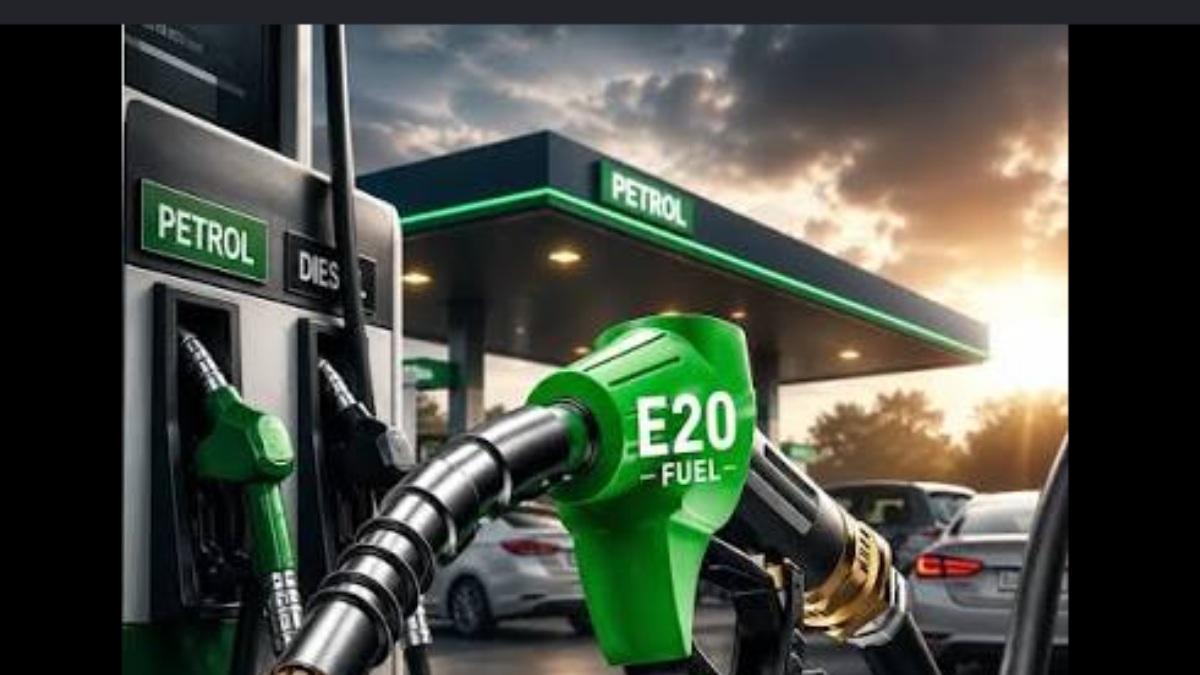
Central government has defended its nationwide rollout of E20 petrol, a fuel blend with 20 per cent ethanol and 80 per cent petrol and addressed one of the most common questions asked by consumers: Why isn’t E20 petrol cheaper at fuel stations?
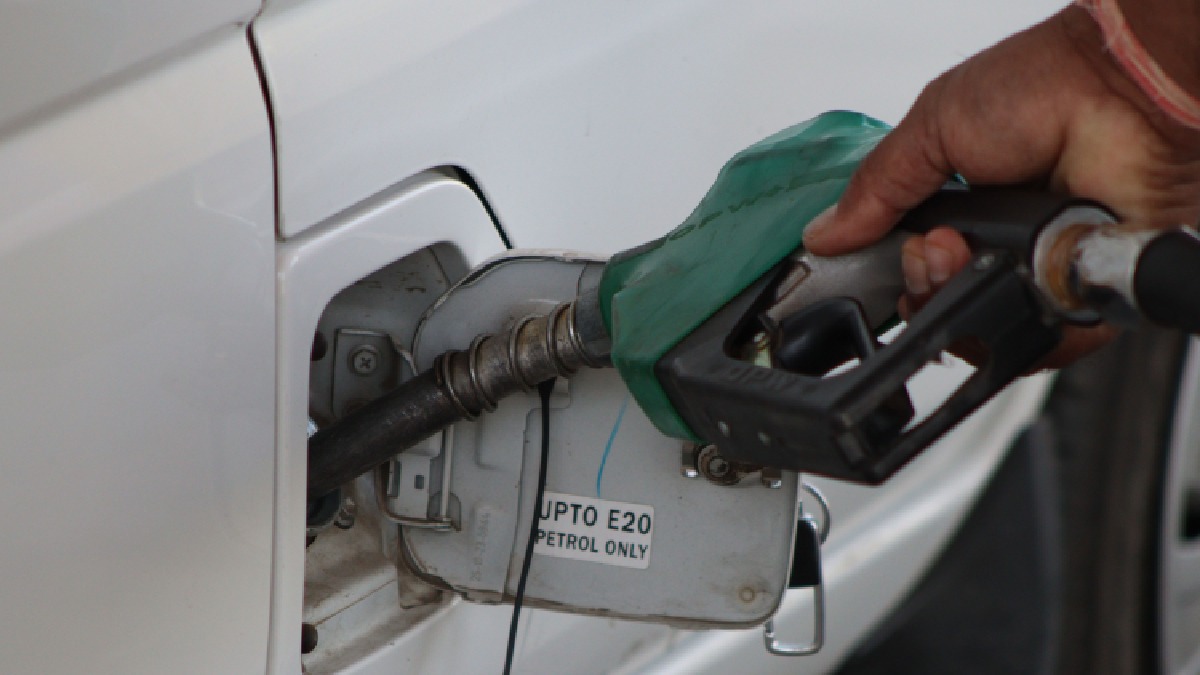
But the government said that while replacing a portion of imported crude oil with locally produced ethanol, motorists should not expect a quick drop in petrol prices. E20 really does improve India’s energy security, it is for farmers and for reducing reliance on imported crude oil and carbon emissions, it added.
Why E20 Petrol Costs the Same
The Ministry of Petroleum and Natural Gas says ethanol used in E20 fuel is obtained from domestic producers at ‘government-fixed prices’ to guarantee stable incomes for farmers.
For example, maize-based ethanol is purchased at around Rs 71.86 per litre. Since the procurement prices are sound and do not fluctuate with the international crude oil prices, manufacturing E20 can be more expensive than making conventional petrol when crude oil trades around Rs 70 per barrel.
The ministry said E20 would only become significantly cheaper to produce if international crude oil prices were to surge to around $120–130 per barrel.

So instead of giving consumers cheaper pump prices, ethanol blending helps India reduce its exposure to volatile global oil markets by replacing one-fifth of petrol consumption with fuel produced in the country.
Why Different Petrol Blends Can't Be Sold Together
The government also explained why consumers cannot choose between pure petrol, E10 and E20 at fuel stations.
The ministry said it would be difficult to run three separate fuel supply chains in India over more than 1 lakh petrol pumps would be logistically unfeasible and financially unsustainable.
So, this country is gradually moving to E20 as the standard petrol blend instead of having multiple options simultaneously.
Is E20 Safe for Older Vehicles?
Another big concern among vehicle owners is that E20 petrol can damage engines that were designed with a lower ethanol level.
The government rejected this as well, citing data from Maruti Suzuki.
In the 2025-26 financial year, the company served almost 2.84 crore vehicles, including around 1.5 crore older models that were not initially certified for E20 fuel.
The ministry added that there were “no reported cases of engine corrosion or fuel system damage” related to E20 usage.
As per the review, the technical assessment conducted by the Automotive Research Association of India (ARAI), the Society of Indian Automobile Manufacturers (SIAM) and the Indian Oil Corporation (IOCL) also found no compatibility issues with existing vehicles.
But officials said that the labels that state that E10 fuel is compatible with them are simply the standards that were in place when those vehicles were launched and should not be seen as evidence that E20 is unsafe.
Mileage May Drop Slightly
The government said that motorists may see a “3-5 per cent reduction in fuel efficiency” when using E20 petrol.
But it said ethanol’s higher octane rating is to be complemented by the engine performance and combustion efficiency.
E20 also helps to reduce lifecycle carbon emissions by about 40 per cent and so it is a key step in making transportation cleaner, the ministry said.
India's Ethanol Journey
India’s ethanol blending programme started in 2001 as a pilot project followed by a formal policy in 2013.
For many years, it is likely that the blending levels were low at about 1.5 percent, mainly because ethanol production was largely based on sugarcane.
The programme started to gain momentum after 2018, when the government expanded ethanol production to maize and surplus or damaged food grains.
These policy changes accelerated blending from 8.1 per cent in 2020-21 to the current 20 per cent target, making India one of the fastest-growing ethanol markets in the world.
Economic and Strategic Benefits
According to Petroleum Planning and Analysis Cell (PPAC), the ethanol blending programme has brought economic benefits.
The government estimates that increased ethanol use has helped India save more than Rs 1.97 lakh crore in foreign exchange by reducing crude oil imports.
At the same time, over Rs 1.66 lakh crore has been transferred to farmers and the rural economy through ethanol procurement.
The stability of fuel prices was also cited as an advantage, officials said. From June 2022 to June 2026 petrol prices in India increased only by 5.58 per cent, which was far less than in several neighbouring South Asian countries and parts of Europe during the same period.
While E20 petrol may not be in immediate cost relief for consumers at the pump, the Centre argues that its long-term value is in strengthening India’s energy independence, supporting domestic agriculture, reducing emissions and protecting the country from unexpected global oil price fluctuations.