Climate change, geopolitical tensions and growing competition over shared water resources are putting freshwater governance systems across Asia under increasing pressure, experts said at an international conference hosted by the Indian Institute of Management Calcutta (IIM-C).
The conference began on October 5 and is looking into the legal, political and institutional challenges associated with transboundary freshwater resources.
The international conference will discuss Asian perspectives on transboundary resources, hydro-politics and basin governance. It brings together international law and state practice to discuss emerging challenges such as water security, climate change and competition over shared resources (see Appendix 2).
The conference was inaugurated by IIM-C Director Prof Alok Kumar Rai. Prof R Rajesh Babu, Dean (Executive Education) at IIM-C and Co-Chair of Development of International Law in Asia (DILA), is a key figure behind the event. The first day’s discussions focused on the need to strengthen legal and institutional mechanisms for freshwater resources to be shared with countries and regions.
The opening session 'Transboundary Freshwater Governance: Foundations and State Practice' addressed the legal and political complexities surrounding shared water resources. Participants discussed the principle of 'no significant harm' over the Mullaperiyar dam dispute, Sri Lanka’s state role in the development of international freshwater governance and transboundary aquifers in South Asia.
The experts also said we have to move away from water security-based approaches that are primarily about dividing river water amongst states. Instead, talks emphasized the importance of a water security perspective that takes into account groundwater, climate risks, ecological sustainability and the community’s need for shared water systems.
Groundwater came up in many of the discussions. Transboundary aquifers are often almost invisible compared to rivers and lakes; they have the potential to be an essential source of fresh water for millions of people.
The need for cooperative groundwater management in South Asia and the creation of more robust mechanisms to protect and monitor underground water resources that are beyond political boundaries was also discussed.
The conference also focused on how water governance and human rights interact. The “Human Rights, Humanitarian Law and Water Justice” session was about access to water as a human right and the consequences if water infrastructure gets involved in armed conflicts.
In his paper, Prof Jeong Woo (Jimmy) Kim presented “Water in the Crosshairs of War: Reverberating Harm, Legal Indeterminacy and the Limits of International Humanitarian Law” on international humanitarian law and where water resources and critical infrastructure are targeted or affected in war.
The session also featured the right to water in Thailand's evolving human rights frameworks and the Indian Constitution. Both legal protections and human rights were discussed, and governments’ responsibility to guarantee fair and sustainable access to water also came up.
Another presentation by Arunika Mishra, a student of Prof Rajesh Babu, examined ethical sourcing and transboundary water governance in the Mekong Delta. Her paper “Ethical Sourcing and Transboundary Water Governance: Mapping Fragmented Policy Interactions in the Mekong Delta” explored how fragmented policy structures affect the management of shared water resources.
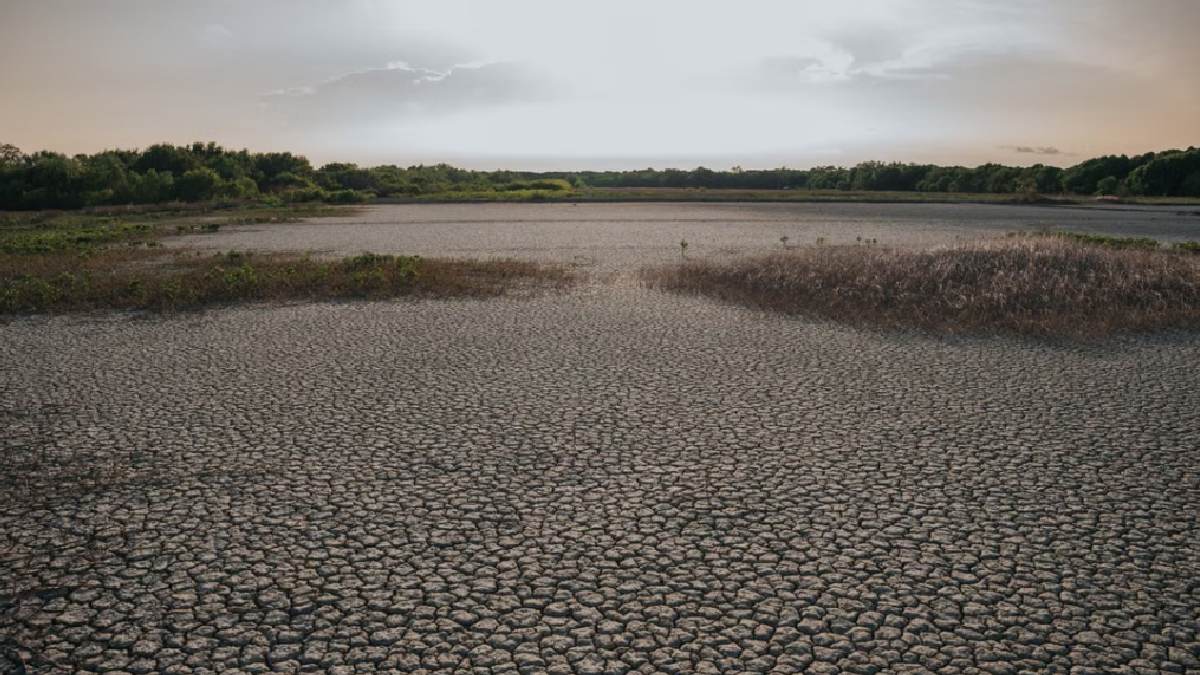
Climate change and international water law were also a major topic of the conference. Sessions focused on droughts, disasters, shrinking glaciers, water justice and climate justice. They discussed the impact of the International Court of Justice’s climate ruling for the Ganges Water Treaty and how world legal frameworks can respond to climate change and water availability.
The paper also explored whether existing international laws for water allocation are capable of dealing with climate-driven changes, and specifically with India's situation. The discussions revealed the need to change water governance mechanisms as rainfall patterns, droughts, glacier loss and other climate-related changes influence freshwater availability.
The opening day’s discussions also underscored the ever more urgent need for legal and institutional adjustments to transboundary water resources. Climate change is changing the water supply, and the demands to solve for these and other issues in Asia are all very complicated; we have challenges in development, environmental protection, human welfare and regional cooperation.
The conference at IIM-C will run through October 7 and will feature scholars examining the practice of Asian states in international law and the changing legal and political dynamics in relation to transboundary resources.
The discussions will help to shape wider discussions on freshwater governance, water security and joint sharing of resources in a region where environmental and geopolitical pressures are mounting.